

Audio By Carbonatix
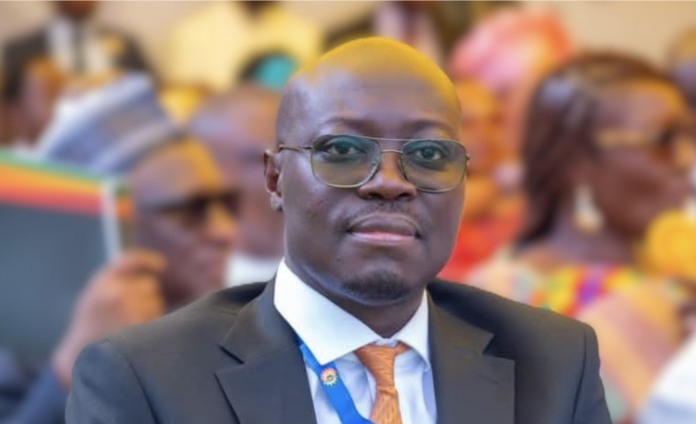
Dr Cassiel Ato Forson, the Minister of Finance, says the government is yet to have a full understanding of the economic crisis as the situation keeps unraveling with time.
The depth of the crisis, he said, would require significant sacrifices from citizens to “stem the bleeding” and put the economy back on track.
“Fellow countrymen and women, the economic crisis isn’t over. Indeed, the full length of our current crisis is still unravelling by the day,” he said during a presentation on: “The true state of the Ghanaian Economy” at the 2025 National Economic Dialogue on Monday.
The theme for the two-day event is: “Resetting Ghana: Building the Economy We Want Together”.
He observed that over the decade, there had been very limited progress in structural transformation of the economy.
“The agriculture sector is still representing one-fifth of GDP and one-third of the labour force, thus about 33 per cent. Manufacturing productivity remains relatively low, and higher productivity sectors in industry, such as commercial mining and construction and employing few people,” he said.
Contrary to what prevails in some advanced countries and medium-sized countries, he indicated that the informal sector and self-employment had rather absorbed a large share of the labour force.
In the absence of radical economic reforms, he predicted that Ghana risked achieving high middle-income status only after 2050.
To avert the situation, he called for comprehensive policies and institutional reforms that enhanced productivity, improve the quality of infrastructures and services, and elevate human capital and workforce skills.
“These reforms have the potential of transforming Ghana within a generation, tripling its per capita income by the year 2050. There is a need to reiterate fiscal policy to support growth and structural transformation,” he said.
Dr Kingsley Amoako, the Founder of the African Centre for Economic Transformation (ACET), said external finance remained an essential piece of the country’s development plan for the foreseeable future.
At a time when traditional official development assistance was dwindling, he urged the Government to pay attention to new donors such as China, India, Saudi Arabia, Turkey, and the United Arab Emirates.
“Recent policy shifts, including those of the Trump Administration in the United States and others in several European countries, have introduced uncertainties into the prevailing development aid architecture,” he said.
The dialogue entails six thematic themes that include macro-economic stability, restoring good governance, private sector led growth, structural policy reforms, infrastructure development and growth with diversification, export competitiveness, productivity, technology and human well-being.
Latest Stories
-
President Mahama is not sincere with Ghanaians on LGBTQ bill matter – Hassan Tampuli
4 minutes -
Gov’t to establish Prison Industrial Hub to equip inmates with income-generating skills – Prison Service boss
22 minutes -
Alhassan Tampuli donates cement, roofing sheets to support storm victims in Gushegu
23 minutes -
Alhassan Tampuli appeals for urgent support for storm victims in Gushegu
26 minutes -
The hypocrisy must stop; pass Anti-LGBTQ+ Bill now – Alhassan Tampuli to Mahama
30 minutes -
Imprisonment should be rehabilitative, not punitive – Ghana Prisons boss at UNGA
51 minutes -
Ga Adangbe traditional priests petition Mahama over McDan aviation licence revocation
1 hour -
Anti-LGBTQ Bill: NDC’s arrogance is worrying – Hassan Tampuli
1 hour -
Let’s give OSP time to mature, not to scrap it – Hassan Tampuli
1 hour -
Nigeria convicts 386 Islamist militants in mass trials
1 hour -
Djibouti president wins election with 97.8% of vote, state media says
1 hour -
We don’t have mandate to deduct tax from rent allowance of security services personnel – Interior Ministry clarifies
2 hours -
Ablakwa receives Presidential Special Envoy on Reparations to advance global agenda
2 hours -
Christina Koch becomes first woman to travel around the moon on Artemis II
2 hours -
Epstein survivors’ calls to meet King Charles and Queen harder to ignore as US visit approaches
2 hours