

Audio By Carbonatix
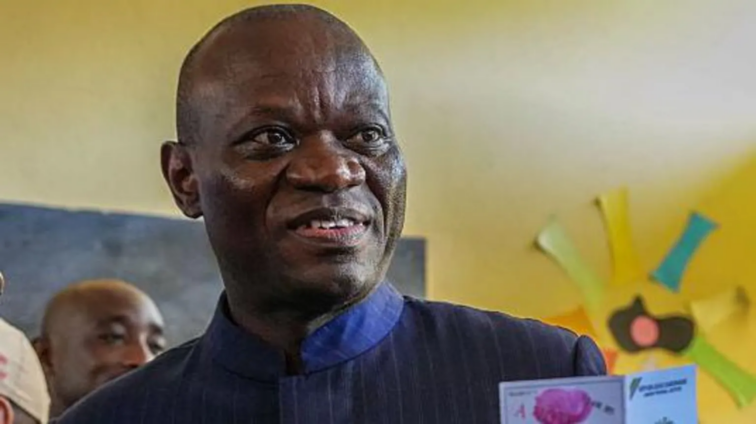
Gabon's military leader Gen Brice Oligui Nguema - who in 2023 led a coup that ended a near-60-year dynasty - has won Saturday's presidential election with more than 90% of the vote, provisional results show.
Ahead of the vote, critics argued that the new constitution and electoral code were designed to give Oligui Nguema a comfortable pathway to the top job.
Some opposition heavyweights who could have posed a serious political challenge were excluded from the race.
His election victory consolidates his grip on power, nearly two years after he masterminded the demise of President Ali Bongo, whose family had been in power in Gabon since 1967.
Oligui Nguema, 50, faced seven other candidates, including former Prime Minister Alain Claude Bilie-by-Nze, who served under the Bongo regime, and two stalwarts of the former ruling PDG party, Stéphane Germain Iloko and Alain Simplice Boungouères.
"Brice Clotaire Oligui Nguema is elected [president] by absolute majority of votes cast, with 575,222 votes," Interior Minister Hermann Immongault announced.
His main challenger, Bilie-by-Nze, received just over 3% of the votes.
More than seven out of 10 registered voters took part in the poll, which the authorities and some observers hailed as signifying the election took place transparently and peacefully.
There were complaints of instances of irregularities in the process, however.
At some polling stations the vote was delayed, while some voters on the electoral roll were not able to find where they were meant to cast their ballot.
Bilie-by-Nze said he was particularly concerned by claims that in some places unmarked ballot papers were not kept in a secure location, and that he feared they could be used to stuff ballot boxes.
Oligui Nguema's victory brings him a seven-year mandate and the resources to tackle the corruption and bad governance that characterised the Bongos' time in power.
The highly articulate former commander of the elite Republican Guard proved to be very popular among a population relieved to be rid of dynastic rule, promising to rid the country of the ill that had tainted Gabon's image.
The small oil- and timber-rich central African nation is home to just 2.5 million people.
Despite its resources, about 35% of the population still live below the poverty line of $2 (£1.50) a day.
Latest Stories
-
The job interview question you don’t have to answer
1 hour -
Trump unveils ‘Super Intelligence Force’ to oversee AI policy
1 hour -
[Video]‘I have asked God to take me when it is time’ – Pete Edochie on health struggles
4 hours -
Manager remanded over $1m auto fraud
4 hours -
Mr President, Ghana was mentioned at the UN; why aren’t we talking about it?
4 hours -
US Marine arrested over murder of woman in Okinawa, Japan
4 hours -
Accra to convene Africa’s regulators and markets on tokenisation at AVAS 2026
4 hours -
Indian police accused of sexually harassing journalists at protest
5 hours -
Jeffrey Archer returns to his former school library
5 hours -
France to close up to 500 schools on Monday over student protests
5 hours -
The Paradox of Plenty — When every smartphone becomes a newsroom
5 hours -
Australia investigating Flydubai co-pilot’s links to country
5 hours -
GTA sensitises taxi drivers in ‘Know Ghana’ tourism campaign
6 hours -
Archbishop Agyinasare calls for responsible speech amid growing social media abuse
6 hours -
‘It will be inexcusable for gov’t not to honour payment of teachers’ arrears by 30th October’ – Haruna Iddrisu
6 hours