

Audio By Carbonatix
The Gaza Strip could be on the brink of a new humanitarian crisis if supplies are not allowed in, authorities say, as Israel responds to the Hamas attacks.
On Monday, Israel declared a "complete siege" on the territory, saying electricity, food, fuel and water would be cut off.
According to residents, aid has not reached the enclave since Saturday.
BBC footage shows deserted streets covered with rubble from collapsed buildings following Israeli airstrikes.
Nearly 700 people have died in these attacks and thousands more are reported to have been injured.
The area is home to about 2.3 million people in total - 80% of whom rely on humanitarian aid mainly due to the ongoing hostilities with Israel.
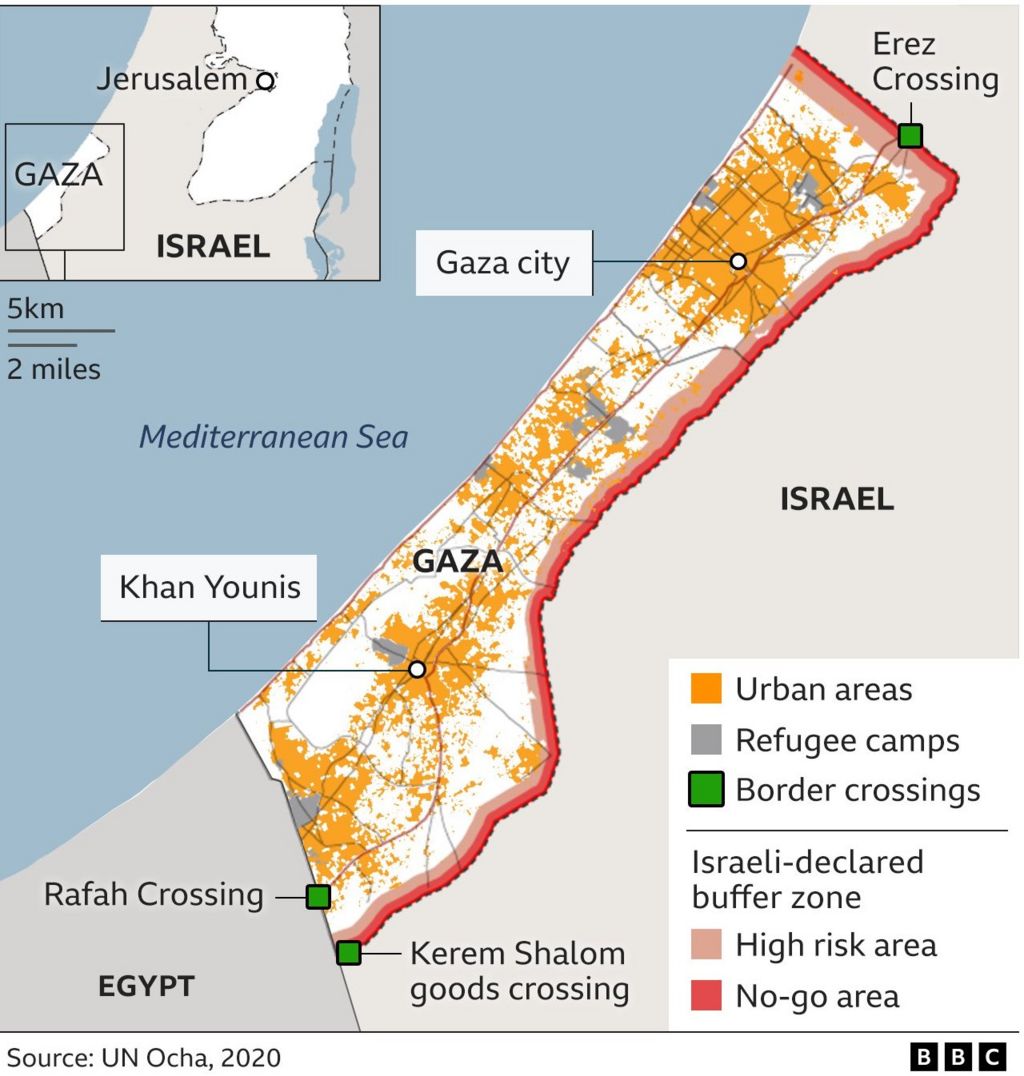
It is ruled by Hamas militants but Israel controls the airspace and its shoreline. It also restricts who and what goods can cross its borders.
Neighbouring Egypt strictly controls what or who can pass through its border with Gaza too.
Since the attacks began on Saturday morning, Israel has stopped all supplies entering Gaza, including food and medicine.
Stéphane Dujarric, spokesman for the UN secretary-general, said more than a dozen healthcare workers had been killed or injured and at least seven medical centres had been damaged.
Meanwhile, many people are currently without electricity and internet, and could soon be out of essential food and water supplies.
"Damage to water, sanitation and hygiene facilities has undermined services to more than 400,000 people," said Mr Dujarric.
"The Gaza Power Plant is now the only source of electricity and could run out of fuel within days."
He added that the World Food Programme was already distributing food for up to 100,000 internally displaced Palestinians and that these efforts would increase eight-fold in the coming days.
Even before the latest restrictions, residents of Gaza already faced widespread food insecurity, restrictions on movement and water shortages.
Juliet Touma, a spokeswoman for the United Nations' Palestinian refugee agency (UNRWA), told the BBC people in Gaza were "terrified" by the current situation and worried for their safety - as well as that of their children and families.
On Monday, Israel's Defence Minister Yoav Gallant said it would impose a "complete siege" on the territory.
"No electricity, no food, no water, no gas - it's all closed," he said, adding that "we are fighting animals and are acting accordingly."
The Israeli infrastructure minister later ordered the immediate cut-off of water supplies to Gaza, saying: "What was in the past will no longer be in the future."
In a statement released before those announcements, the Palestinian health ministry said hospitals were facing a shortage of medicines, medical supplies and fuel due to Israel's actions.
It called on international actors to urge Israel to "restart power lines" and to supply emergency needs in the form of medicine, fuel and power generators.
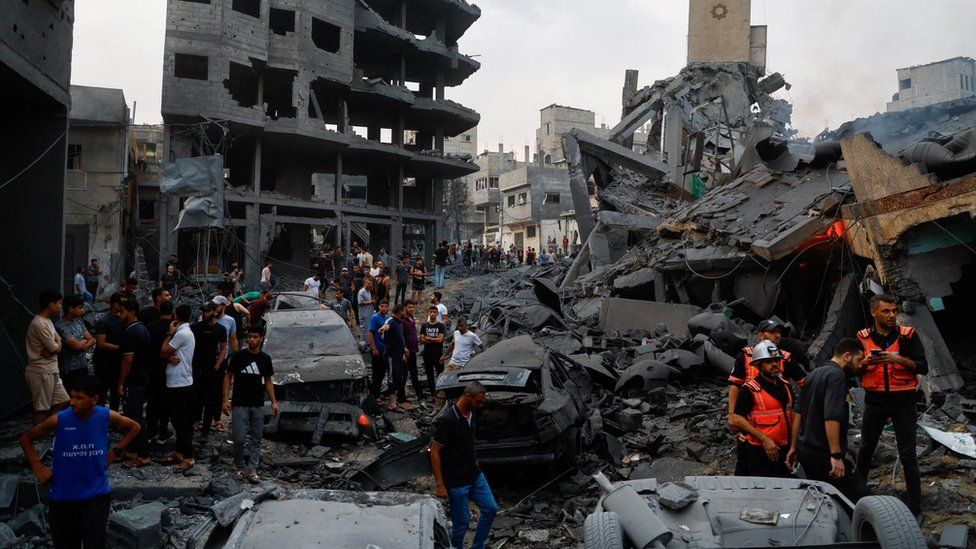
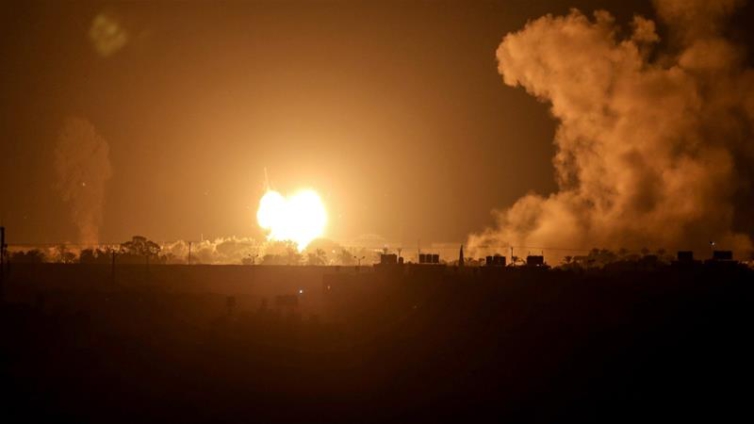
Israel has launched massive retaliatory air strikes into Gaza in recent days. Sunday night saw a particularly heavy barrage of strikes, potentially the biggest Gaza has experienced in years.
Some of the strikes targeted the border area in the east of Gaza, from where Hamas launched their attacks on Saturday morning. Israel appears to be targeting those areas to try and shore up security there.
There have also been reports from witnesses of Israel using artillery fire in the border area.
Israel said it is striking Hamas targets in Gaza, but there are reports of civilians being hit.
The Palestinian Ministry of Foreign affairs said two refugee camps in Gaza - Al-Shati (also known as the Beach camp) and Jabalia camps - were hit by Israeli airstrikes, reportedly leaving several injured and dead.
Video shared online from Jabalia showed widespread chaos, including a body being carried away and a man covered in blood and dust.
The foreign ministry also said air strikes hit a United Nations school in Gaza that was housing hundreds of civilians, including children and the elderly.
The UN confirmed the attack, saying the school was "severely damaged", but that no one was killed.
There have also been reports of a mosque, as well as homes, being hit.
According to Associated Press, 19 members of the same family were killed in a strike in Rafah, in the south of Gaza.
The UN said on Monday 123,538 people in Gaza have been internally displaced, mostly "due to fear, protection concerns and the destruction of their homes".
The Office for the Coordination of Humanitarian Affairs (OCHA) added that 73,000 people are sheltering in schools.
Latest Stories
-
Fire guts auto parts warehouse at Bubuashie, one fire officer injured
15 seconds -
I owe my victory to coach Ofori Asare – Allotey after winning WBA Africa Gold Super Flyweight belt
4 minutes -
Church of Pentecost supports over 2,000 BECE candidates in Obuasi with career guidance seminar
2 hours -
Brandon Asante and Coventry all but promoted to Premier League despite Sheffield Wednesday draw
2 hours -
GPL 2025/26: Late Kwartemaa strike downs Hearts in Tema
2 hours -
Ghana Faces Sierra Leone Moment as Prosecutorial Powers come under strain
2 hours -
Don’t consume fish or seafood from Tema Shipyard until further notice – FDA warns
2 hours -
Why volunteering might be Africa’s most underrated career accelerator
2 hours -
ActionAid Ghana raises concern over gender gaps in Feed Ghana Programme
3 hours -
Windstorm wreaks havoc in Gushegu, displacing nearly 2,000 residents and damaging schools
3 hours -
Friends of Bridget Bonnie Marks her 35th birthday with donation to Kasseh Model Health Centre
3 hours -
From Ekumfi Kokodo to the Pulpit Stage: Essi Donkor’s gospel journey takes shape
4 hours -
Landfilling waste management creates no value, it’s an economic waste
4 hours -
Photos: Speaker Bagbin Commissions MPs constituency office under parliamentary decentralisation programme
4 hours -
Black Stars technical advisor Winfried Schäfer sacked as GFA shakes up backroom staff
4 hours