

Audio By Carbonatix
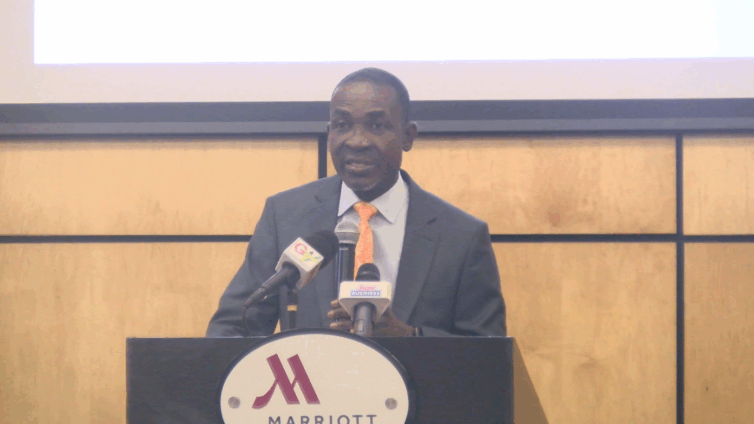
The Ghana Civil Aviation Authority (GCAA) says air ticket prices in Ghana are determined largely by market forces and not by the regulator.
Director General of the GCAA, Rev Stephen Wilfred Arthur, said that air ticket pricing in the domestic aviation industry is deregulated.
He said the regulator only has the mandate to intervene in cases of anti-competitive practices or price collusion.
“I must add my voice to that of the general public to indicate that indeed there have been varied concerns in terms of the level of the air ticket to various destinations, especially within our domestic space,” he said.
“But permit me to make this very fundamental statement: in our industry, the pricing of an air ticket is not fixed by the regulator, that is, the Ghana Civil Aviation Authority. The price of a ticket essentially is deregulated.”
According to Rev Arthur, “the market forces to a larger extent are determining the rate of the air ticket.”
He, however, said the GCAA can investigate and impose sanctions where airlines engage in anti-competitive practices or price collusion.
He also backed calls for more airlines to enter Ghana’s domestic aviation market, saying increased competition could help reduce fares.
“One of the cardinal factors to consider is to inject competition, because definitely when there are more players in the industry, or more airlines in the air transport space, definitely there will be more seats by way of capacity,” he said.
He added that competition could improve service quality while “pushing the airfare a bit downwards to be more affordable than we have it at the moment.”
Rev Arthur said the GCAA is ready to support prospective airlines through the regulatory process.
“Yeah, we are very much open, and we create a level playing field for all prospective applicants or airlines, without any discrimination,” he said.
But he stressed that safety and security would not be compromised to attract more operators.
“The greater burden is not so much on the regulator, but on the applicant to meet all the necessary requirements, because at all times we will never compromise on safety and security just for the sake of injecting the space with more players,” he said.
Rev Arthur also pointed to government’s withdrawal of import duties on aircraft spares as a measure that could help reduce operating costs for domestic airlines.
He said lower operating costs could eventually support meaningful reductions in airfares.
“We do appreciate that it is not the only reason. They have fuel, they have the leasing cost, but at least there is a demonstration on the part of government that something is being done,” he said.
He said the domestic market exists and could expand if fares become more affordable.
“If more players come on the scene, if fares go down, more people will be ready and willing, and can afford to, fly domestically,” he said.
Latest Stories
-
Ghanaian entrepreneur Mary Nyamekye Asamoah wins Africa Travel 100 award
2 minutes -
Obuasi SHTS abuse: Sanction all officials who failed to act – Moving Masculinity
7 minutes -
Lucy Agyepong honoured for excellence in engineering education at maiden GAAS Women’s Awards
10 minutes -
Harriet Afia Konadu Asiedu
17 minutes -
AFCON 2027: Sports Minister ‘convinced’ Black Stars will qualify despite losing opening two games
18 minutes -
CUTS welcomes VAT collection on cross-border digital services, urges fair treatment of Distance Learning students on overseas programmes
22 minutes -
Leave the Chiefs and fix the Galamsey Problem: Dr Solomon Owusu Advises President Mahama
25 minutes -
Pay attention to teachers and give them what is due – Ho District GNAT tells government
28 minutes -
Authorities knew of abuse allegations against Obuasi headmaster months before suspension – JoyNews investigation
33 minutes -
US teenager appears in court over alleged Hindu temple shooting plot
36 minutes -
Academic City donates paediatric rehabilitation staircase to Ga East Hospital
39 minutes -
Services drive 7.4% expansion in Ghana’s economic activity
51 minutes -
‘I don’t make music for awards, I make it to connect people’ – Rocky Dawuni
1 hour -
Farmer jailed for three months over assault on wife in viral video
1 hour -
Police arrest eight in Okaishie operation targeting illicit drugs and medicines
1 hour