

Audio By Carbonatix
Germany's coalition government has agreed on a new military service plan to boost troop numbers following months of wrangling between political forces.
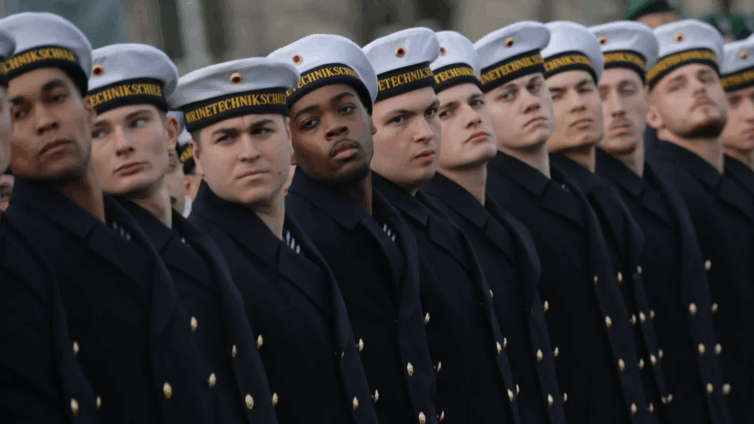
The new military service plan will mandate all 18-year-old men to fill out a questionnaire on their suitability to serve and, from 2027, to undergo medical screening.
The decision comes as Berlin aims to create Europe's strongest conventional army.
The boss of Germany's biggest defence firm, Rheinmetall, has told the BBC he believes that target could be met in five years.
Lawmakers are expected to vote on the plan by the end of 2025.
Armin Papperger said Chancellor Friedrich Merz's aim to boost the Bundeswehr was "realistic" and he told the BBC that "clear decisions" were coming from government.
Earlier this year German defence chief Gen Carsten Breuer warned that the Western Nato alliance had to prepare for a possible Russian attack within four years.
Mr Papperger said he had "no glass ball" about the future but agreed Germany had to be "ready in '29".
When they formed a coalition earlier this year, Merz's conservative CDU/CSU and the centre-left Social Democrat SPD agreed to re-introduce military service which would be voluntary "to start with".
The Bundeswehr currently has around 182,000 troops. The new military service model aims to increase that number by 20,000 over the next year, rising to between 255,000 and 260,000 over the next 10 years, supplemented by approximately 200,000 reservists.
From next year, all 18-year-old men and women will be sent a questionnaire to assess their interest and willingness to join the armed forces. It will be mandatory for men and voluntary for women.
From July 2027 all men aged 18 will also have to take a medical exam to assess their fitness for duty.
If the government's targets are not met, a form of compulsory enlistment could be considered by parliament. If war were to break out, the military would be able to draw on the questionnaires and medical exams for potential recruits.
Some within Germany's political left remain deeply opposed to mandatory service.
Many young Germans are wary, and a significant majority oppose it. A recent Forsa survey for Stern magazine suggestedthat while just over half of respondents favoured compulsory service, opposition rose to 63% among 18- to 29-year-olds.
"I don't want to go to war because I don't want to die or I don't want to be shot at," said Jimi, a 17-year-old student from Berlin, who attended an anti-conscription protest outside the Bundestag earlier this week. "I also don't want to shoot people."
An attack against Germany was an "unlikely and abstract scenario" that the government was using to legitimise "stealing millions of young people's right to decide what they should be doing", he said.
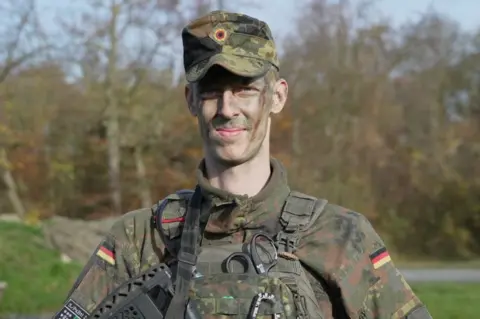
Meanwhile, 21-year-old Jason signed up as a new Bundeswehr recruit earlier this year because of the current "security situation".
"I wanted to contribute to defend peace, to defend democracy if the worst happens," he said. By joining up he felt he was "giving back to society" but also believed in the deterrent potential of the army, "so potential enemies don't even think about attacking you".
Defence Minister Boris Pistorius has sought to reassure Germans, saying that despite the new military service plan there was "no cause for concern... no reason for fear".
"The more capable of deterrence and defence our armed forces are, through armament through training and through personnel, the less likely it is that we will become a party to a conflict at all," Pistorius said.
Defence spending in Germany tumbled after the end of the Cold War, while conscription was suspended in 2011.
Given its past, Germany has long been shy of showing military might, but earlier this year Friedrich Merz announced that the rule for German defence "now has to be whatever it takes", following Russia's full-scale invasion of Ukraine.
Nato countries across Europe have come under pressure from President Donald Trump's White House to hike spending.
European moves to re-arm have meant significant revenue for Rheinmetall.
Its CEO, Armin Papperger, whose firm also supplies Ukraine, said: "We make a lot of money because there is a huge demand."
"We have to grow strong on vehicles, on ammunition, we have to have our own satellite competencies. We do much more on the electronics and artificial intelligence... than ever before," he said.
A US report last year suggested the Rheinmetall boss had been the target of a Russian assassination plot. There was no confirmation at the time, and Mr Papperger would not be drawn on the report, saying: "I feel good, I feel safe."
Asked about whether he felt Europe was in a state of cold or hybrid war, he said: "Whatever you call it, it's not a peaceful time."
Latest Stories
-
Man City suffer as PSG masterclass sets up Champions League win
1 hour -
Customer Service Africa CEO urges business leaders to observe staff and customer interactions
1 hour -
On night of mayhem for Liverpool, Barcola arrives in style
1 hour -
Muzic Mensah finds healing and renewed love in new single ‘WayƐ Late’
2 hours -
FIFA to offer extra £2.6bn for football development
2 hours -
Government backing is no EPA permit – Authority warns GoldBod, ministries
2 hours -
Real Madrid produce stunning late fightback to down Roma
2 hours -
EPA orders immediate halt to unpermitted reclamation and dredging nationwide
2 hours -
Afenyo-Markin’s lawsuit against Sammy Gyamfi takes focus away from development – Kpebu
2 hours -
FWSC urges media to guard against misinformation in proposed IPEC transition
2 hours -
MoMo Fest 2026: Shatta Wale to Rock Accra Stadium on October 17
2 hours -
GTEC’s letter directing public universities to reopen by October 16 is unprofessional – GAUA
3 hours -
Suspect in viral video assaulting wife jailed for 3 months
3 hours -
GAUA insists strike will end only after Fair Wages addresses market premium issue
3 hours -
Kpemka seeks compensation as he sues BOST over alleged unlawful termination
3 hours