

Audio By Carbonatix
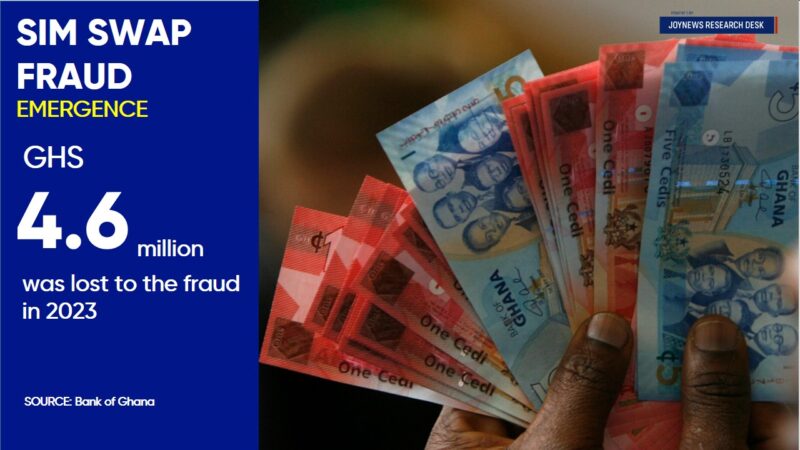
The Bank of Ghana has revealed a rapid emergence of SIM swap fraud targeting individuals with access to mobile banking channels. According to the apex bank, about GHȼ4.6 million was lost to this fraud in 2023, attributed to 15 recorded cases.

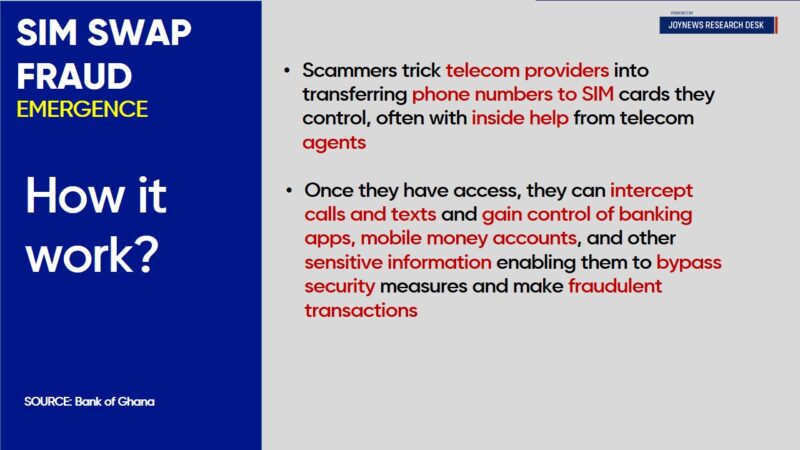
This type of fraud targets individuals with mobile banking access, including banking apps, WhatsApp banking, or any account linked to their mobile number. Scammers trick telecom providers into transferring victims' phone numbers to SIM cards they control, often with inside help from telecom agents.
Once they have access, they can intercept calls and texts and even gain control of banking apps, mobile money accounts, and other sensitive information, enabling them to bypass security measures and make fraudulent transactions.
Even in the event of cheque clearing, fraudsters can intercept mobile phone confirmations.
The threat extends beyond individuals to corporate institutions, where large sums of money can be stolen.
Ransford Nana Addo Junior, a Certified Fraud Examiner and Financial Crime & Fraud Lecturer at the National Banking College, says "It is not only individual accounts. When a SIM swap happens on corporate accounts, it's more dangerous. For instance, if the CFO of a hotel has his number swapped and a fraudulent transaction is initiated, the fraudsters will be the ones receiving the confirmation."
He also noted that SIM swap fraud extends beyond banking:
"It goes beyond just the mobile channels and even beyond banking. For instance, if somebody wants to intercept your medication information sent through SMS or your SSNIT records, it can be intercepted through SIM swap as well."
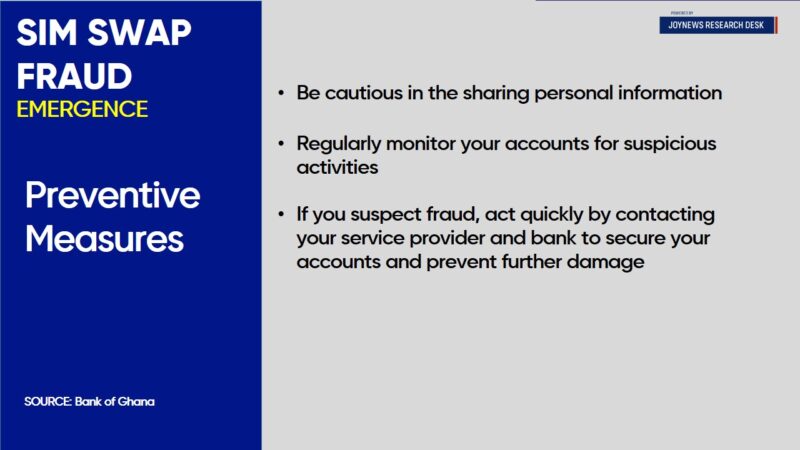
To protect yourself, be cautious in sharing personal information and regularly monitor your accounts for suspicious activities. If you suspect fraud, act quickly by contacting your service provider and bank to secure your accounts and prevent further damage.
For payment service providers, the Bank of Ghana has directed compliance with section 34(3)(a) and (b) of the Payment Systems and Services Act 2019 (Act 987). This requires the deactivation of a customer's electronic money account for two days when they swap or replace their SIM card. The account can be reactivated once the customer presents valid identification, mitigating SIM swap-related fraud.
Details of the report showed a 5% rise in the number of overall fraud cases reported leading to a loss of GHS 88 million in 2023.
Latest Stories
-
Todays Front pages: Monday, September 28, 2026
2 minutes -
WAFU B U-17 Girls Cup: Black Maidens finish tournament with 4-0 win over Cote d’Ivoire
7 minutes -
2026 Women’s Super Cup: FC Savannah to face Epiphany Warriors in final on September 29
21 minutes -
Ghana’s second chance: How President Mahama’s return offers historic opportunity for transformation
27 minutes -
AFCON 2027Q: Alexander Djiku ruled out of clash against Gambia
30 minutes -
RCI Immanuel Temple donates supplies to Motherly Love Orphanage
1 hour -
COCOBOD asks investors to fund cocoa purchases, but proceeds may also repay old debt
2 hours -
Gov’t hands over site for construction of 160-bed Savannah Regional Hospital
2 hours -
NCPTA clarifies GH¢200 cap on PTA dues and levies per parent
2 hours -
Asante Kotoko part ways with coach Eric Tinkler
2 hours -
GTA calls for ultra-modern Cocoa Museum in Western North
2 hours -
NPP says concerns over delegates’ register addressed ahead of October 3 polls
2 hours -
PwC Ghana appoints George Arhin as Country Senior Partner
2 hours -
New Economy will turn imports into opportunities for Ghanaian production – Ato Forson
2 hours -
Two Ada SHS students convicted, placed on 12-month good behaviour bond
2 hours