

Audio By Carbonatix
To bring quality healthcare closer to communities, the Ghana Health Service (GHS) is implementing a transformative initiative called the "Network of Practice." This initiative aims to enhance the existing Community-Based Health Planning and Services (CHPS) system by connecting health facilities at the sub-district level to a central health centre.
The goal is to improve access to quality healthcare while reducing the overcrowding burden on district hospitals.
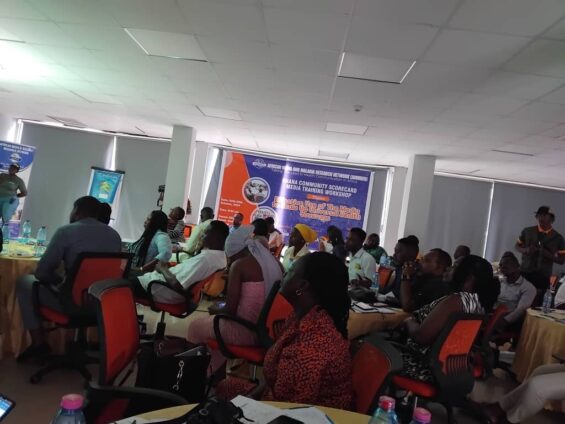
Dr Andrews Ayim, Deputy Director of Information, Monitoring, and Evaluation at GHS, shared insights about the Network of Practice during a recent workshop on the Community Scorecard, a program organized by the Africa Media and Malaria Research Network (AMMEREN), African Leaders Malaria Alliance (ALMA), and the Ministry of Health with funding support from Expertise France.
Addressing Healthcare Accessibility and Quality
Speaking on the urgent need to decentralize healthcare access, Dr Ayim explained that the CHPS compounds, which are the first points of healthcare for many, often have limited resources.

This can necessitate referrals to district hospitals for more complex cases, causing difficulties for patients, especially those with chronic conditions like hypertension. “An elderly patient with hypertension, for example, currently has to travel to the district hospital every month for medication refills. Through the Network of Practice, we aim to equip health centres at the sub-district level to provide these services, thus minimizing travel and ensuring patients have consistent access to care,” Dr Ayim remarked.
Under this system, each sub-district health facility will work in close coordination with a designated health centre that serves as a model. This model health centre will support nearby CHPS compounds with additional resources and expertise, ensuring a seamless transition of cases from CHPS compounds to the health centre and, if necessary, to district hospitals. Dr. Ayim emphasized that this will relieve pressure on district hospitals, which are often overcrowded, compromising the quality of care. “By empowering sub-district health centres, we can filter cases better, allowing district hospitals to focus on more severe cases while enhancing quality at every level,” he added.

Efficient Resource Sharing and Specialist Support
The Network of Practice, According to Dr Ayim also introduces a model of resource-sharing across facilities within the network. In situations where a particular facility has a specialist, their expertise can be extended to other connected facilities. “Even though we don’t have many specialists, the resources available within the network can be shared, enabling all facilities to benefit from the skills of these professionals,” Dr Ayim explained, stressing the importance of collaborative healthcare systems, especially in resource-limited settings.
Role of Journalists in Community Health Advocacy
The training workshop also underscored the role of journalists in bridging the gap between health systems and communities. Dr. Charity Binka, Executive Director of AMMEREN, highlighted that journalists play a crucial role in promoting universal health coverage, particularly as Ghana strives to meet its 2030 goal for health accessibility. “Journalists can bring balanced reporting that reflects both the communities' needs and the health systems’ challenges, fostering growth and improvement in healthcare delivery across Ghana,” Dr. Binka noted. She further urged journalists to avoid sensationalism and focus on stories that emphasize community health development.

The Community Scorecard Initiative
The Community Scorecard, which was a key focus of the workshop, allows communities to assess the performance of local health facilities, providing a direct feedback mechanism that the GHS can use to address shortcomings and improve services. “The scorecard offers a transparent, community-driven evaluation of health facilities, which journalists can report on to bridge understanding and encourage collaborative solutions,” Dr Ayim stated.
With such initiatives and the support of informed media reporting, Ghana is positioning itself to build a robust, community-centred healthcare system that improves lives at the grassroots. The introduction of the Network of Practice reflects GHS’s commitment to quality healthcare, and the active involvement of journalists promises to amplify its reach and impact across Ghana’s communities.

Latest Stories
-
Global InfoAnalytics poll puts John Boadu, Justin Kodua and Titus Glover ahead in NPP executive race
6 minutes -
Ghana to establish skills development university with $50m from German support package
12 minutes -
Baffour Awuah under EOCO investigation over alleged financial loss and money laundering – Deputy AG
18 minutes -
How healthy is Ghana’s health sector?
23 minutes -
HACSA Tech4Girls graduates 80 young women with digital and technology skills
24 minutes -
Arrest of Manhyia South MP should involve Parliament, not police station – Kpebu
56 minutes -
Two Nigerians sentenced to 189 months in US prison over $2.4m cyber fraud
1 hour -
Cristiano Ronaldo leaves Portugal’s training camp after rift with Head Coach
1 hour -
Ghana Energy Awards opens nominations for landmark 10th anniversary edition
1 hour -
Aayalolo contra-flow: Are we treating the symptom instead of the disease?
1 hour -
GTEC orders Colleges of Education to begin 2026/2027 admissions despite fees approval delay
1 hour -
Legal reforms must solve real problems, improve justice – Bagbin
2 hours -
Ofori-Sarpong named Alumni President of the Year, honoured for PRESEC dormitory project
2 hours -
Germany commits $132m to Ghana for skills development and training university – Pelpuo
2 hours -
‘Influence should go beyond visibility’ – Taadi Banyinba GH launches The TB Impact
2 hours