

Audio By Carbonatix
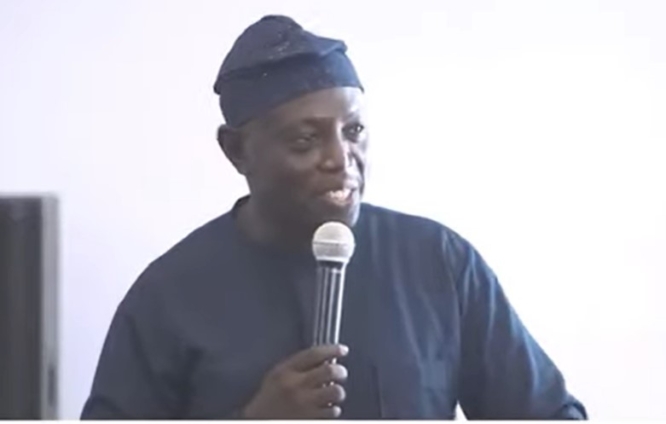
Associate Professor Isaac Boadi, Dean of the Faculty of Accounting and Finance at the University of Professional Studies, Accra (UPSA), has painted a sobering picture of Ghana’s fiscal landscape, characterising the nation's financial troubles not as a state of bankruptcy but as the result of massive systemic losses.
Speaking at a Tackling Tax Revenue Leakages in Ghana Forum organised by his faculty, Prof. Boadi argued strongly that the risks are dire if immediate yet bold actions are not taken to tackle tax revenue leakages in Ghana.
“Ghana is not broke. Ghana is bleeding,” he declared, pointing out that “This is not a political matter. It is not NDC versus NPP. It is Ghana versus corruption.”
According to Prof. Boadi, Ghana loses about GH₵9 billion annually due to a combination of corruption, tax evasion, and systemic smuggling across various sectors of the economy.
He stressed that these are not abstract figures but stark indicators of missed opportunities and human suffering.
“These figures are not just numbers,” he said. “They represent classrooms unbuilt, machines and medicines unavailable, and dreams deferred.”
Sector-by-Sector breakdown of fiscal leakages
Prof. Boadi outlined detailed estimates of losses across several critical sectors, citing credible sources:
- Tax Administration: An estimated GH₵3 billion is lost annually to illicit financial flows, largely through high-net-worth individuals and foreign companies exploiting legal loopholes (GRA estimates).
- Customs and Trade: The World Bank’s 2023 report highlights import-related corruption costing Ghana over GH₵550 million annually due to under-invoicing, especially in machinery and textiles.
- Gold Mining: Losses in 2022 alone were pegged at GH₵2 billion, with about 60% of small-scale mining operations evading taxes entirely.
- Oil and Gas: An estimated GH₵1.5 billion in unaccounted revenues linked to production-sharing agreements, as reported by OPEC.
- Cocoa Smuggling: Approximately GH₵150 million lost annually due to cross-border smuggling activities.
- Forestry: Illegal logging is estimated to cost GH₵250 million annually in unpaid timber royalties (Forestry Commission).
- Public Procurement: The Auditor-General’s reports indicate a loss of over GH₵170 million due to procurement inefficiencies and waste.
- Fertiliser Subsidy Programme: Roughly GH₵100 million is lost yearly to fertiliser smuggling under the Ministry of Food and Agriculture.
- Port and Harbours: Corruption at Ghana’s ports results in an estimated GH₵250 million loss annually through unpaid import duties.
- Informal Sector: With an estimated 80% of the workforce operating informally, Ghana loses an additional GH₵15.6 million annually in untapped tax revenue.
Root causes and consequences
Prof. Boadi identified four root causes fuelling the leakages: weak enforcement, outdated systems, institutionalised collusion, and lack of transparency.
He warned that if these are not addressed, Ghana risks deeper social and economic consequences, including deteriorating public services, rising youth unemployment, and a worsening debt crisis.
“The loopholes are being exploited, not just by petty criminals, but by powerful corporations and even officials benefiting from a broken system,” he said.
The way forward
In his closing remarks, Prof. Boadi urged all stakeholders—government, private sector, and citizens—to rise to the occasion.
He outlined four urgent interventions:
- Digitalisation of revenue collection systems – “We cannot tackle 21st-century challenges with 20th-century tools.”
- Strict sanctions for offenders – “Without consequences, corruption becomes profitable.”
- Transparency in public finance – “Every Ghanaian must be able to track how every cedi is raised and spent.”
- Formalisation of the informal sector – “Bringing more economic actors into the tax net is essential for inclusive development.”
He warned: “The data is clear. The victims are real. And the solutions demand courage—from all of us.”
Latest Stories
-
Journalists look back on a decade of breast cancer reporting in Ghana
21 minutes -
President Mahama ends Resetting Ghana tour of Ahafo Region
2 hours -
African negotiators seek delivery of climate commitments at COP31
2 hours -
BoG develops AI rules for financial sector
2 hours -
‘Big Push’: Government assures contractors of prompt payments
2 hours -
Court fines miner for breaking into gold buying shop
3 hours -
Tarkwa court jails labourer for three years over GH¢123,000 theft
3 hours -
GAEC must retain nuclear scientists for Ghana’s nuclear ambitions – Minister
4 hours -
Man reportedly mistaken for game and shot by hunter dead in forest
4 hours -
19-year-old mason jailed 15 years for defiling seven-year-old pupil
4 hours -
Ghana’s banking sector assets rise 20.47% to GH¢500.2bn – BoG Governor
4 hours -
22 injured as Sprinter bus overturns at Sege after tyre burst
4 hours -
UN housing expert urges Ghana to strengthen Rent Control Department amid housing affordability concerns
4 hours -
Delta-BCI partnership reaches 166,000 people with breast cancer education
4 hours -
Power restoration fault suspected in Kumasi Central Market fire
10 hours