

Audio By Carbonatix
The Executive Secretary of Ghana Grain Council says targeted investments by the government and private sector are needed to address Ghana’s 60 per cent rice importation concerns.
Emily Boahene said Ghana’s 60 per cent importation of rice made it vulnerable to global economic shocks, further threatening its food security.
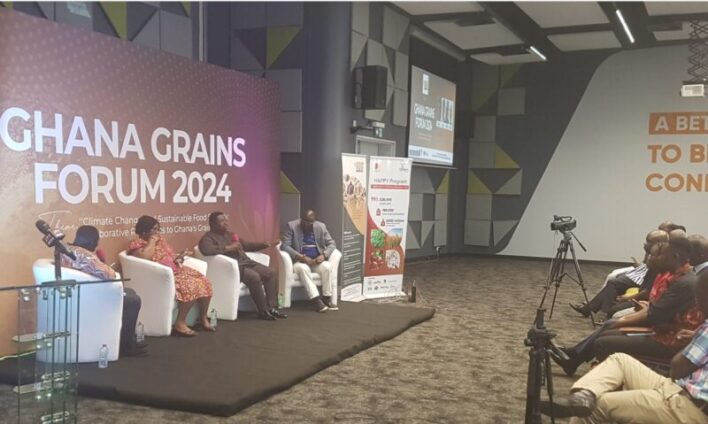
The Executive Secretary spoke at the Ghana Grains Forum held in Accra.
The 2024 edition was themed “Climate Change and Sustainable Food Security: Collaborative Responses to Ghana’s Grain Crises.”
The event underscored the prevailing national discourse on Ghana’s grain potential because of the dry spell in the northern part of the country.
Experts say the prevailing national crises could significantly affect Ghana’s grain supply, further worsening food security since grain is considered to be a major staple food for the country.
The Executive Secretary said targeted policies to reduce rice importation must prioritise investments in irrigation infrastructure, post-harvest management, and market linkages.
The targeted investments she noted could double Ghana’s rice yields from 1.2 metric tonnes to 4.8 metric tonnes annually.
She said although countries such as Nigeria and Ivory Coast had higher rice consumption than Ghana, they had low rice imports.
That, she said, was due to a robust local production mechanism by those countries.
The Executive Director stated that soyabeans, another grain, held the prospect of increasing Ghana’s export earnings and local production capacity.
She asserted that Ghana generated annual export earnings of $29 million through soybean exports.
Despite those achievements, she said Ghana lagged behind major soybean producers such as South Africa, Zambia, and Nigeria.
The Ghana Grain Forum also featured panel discussions, which comprised major players and experts within the grain industry space.
The panel, comprised of business owners and academics, called for a multi-sectoral and decentralised approach to enhance Ghana’s grain yields.
The experts held that a decentralised approach would promote the inclusion of local communities in the supply chain of grains at the community level, which could increase yields and promote employment.
They advised that the multi-sectoral approach must include key relevant institutions such as the Ministry of Transport, Ministry of Finance, Ministry of Works and Housing and academia.
Daniel Fahene Acquaye, Founder, Agri-Impact Limited, urged the government to explore innovative solutions to improve grain yields in the country.
The innovative solution, he said, must include the utilisation of research findings from academia on new seedlings.
Dr. Abu Sakara Forster, an agriculturalist, said interventions in the grain sector must be targeted at three key sectors, notably finance, technology, and marketing.
Latest Stories
-
Ghana explores centre of excellence for hearing, communication and cochlear implant care
11 minutes -
Schizophrenia-related disorders lead mental health cases recorded in Ghana
32 minutes -
Dutch authorities enlist Ghana in hunt for fugitive drug lord Bolle Jos
56 minutes -
Ghana housing finance conference adopts communiqué to improve affordable housing access
5 hours -
Special Initiatives Minister urges Wa Technical Institute to enrol more girls as EU-backed solar training lab opens
6 hours -
In the matter of my first year at the Bar
6 hours -
ActionAid Ghana calls for an end to child marriage, greater investment in girls’ rights
6 hours -
Newsfile to tackle World Cup visa scandal, beach demolitions, education strikes, BRICS bid
6 hours -
UK-Ghana Trade & Investment Summit: Trade Resource Centre to help businesses maximise UK-Ghana trade opportunities
7 hours -
Embassy of Denmark celebrates World Maritime Day
7 hours -
Linking LEAP to productive inclusion could cut extreme poverty by 2030 – UNICEF
8 hours -
Trade Ministry backs use of creative arts to rehabilitate prison inmates
8 hours -
Negotiations with government to continue despite strike suspension – GNAT
8 hours -
‘Ghana cannot afford to waste public resources; every cedi has a job’ – Ato Forson
8 hours -
Ghana expects economic boost as World Assemblies of God Congress brings 10,000 delegates to Accra
8 hours