

Audio By Carbonatix
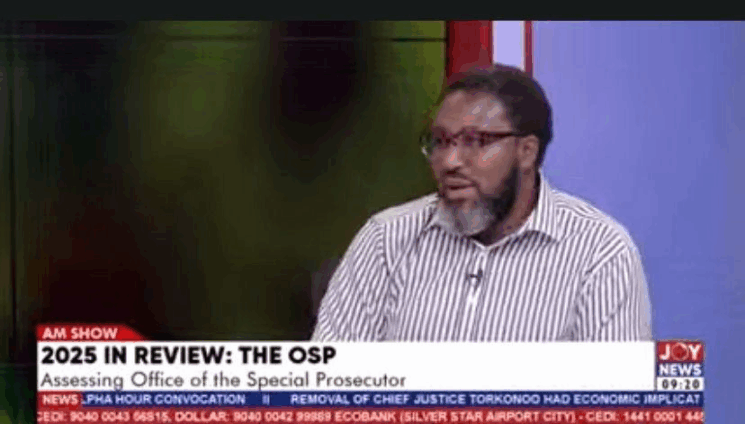
A Lawyer and Energy Expert, Lom–Nuku Ahlijah, has maintained that Ghana is not in the era of 'dumsor', despite occasional power outages experienced across parts of the country.
Speaking on JoyNews' AM Show, Mr. Ahlijah said 2025 has generally been a good year for Ghana’s energy industry, particularly in the areas of power, oil, and gas.
According to him, the relative stability in the sector has positively impacted electricity tariffs, as well as the various cost components that go into tariff determination, including fuel and petroleum prices on the global market.
He noted that, while there is still room for improvement, the country has not experienced any major disruptions in power supply this year, adding that this reflects positively on the performance of the current government in managing the energy sector.
Touching on Ghana’s energy sector debt, Mr Lom-Nuku acknowledged that the country is grappling with significant legacy debts, which cannot be resolved overnight.
He explained that clearing these debts requires deep structural reforms, a process that is currently being discussed between the government and the International Monetary Fund (IMF).
He further explained that Independent Power Producers (IPPs) have existing contracts with the Electricity Company of Ghana (ECG) and have continued to supply power, especially during periods when gas supply is unavailable.
However, he said this comes at a high cost, as ECG is forced to rely on liquid fuels, which are far more expensive than gas. These additional costs, he stressed, ultimately fall on the government.
According to Mr. Ahlijah, the government has proposed in the 2026 Budget Statement the establishment of a new gas processing facility to ensure a cheaper fuel supply for thermal plants in the long term.
He also welcomed the government's claims of saving about 300 million dollars through the renegotiation of power contracts, explaining that this means the financial impact of the renegotiated agreements has been properly quantified.
He noted that without the renegotiation, the State would have been required to pay that amount under existing contracts, but the new terms have created some fiscal space and eased pressure on government finances.
Despite these gains, Lom-Nuku emphasised that sustained reforms and prudent management remain critical to ensuring long-term stability in the energy sector.
Latest Stories
-
MPs, CSOs push for dedicated budget line for malaria
14 seconds -
Jeffrey Nortey’s viral Kanayo O. Kanayo bar gets the legend’s attention, leads to a meet-up
2 minutes -
Bagre Dam’s Annual Floods: Scientists seek a lasting solution as Northern Ghana’s farmers count the cost
2 minutes -
Why Corporate Communications Professionals Must Be Marketing-Oriented: The strategic advantage and the professional mileage
13 minutes -
DVLA hands 357 suspected cloned vehicles to GRA over customs duties
13 minutes -
Appeals will not end strike, FWSC must negotiate – GAUA General Secretary
20 minutes -
Haruna Iddrisu hails Ghana’s academic calendar as best in a decade
21 minutes -
Silent Football: A team, a dream, a $24,000 debt – the struggles of Ghana’s deaf footballers
21 minutes -
Education Minister Haruna Iddrisu demands merit-based admissions, appointments at Defence University
24 minutes -
National Defence University to strengthen Ghana’s response to emerging security threats – Haruna Iddrisu
27 minutes -
Pupil arrested after two teachers shot at French school
34 minutes -
Lamisi takes ‘Let Us Clap’ tour across five countries and 18 dates
51 minutes -
DVLA cuts roadworthy contract cost from $155.4m to GH¢2m – CEO
53 minutes -
Okyeame Kwame calls for free university education for farmers’ children
56 minutes -
Black Stars: Two decades of coaching triumphs and turmoil (2006–2026)
1 hour