

Audio By Carbonatix
Ghana’s weak downstream oil sector ranks it 5th out of 19 Sub Saharan African countries, according to Fitch Solutions Downstream Oil & Gas Risk/Reward Index.
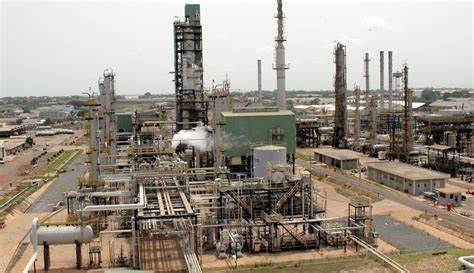
The nation is also ranked 57th globally out of 92 nations as its Petroleum Hub Development project has been described as overambitious.
“Although it [Ghana] scores slightly higher than the regional average, Ghana’s limited refining capacity and low utilisation rates, combined with its under-developed regulatory framework, mark it as an unattractive area for private investment.”
“However, if the necessary funding for the Petroleum Hub Development can be obtained, the project offers significant upside to Ghana’s RRI [Risk Reward Index] position and the future of its downstream sector”, it pointed out.
In October last year, parliament passed the Petroleum Hub Development Corporation Bill, which seeks to establish the Petroleum Hub Development Corporation and subsequently fuel the growth of the country’s downstream sector.
The integrated petroleum hub that will be built in Bonyere in Western Region will be constructed in three phases and is expected to be completed by 2030.
It is proposed to incorporate four refineries, crude oil storage tanks and two petrochemical plants.
But Fitch Solutions considers the project as a high risk given the existing dynamics across the nation’s downstream sector, citing Tema Oil Refinery as an example. A weakness is its limited projected growth in demand of its refined fuels.
Nonetheless, the Energy Ministry expects the three-phase project to attract total investments of about $60 billion with $12 billion needed to fund the first phase.
Each refinery is estimated to cost $5.4 billion, and the first phase is expected to construct 350,000 barrels of oil per day of refining capacity.
By November 2020, the Ministry had reportedly shortlisted three bids for the project, where one investor pledged $15 billion to fund the storage element of the project. The Energy Ministry expects that 90% of funding will come from the private sector and the remaining 10% from the government.
Latest Stories
-
GTA sensitises taxi drivers in ‘Know Ghana’ tourism campaign
11 minutes -
Archbishop Agyinasare calls for responsible speech amid growing social media abuse
15 minutes -
‘It will be inexcusable for gov’t not to honour payment of teachers’ arrears by 30th October’ – Haruna Iddrisu
24 minutes -
Forbes’ World’s Best Employers 2026: No Ghanaian firm ranked among 900 companies
26 minutes -
Electronic processing of teachers’ data: ‘The decision is the Controller’s’ – GES boss
30 minutes -
Teachers’ Strike: Haruna Iddrisu questions paper-based processing of promoted teachers’ data
43 minutes -
Teachers’ strike: GES targets Monday deadline to submit promotion data to Controller
51 minutes -
Inflation to average 11.3% in 2027 – Fitch Solutions
1 hour -
I didn’t campaign for NDC to come and do this nonsense – Kpebu on EOCO
1 hour -
Fitch Solutions maintains policy rate forecast of 14% by December 2026
1 hour -
Diaspora Nasara Caucus congratulates Mohammed Ali Suraj, new NPP executives
3 hours -
Dr Antwi-Boasiako’s cybersecurity book showcased at UN crime prevention congress
3 hours -
We will empower the grassroots and protect every vote – NPP’s 1st Vice Chair Kojo Bamba
3 hours -
I do not see myself as better than anyone – NPP’s 1st Vice Chair Kojo Bamba
4 hours -
Police blur the line between invitations and arrests – Reindorf Twumasi Ankrah
4 hours