

Audio By Carbonatix
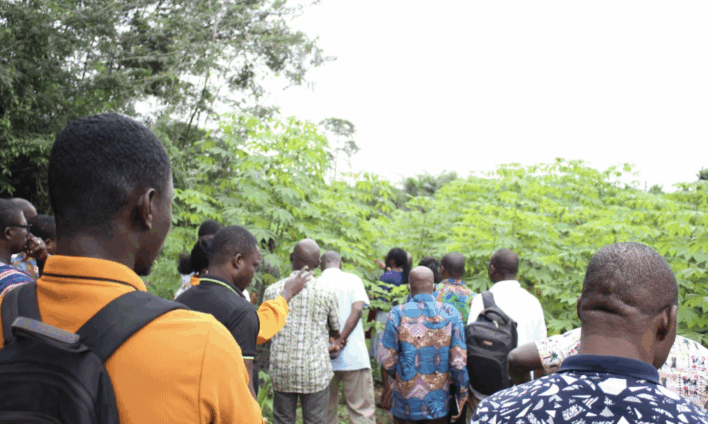
The Central and West African Virus Epidemiology (WAVE) project, under the Council for Scientific and Industrial Research (CSIR) Crop Research Institute, has organised a training to equip agricultural officers with skills to monitor cassava viral diseases.
The workshop which was held in Somanya in the Yilo Krobo Municipality, targeted agricultural Directors and Extension Officers from 10 districts and municipalities.
These included Yilo Krobo, Upper Manya Krobo, Okere, Akuapim North, Akuapim South, North Tongu, South Tongu, Akatsi South, Shai Osudoku, and Ada West.
Addressing participants, Dr Allen Oppong, the Principal Research Scientist at CSIR and Country Director of WAVE Ghana, explained that the training was to strengthen surveillance systems by improving early detection and reporting, to prevent disease spread and protect farmer livelihoods.
The WAVE initiative operates in 10 African countries, including Nigeria, Benin, Togo, Cameroon, Ghana, Congo, Gabon, Burkina Faso, Sierra Leone, and Côte d’Ivoire, with its headquarters in Abidjan.
Dr Oppong stated that cassava was one of Africa’s most important food security and industrial crops, but its productivity was constantly threatened by viral diseases.
“Our goal is to improve cassava productivity by addressing viral diseases that impede yields. By training officers to collect accurate data, we can quickly detect emerging diseases, prevent outbreaks, and safeguard both farmers’ incomes and national food security,” he said.
He highlighted two major cassava diseases: Cassava Mosaic Disease (CMD) and Cassava Brown Streak Disease (CBSD).
He explained that CMD was already widespread in Ghana and across West Africa, while CBSD, though not yet present in the sub-region, had been spreading from Central and East Africa.
“The cassava mosaic virus attacks the leaves, reducing photosynthesis and eventually affecting tuber development, which leads to reduced yields.
On the other hand, cassava brown streak disease destroys the tuber itself, making it completely inedible. If we fail to take proactive measures, we may even be forced to import cassava into Ghana,” he warned.
Dr Oppong said cassava was more than food, citing the staple crop as an industrial and economic powerhouse, adding that protecting it from viral diseases was like protecting Ghana’s future.
Mr Yaw Boateng, the North Tongu District Director of Agriculture, stressed the devastating impact of CMD on yields.
“If a farmer is expecting 30 tons of cassava per acre, the disease can slash that by 70 per cent which is a serious threat to food security and farmers’ income,” he said.
He said data collection tools such as Kobo Collect would be used to monitor and report field cases, helping researchers develop more resistant cassava varieties.
Mr Boateng also reminded participants that cassava was not only a staple food but also a major industrial crop, used in producing ethanol, biofuel, starch, adhesives, pharmaceuticals, alcohol, paper, and textiles.
He cited the Syno Hydro company in North Tongu, which processed cassava into ethanol, as an example of the crop’s economic potential.
Ms Akosua Bonsu, the Shai Osudoku District Agriculture Director, said cassava had become a “cash crop” in its own right.
“For too long, cocoa has been the centre of attention as Ghana’s leading cash crop. But cassava offers immense economic opportunities,” she stated.
She said even the water drained from cassava dough could kill weeds, suggesting untapped potential for new products.
“It is time for the government and the Ministry of Food and Agriculture to prioritise cassava research and development,” Ms Bonsu said.
Participants said the workshop underscored that, while cassava was resilient and versatile, and its future depended on timely disease detection, effective farmer education, and strong policy support.
Stakeholders warned that delays in tackling viral diseases could erode food security, cut farmer incomes, and undermine Ghana’s agro-industrial ambitions.
Latest Stories
-
Haruna Iddrisu calls for limits on annual university accommodation fee increases
27 minutes -
Today’s front pages: Tuesday, October 13, 2026
1 hour -
Wealth Over Water: How Galamsey Is Threatening Ghana’s Water Security
2 hours -
LA 2028: Black Queens pumped up for second leg of Mauritius tie
2 hours -
LA 2028: Black Queens hold final training session ahead of second leg against Mauritius
3 hours -
Standards are not Seasonal: What the EC appointments teach both sides
3 hours -
King Mohammed VI urges private sector to create youth jobs and spread benefits of growth
3 hours -
KGL U17 Colts 2026: Greater Accra win title after penalties win over Western Region
3 hours -
UK Investment Roadshow opens in London to advance UK-Ghana growth partnership
3 hours -
Assemblies of God requires pastors to resign before entering partisan politics – Rev. Wengam
3 hours -
Ghana targets 20% annual reduction in maternal deaths – Health Minister
3 hours -
Cyber attacks in Africa grow faster than global rate, report finds
3 hours -
Ghana signs UAE deal to create 5,000 overseas jobs
3 hours -
One Million Coders Programme targets 100,000 digital jobs in two years – Sam George
3 hours -
John Jinapor, Italian Ambassador explore opportunities for energy sector investment
3 hours