

Audio By Carbonatix
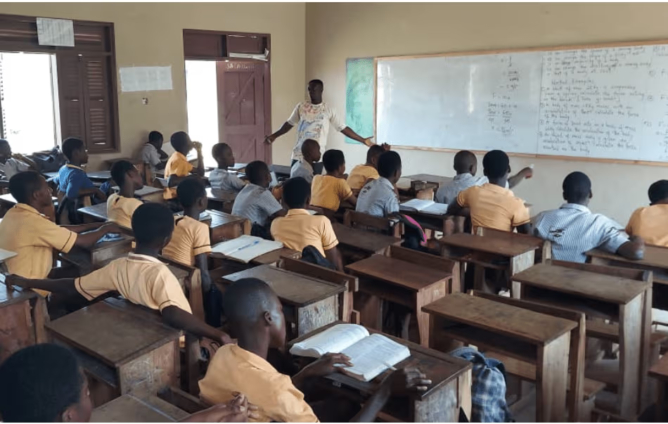
Every morning, teachers across Ghana enter classrooms with one main task: helping children learn. But as education demands change, teachers are expected to do more, use better teaching methods, support children with different learning needs and continue improving their skills.
A new study has found that many Ghanaian teachers are willing to take part in professional training, but challenges including cost, timing and access are making it difficult for some to benefit fully.
The study, titled “Teacher Professionalism and Professional Practice in Ghana: Baseline Evidence,” was published in the Journal of Applied Social Sciences and Entrepreneurship Education, Volume 1, Issue 1, pages 87–112.
The research was led by Prof Isaac Boateng, Pro Vice-Chancellor of the University of Skills Training and Entrepreneurial Development (USTED), together with Christian Addai-Poku and Bernard Kuug of the National Teaching Council, Prince Gyimah, Edwards Alexander Kyei of the University of Education, Winneba, and Joseph Nkyi-Asamoah of Offinso College of Education.
The study involved 4,645 in-service teachers from across Ghana and examined how teachers view professional development, their classroom practices and the factors that influence their work.
It comes at a time when Ghana is implementing major education reforms aimed at improving teaching quality through the National Teachers’ Standards, teacher licensing and mandatory Continuous Professional Development (CPD) programmes.
The findings provide a positive picture of Ghanaian teachers. More than 92 per cent of teachers surveyed said professional development programmes were helpful or very helpful to their work.
Many teachers said the training improved their classroom management, teaching methods and confidence in handling learners.
The study also found that teachers have a strong sense of pride in their profession.
Nearly 95 per cent said they were proud to be teachers, while almost all respondents agreed that teachers should serve as role models for children.
More than 94 per cent said they take part in lifelong learning activities to improve their knowledge and teaching skills. For parents, the findings offer some encouraging signs about what happens inside Ghanaian classrooms.
The research found that many teachers are paying attention to the different needs of learners. About seven out of ten teachers said they consider gender differences when preparing lessons, while around two-thirds said they support children with special educational needs.
More than 95 per cent said they understood the laws and ethical standards guiding the teaching profession.
Teachers also reported strong links with families and communities. More than nine out of ten respondents said they take part in Parent Association meetings, while almost all said they involve parents in supporting children’s education. However, the study also highlights challenges that could slow efforts to improve teaching quality.
Although teachers value professional training, many say accessing it is not always easy. Nearly one-third of respondents described CPD activities as time-consuming. About three in ten said the programmes were expensive, while one in five said they were not easily accessible.
The challenge is likely to be greater for teachers working in rural communities. About 68 per cent of the teachers who took part in the study worked in rural areas.
For some teachers outside major towns and cities, attending training can mean travelling long distances, spending money on transport and leaving their classrooms for some time.
The researchers say this raises an important question for Ghana’s education system because if teachers are expected to keep improving, how can professional training be made easier, cheaper and more practical for everyone?
Making teacher training work better
The study recommends changes in how teacher professional development is planned and delivered. The researchers say the Ministry of Education, through the National Teaching Council, should strengthen the practical implementation of the National Teachers’ Standards.
Although many teachers know about the standards, the study found that awareness alone does not always lead to better classroom practice.
The researchers say teachers need more support to apply these standards in areas such as lesson delivery, classroom management, assessment, supporting learners with different needs and working with parents.
The study also calls for Continuous Professional Development programmes to become more affordable, accessible and closely linked to classroom realities.
Prof. Boateng and his team say training should focus more on practical issues teachers face every day, including teaching methods, managing classrooms, assessing learners and supporting inclusive education.
Another concern raised by the study is the timing of training programmes. School-Based In-Service Education and Training (INSET) is one of the most common forms of professional development among teachers in Ghana.
The research found that while INSET helps strengthen teachers’ professionalism, frequent training sessions during school terms may affect teaching time.
The researchers say the issue is not whether teachers should receive training, but how the training is organised.
They recommend that more INSET activities should take place during school vacations or be carefully scheduled to avoid reducing the time teachers spend with pupils.
Learning from each other
The study also highlights the importance of Professional Learning Communities, where teachers learn from one another, share experiences and discuss classroom challenges.
The researchers say these platforms can help teachers translate professional standards into everyday classroom practice.
They argue that teacher development should not depend only on workshops and seminars but should also include regular collaboration among teachers within schools.
The study further points out that teachers do not all face the same challenges. A teacher in a rural basic school may have different needs from a teacher in an urban senior high school or a technical and vocational institution.
The researchers found that factors such as school location, teaching level, years of experience, professional rank and family responsibilities were linked to differences in teacher professionalism and classroom practice.
They therefore recommend targeted support for teachers in different situations, especially those working in rural communities and those at different stages of their careers.
Qualifications alone are not enough.
The research also challenges the belief that higher qualifications automatically lead to better teaching. It found that teachers with higher academic qualifications did not always show stronger professional attitudes or better classroom practices than teachers with lower qualifications.
The study also found that moving to higher professional positions did not automatically mean stronger commitment to teaching. The researchers say improving education quality requires more than certificates and promotions.
Teachers also need practical support, mentoring and opportunities to apply what they learn in real classrooms.
A challenge for Ghana’s education reforms
The researchers acknowledge some limitations of the study. Because the survey was conducted online through platforms including Google Forms and SurveyMonkey, teachers with limited internet access may have been less likely to participate.
The findings should therefore not be seen as a complete picture of every teacher in Ghana. However, the study provides important evidence about how teachers view their profession and the support they need.
It indicated that Ghanaian teachers are willing to improve, but they need a system that makes professional learning easier.
For millions of children across the country, improving education will depend not only on what teachers are expected to do, but also on the support they receive to do their work better.
Latest Stories
-
Let The Constitution direct Chieftaincy to deliver “All Development Is Local”
55 minutes -
John Jinapor outlines renewable energy, nuclear power priorities for 2027
1 hour -
Ghana explores centre of excellence for hearing, communication and cochlear implant care
2 hours -
Schizophrenia-related disorders lead mental health cases recorded in Ghana
3 hours -
Dutch authorities enlist Ghana in hunt for fugitive drug lord Bolle Jos
3 hours -
Ghana housing finance conference adopts communiqué to improve affordable housing access
7 hours -
Special Initiatives Minister urges Wa Technical Institute to enrol more girls as EU-backed solar training lab opens
8 hours -
In the matter of my first year at the Bar
8 hours -
ActionAid Ghana calls for an end to child marriage, greater investment in girls’ rights
8 hours -
Newsfile to tackle World Cup visa scandal, beach demolitions, education strikes, BRICS bid
9 hours -
UK-Ghana Trade & Investment Summit: Trade Resource Centre to help businesses maximise UK-Ghana trade opportunities
9 hours -
Embassy of Denmark celebrates World Maritime Day
9 hours -
Linking LEAP to productive inclusion could cut extreme poverty by 2030 – UNICEF
10 hours -
Trade Ministry backs use of creative arts to rehabilitate prison inmates
10 hours -
Negotiations with government to continue despite strike suspension – GNAT
10 hours