

Audio By Carbonatix
Ghana is set to resume the payment of debt it owes to Eurobond holders in about two weeks, having completed its $13 billion external debt exchange programme.
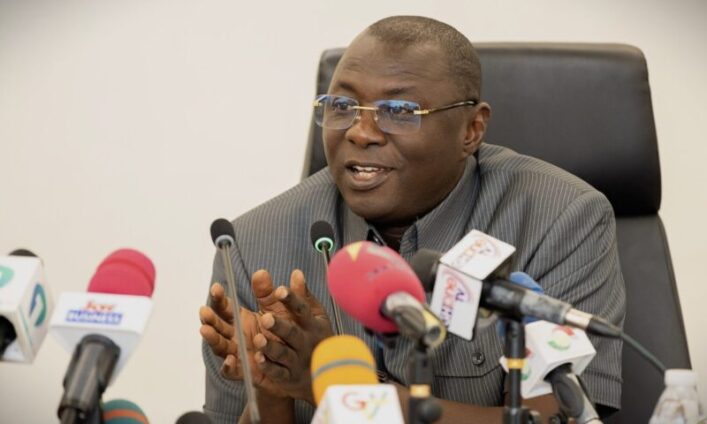
Meanwhile, the repayment of debt owed to the Official Bilateral Creditors has been postponed to 2028, Dr Mohammed Amin Adam, Finance Minister, announced at a press in Accra on Thursday, October 3.
“By the 98 per cent we’ve achieved, we’ve all consented to the exchange, but the actual exchange will take place over the next two weeks, and once we exchange, it means that we can start servicing our debts,” he said.
“We’ll not service at the levels we’d have done because of the reduction in the interest rate and principal… with the Official Bilateral Creditors, the servicing of the debt has been postponed until after 2028,” he added.
The Finance Minister stated that the government was building enough buffer for the repayment of the country’s debt, by growing the Sinking Fund and increasing revenue to Gross Domestic Product (GDP) to 18 per cent.
“With increased revenue, our capacity to pay back our debts is going to be enhanced, and we’re taking the proposed amendments to Cabinet for Parliament for amendments to the Fiscal Responsibility Act, which limits our debt,” he said.
Dr Amin Adam noted that the completion of both the Domestic Debt Exchange Programme (DDEP), and external debt, including the Eurobond exchange, would provide relief to the country, making its debt sustainable.
That, he said, would enhance the performance of the cedi against its major trading currencies, particularly the Dollar, lead to a credit rating upgrade, and boost investor confidence in the country.
“With this development, Ghana is likely to get positive upgrades, and when you get upgrades, the international community and investor confidence in your economy increases,” he said.
“So, investors will come in more than they’ve done over the last two years to invest in your economy, and when they’re coming, they’re bringing in forex, which then strengthens your currency,” he echoed.
Ghana suspended all of its debt service payments for some of its external debt, including Eurobonds, commercial term loans, and bilateral debts in December 2022, as part of a restructuring process.
It was an emergency measure to prevent a further deterioration in the economic, financial, and social situation in the country, as the government engaged the International Monetary Fund (IMF) for a US$3 billion loan-supported programme.
The three-year Extended Credit Facility was aimed at restoring macroeconomic stability and ensuring debt sustainability, caused by large external shocks and pre-existing fiscal and debt vulnerabilities.
Latest Stories
-
Ghana at the heart of global PR excellence
4 minutes -
Ghana Institute of Architects clarifies position on ARC-ASG dispute amid ongoing case
5 minutes -
NDC supporters storm Fomena constituency office over alleged disqualification of chairman aspirant
8 minutes -
NPA CEO assures tanker drivers of action on welfare concerns
9 minutes -
Karpowership seeks contract extension as Ghana’s power demand grows
11 minutes -
Gender Ministry inaugurates committee to drive early childhood development
13 minutes -
Four Schools, One Crown: Prempeh, Corpus Christi, Mfantsipim and St Augustine’s battle for NIQ trophy
14 minutes -
HIV status cannot be used to deny employment under Ghana law – Ghana AIDS Commission
15 minutes -
Buffer Stock calls for expansion of national storage capacity as it falls below 50,000 metric tonnes
16 minutes -
Central Regional Minister urges use of religious platforms to change environmental, sanitation practices
38 minutes -
Henry Kweku Banning
39 minutes -
Execution of US murderer Christa Pike halted an hour before it was due to happen
41 minutes -
GoldBod generates US$1.87bn in FX in September, exceeds monthly target
44 minutes -
SOE comments controversy: ‘We must never abandon our humanity because of judicial office’ – CJ
54 minutes -
Samuel Kojo Brace declares intention to contest NPP parliamentary primary in Ahanta West
55 minutes