

Audio By Carbonatix
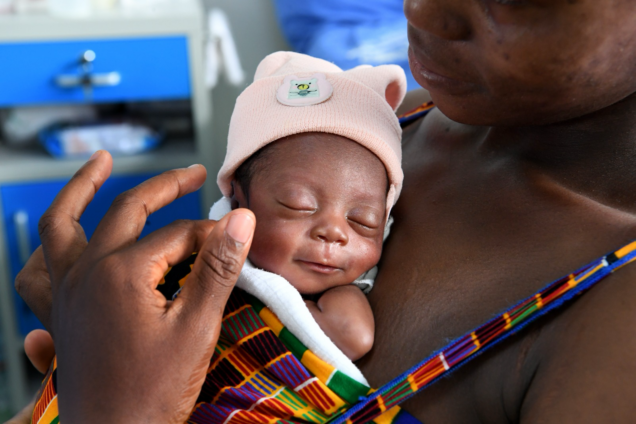
In 2023, the global number of children dying before their fifth birthday decreased to 4.8 million, while the number of stillbirths slightly decreased, staying around 1.9 million, as revealed in two new reports from the United Nations Inter-agency Group for Child Mortality Estimation (UN IGME).
According to the reports, since 2000, child deaths have been reduced by more than half, and stillbirths have fallen by over a third, driven by continued global investments in child survival.
In 2022, the world achieved a milestone with child deaths dropping slightly below five million for the first time. However, progress has slowed, and far too many children continue to die from preventable causes, the report indicated.
Recent announcements of significant aid cuts from major donors have been recognized as a major setback to the progress made over the past decades in child survival programs.
Experts warn that these reductions are resulting in shortages of healthcare workers, the closure of clinics, disruptions to vaccination campaigns, and a lack of crucial supplies such as malaria treatments and monitoring systems, all of which make it harder to reach the most vulnerable children, according to the Inter-agency Group.
Even prior to the current funding crisis, data showed that progress in child survival had already decelerated. Since 2015, the annual rate of decline in under-five mortality has slowed by 42%, and the reduction in stillbirths has decreased by 53%, compared to the period from 2000 to 2015.
Nearly half of under-five deaths occur within the first month of life, primarily due to premature birth and complications during labor.
After the newborn period, infectious diseases—such as pneumonia, malaria, and diarrhoea—remain the leading causes of preventable child deaths.
Additionally, 45% of late stillbirths happen during labor, often as a result of maternal infections, prolonged or obstructed labor, and a lack of timely medical intervention.
According to the reports, improving access to quality maternal, newborn, and child healthcare across all levels of the health system will save many more lives.
This includes promoting and providing preventive care in communities, ensuring timely visits to health facilities and professionals at birth, delivering high-quality antenatal and postnatal care, offering well-child preventive services such as routine vaccinations and comprehensive nutrition programs, diagnosing and treating common childhood illnesses, and providing specialized care for small and sick newborns.
The reports also highlight that a child's place of birth significantly impacts their chances of survival. For instance, the risk of dying before the age of five is 80 times higher in the highest-mortality country compared to the lowest-mortality country.
Additionally, a child born in sub-Saharan Africa is, on average, 18 times more likely to die before age five than one born in Australia or New Zealand. Within countries, the poorest children, those living in rural areas, and those with less-educated mothers face higher risks.
Stillbirth disparities are similarly stark, with nearly 80% of stillbirths occurring in sub-Saharan Africa and Southern Asia, where women are six to eight times more likely to experience a stillbirth than women in Europe or North America.
Women in low-income countries are also eight times more likely to experience a stillbirth than those in high-income countries.
UNICEF Executive Director Catherine Russell stated that millions of children are alive today thanks to the global commitment to proven interventions, including vaccines, nutrition, and access to safe water and basic sanitation.
Catherine said bringing preventable child deaths to a record low is a remarkable achievement. “But without the right policy choices and adequate investment, we risk reversing these hard-earned gains, with millions more children dying from preventable causes. We cannot allow that to happen.”
Director-General of the World Health Organization, Tedros Adhanom Ghebreyesus, emphasized that by addressing issues like malaria, preventing stillbirths, and ensuring evidence-based care for the smallest babies, we can make a significant difference for millions of families.
“In the face of global funding cuts, there is a need more than ever to step up collaboration to protect and improve children’s health.”
World Bank Global Director for Health and Director of the Global Financing Facility, Juan Pablo Uribe, indicated that most preventable child deaths occur in low-income countries, where essential services, vaccines, and treatments are often inaccessible.
Juan said investing in children's health ensures their survival, education, and future contributions to the workforce.
“With strategic investments and strong political will, we can continue to reduce child mortality, unlocking economic growth and employment opportunities that benefit the entire world.”
According to the UN DESA Under-Secretary-General, Li Junhua, disparities in child mortality across and within nations remain one of the greatest challenges facing the world.
“Reducing such differences is not just a moral imperative but also a fundamental step towards sustainable development and global equity. Every child deserves a fair chance at life, and it is our collective responsibility to ensure that no child is left behind.”
UN IGME members are urging governments, donors, and partners from both the private and public sectors to safeguard the hard-won progress in saving children's lives and to accelerate efforts.
Increased investments, service integration, and innovations are urgently needed to expand access to proven life-saving health, nutrition, and social protection services for children and pregnant mothers.
The two reports—Levels & Trends in Child Mortality and Counting Every Stillbirth—are the first in a series of crucial global data sets being released in 2025.
Latest Stories
-
President Mahama is not sincere with Ghanaians on LGBTQ bill matter – Hassan Tampuli
15 minutes -
Gov’t to establish Prison Industrial Hub to equip inmates with income-generating skills – Prison Service boss
34 minutes -
Alhassan Tampuli donates cement, roofing sheets to support storm victims in Gushegu
35 minutes -
Alhassan Tampuli appeals for urgent support for storm victims in Gushegu
38 minutes -
The hypocrisy must stop; pass Anti-LGBTQ+ Bill now – Alhassan Tampuli to Mahama
41 minutes -
Imprisonment should be rehabilitative, not punitive – Ghana Prisons boss at UNGA
1 hour -
Ga Adangbe traditional priests petition Mahama over McDan aviation licence revocation
1 hour -
Anti-LGBTQ Bill: NDC’s arrogance is worrying – Hassan Tampuli
1 hour -
Let’s give OSP time to mature, not to scrap it – Hassan Tampuli
1 hour -
Nigeria convicts 386 Islamist militants in mass trials
2 hours -
Djibouti president wins election with 97.8% of vote, state media says
2 hours -
We don’t have mandate to deduct tax from rent allowance of security services personnel – Interior Ministry clarifies
2 hours -
Ablakwa receives Presidential Special Envoy on Reparations to advance global agenda
2 hours -
Christina Koch becomes first woman to travel around the moon on Artemis II
2 hours -
Epstein survivors’ calls to meet King Charles and Queen harder to ignore as US visit approaches
2 hours