

Audio By Carbonatix
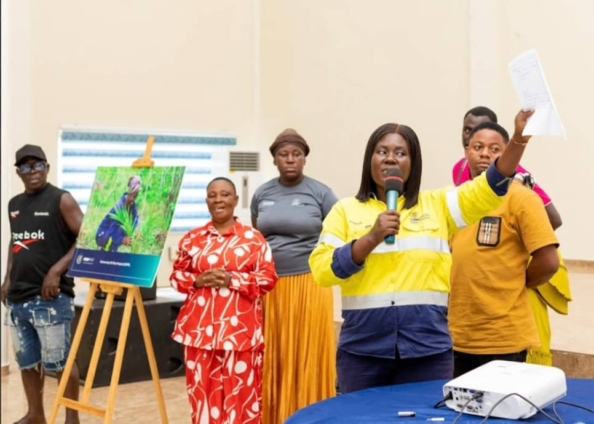
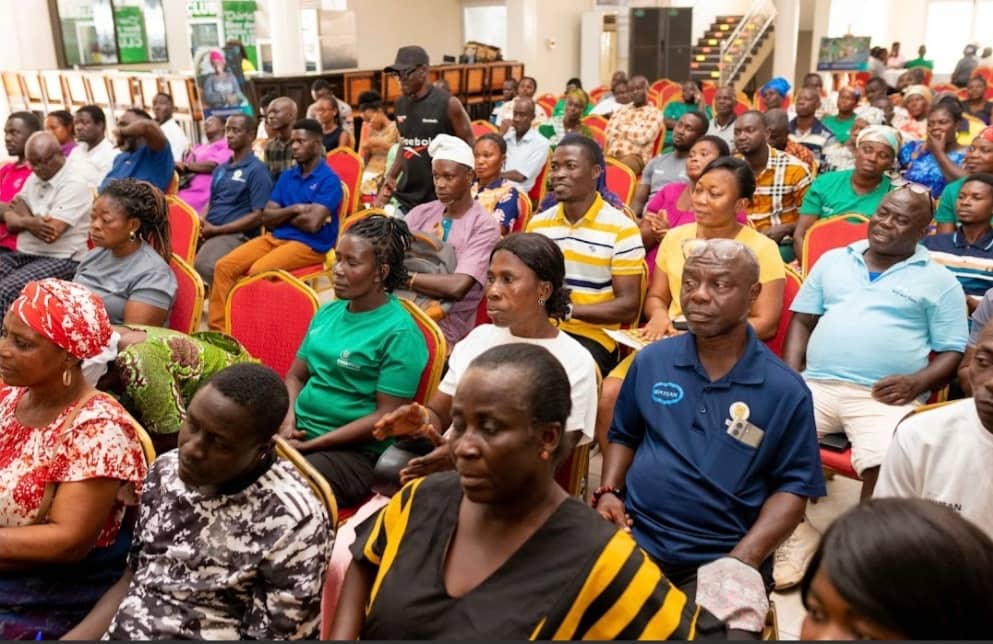
In line with Sustainable Development Goal 6, which underscores the importance of “clean water and sanitation for all,” the Gold Fields Ghana Foundation has held its Quarter Four (Q4) Water and Sanitation Review Meeting to assess activities across 2025. The meeting brought together WATSAN communities from the Tarkwa-Nsuaem and Prestea Huni-Valley municipalities.
According to the Project Coordinator for Water, Sanitation, and Health, the year saw several capacity-building initiatives, including the training of area mechanics, monitoring visits, and quarterly reviews, all aimed at strengthening community-led water and sanitation management for the Foundation’s 22 host communities.
“Together, we assess what has been done and plan how best to run WATSAN activities smoothly and efficiently in the coming year,” she remarked.
She highlighted notable success stories, noting that monitoring exercises revealed remarkable improvements in several communities.
“We know New Atuabo has a success story, with other communities like Amoanda and Koduakrom also doing well, as some have embarked on extensions to underserved areas and others drilling additional boreholes to complement the existing ones,” she emphasised.
She also praised the maintenance culture observed in some areas:
“We visited communities to assess their water and sanitation facilities. Their standpipes and pipelines are well maintained, and we have resourced them with sanitation materials to motivate them to sustain the cleanliness around their facilities,” she said.
However, she expressed concern over the lack of ownership in certain communities:
“A few community members still think that because Gold Fields provided the water systems, it must be for free. But there is a need to ensure maintenance to make it sustainable, hence the need for communities to take ownership and contribute their token when they use it,” she emphasised.
She underlined the critical importance of community commitment for the sustainability of the water systems:
“…The Foundation is preparing to refine its 2026 water and sanitation strategy, and we will stress ownership. Once you own the system, there is a greater commitment to protect and sustain it into the future,” she concluded.
Latest Stories
-
BRICS Or Balance? What Ghana’s bid really means
13 minutes -
GPRTU wants full TRAFFITECH-GH implementation to start in 2027
32 minutes -
Mahama announces plans to import electric wheelchairs for PWDs
36 minutes -
KGL U17 Colts 2026: Western beat Prempeh Elite Academy to set up final final with Greater Accra Region
54 minutes -
Late Solanke strike salvages 10-man Spurs draw at Man United
1 hour -
Gender Ministry to monitor welfare of Nana Akua Addo’s children amid domestic violence case
1 hour -
Benedict Okyere Yeboah: Ghana’s football problem goes beyond sacking a coach
1 hour -
GPL 2026/27: Darkwah Wiafe’s winner sees All Blacks beat Kotoko
1 hour -
ITF World Tour : Patel Wins Boys’ Singles Final at J100 Accra
2 hours -
Ghana must pursue BRICS partnership if it brings economic benefits – Kpebu
2 hours -
Success and Wright Claims J100 Accra Girls’ Doubles Championship
2 hours -
ITF J100: America’s Wright wins J100 Accra Girls’ Singles Title
2 hours -
Expedition hopes to find aviator Amelia Earhart’s plane on remote island
2 hours -
US seeks changes to rejected $109m health compact with Ghana – Mahama
2 hours -
Nine dead in mass shooting at Pennsylvania home
3 hours