

Audio By Carbonatix
The Chairman of the Food and Beverages Association, John Awuni has described the government's decision to ban the importation of some staple foods as insensitive.
According to him, before the government decides to implement such policies, it should have done due diligence by ensuring that the country produces these food items it is seeking to place a ban on.
In an interview with JoyNews, he said “I must say it very unacceptable and maybe it is some wickedness you want to unleash on the people because it is not as if the country is ready for this.
“If the country is ready for this, we all will clap hands and be happy about that. As a technical person, I want to see that this country has built blocks towards this, but you don’t wake up one early morning and exercise this level of insensitivity on the people.”
- Read also: Gov’t pushing for law to ban import of ‘yemuadie’, rice, others without committee approval
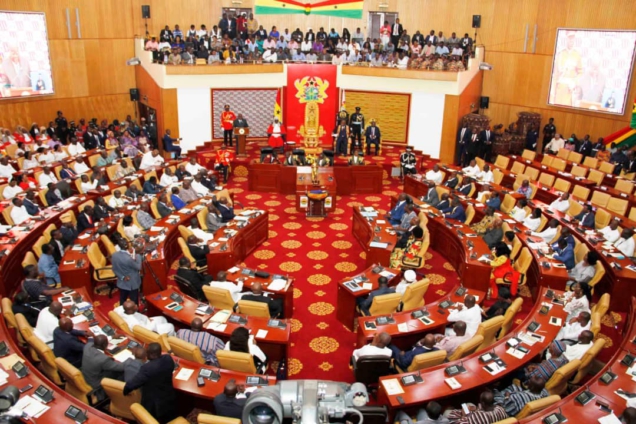
His comments come on the back of the government's push to restrict the importation of what it calls strategic products, including rice, fruit juices, tripe, fish, cement, and some other 17 items.
In this regard, the Chairman said before the Executive decides to push such policies, they must ensure that the country has local products that can last for a minimum of three years to prevent food shortages.
“If I take rice for instance, before any government can come up with a policy to implement, government should have had its local stock in a buffer in their warehouses which can cover about three years. That is, we have produced rice locally and are in stock which can cover a minimum of three years,” he stressed.

An Associate Professor at the University of Ghana Business School, Lord Mensah says he doubts that there would be a successful implementation of the plan.
“So from where I sit, the call (to re-evaluate) the timing and whether it should be prioritised or not is in order because if you take things like fruit juice, you take things like animal and vegetable oil, I mean if you look at our livestock market do we have enough that can feed the demand in the country? So, I think it is too early or it is too quick to drop such an L.I. to place restrictions," he clarified.
He added that he was not sure if the government wanted to have the policy in place and work hard to ensure that the country is self-sufficient before the policy is fully implemented. However, he said “I still don’t trust the delivery of this."
Latest Stories
-
Mahama honoured at 2026 World Health Summit in Berlin for global health leadership
3 minutes -
Breast cancer is not a death sentence – Besease Kontire Obaapanin, Magmina Foundation lead awareness campaign
5 minutes -
EcoBank invests in digital education of 4 Garisson School to mark 40 years in Africa
36 minutes -
AGI urges investment in skills and raw materials to strengthen local manufacturing
39 minutes -
GPL 2026/27: ‘We have to rectify our mistakes’ – Boadu reacts to Aduana FC defeat
40 minutes -
No disability access, no building permit – KMA declares
40 minutes -
Asantehene to lead environmental restoration effort at Jimi Land Reclamation Site
44 minutes -
Poor Ghanaians are being jailed because they cannot afford justice – Crime Check Foundation
45 minutes -
No conflict in appointing Emelia Agbenyo as Deputy EC Chair – NDC
46 minutes -
87-year-old man jailed 20 years for defiling 9-year-old girl at Ofankor
48 minutes -
Sankofa Gold targets 70kg output after 9-month shutdown
51 minutes -
Tamale, Bolgatanga had just one Legal Aid lawyer between them – Kwesimintsim MP
58 minutes -
PAC orders eviction of former irrigation company MD from official residence
1 hour -
Legal Aid Commission has offices in only 45 of Ghana’s 261 districts, needs 180 more staff
1 hour -
Challenging Heights welcomes Ghana’s Tier 1 ranking, calls for more anti-trafficking funding
1 hour