

Audio By Carbonatix
A political scientist at the University of Ghana is worried about the lack of accountability whenever tax bills are passed.
Dr Kwame Asah-Asante says leaders of the country are quick to come out with new tax bills but are unable to provide detailed accountability on revenues earned from these taxes.
“The issue is that, are we going to be able to manage the resources so well that will be derived from this revenue? We have seen it time and again that our leaders are quick to come out with tax or taxes, but the money generated from it, we find it difficult to account for them,” he said on Monday.
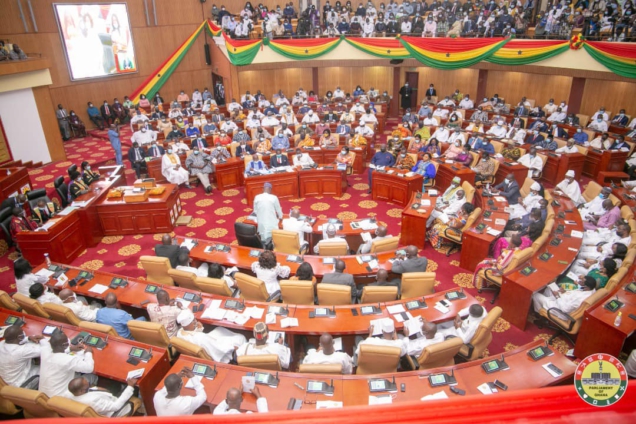
On March 31, Parliament approved three new tax bills proposed by the Finance Minister, Ken Ofori-Atta.
According to Mr Ofori-Atta, the bills are crucial for the progress of government’s pursuit of an International Monetary Fund (IMF) deal.
The new tax bills include; the Income Tax Amendment Bill, The Excise Duty Amendment Bill and the Growth and Sustainability Amendment Bill and are expected to rake in close to GHs4 billion.
Speaking on the AM Show on JoyNews’, Dr Asah-Asante reiterated that the passing of the bills “is a good beginning for our journey to the IMF” but indicated that those in charge have not been accountable.
The political scientist lamented citizens' inability to demand accountability and as a result, government always slaps taxes on the people without disclosing details of revenues gained.
Meanwhile, he added that the government’s energy that is being used to make sure that it gets the basics right in securing an IMF deal could be channelled into creating home–grown solutions where there would be no need to seek an IMF bailout.
“If you look at how government wants to meet all the specifics directed by the IMF, right? They want to get all those basics right to have the facility.
"Then I ask myself; that energy that you derive from the system to pursue this programme, couldn’t you have used it in your economy, build the necessary capacity that you don’t go to the IMF,” he said.
According to him, Ghana always finds itself “in tears” as a result of some unfavourable conditions attached to the IMF deal.
Latest Stories
-
Photos: Housing solutions take centre stage at Day 2 of the 3rd Republic Bank-JoyNews Habitat Fair
22 minutes -
Video: Immunity should be exercised without creating classism – Inusah Fuseini on cocaine bust
55 minutes -
Ghana Air Force passes out 293 recruits after six months of intensive training
1 hour -
EOCO vrs Baffour Awuah: EOCO should have secured warrant before arrest attempt at court – Inusah Fuseini
1 hour -
Triple fibre cuts disrupt telecom services across Northern, Oti regions – Sam George
1 hour -
Politicisation could undermine parliamentary probe into cocaine seizures – Dr Osae-Kwapong
1 hour -
EOCO chases MP: Can Section 41 cure lacuna in EOCO Act? – Inusah Fuseini asks
1 hour -
GNFS, GWL inspect fire hydrants in Ministries enclave; 23 found faulty
1 hour -
Gov’t directs release of 50,000 bags of grain to ECOWAS
1 hour -
Ghana, Germany deepen cooperation on railways, labour mobility
2 hours -
Huge crowds greet Pope in Paris for open-air Mass
2 hours -
‘I never said I’ll declare a state of emergency’ – President Mahama on galamsey
2 hours -
Bobby Banson condemns EOCO’s attempted arrest of Nana Agyei Baffour Awuah
3 hours -
When Kumasi begins to look like somebody is in charge
3 hours -
Parliamentary probe into cocaine seizure would be a waste of time – Inusah Fuseini
3 hours