

Audio By Carbonatix
The Government of Ghana has announced an ambitious total revenue and grants target of GH¢268.1 billion for the 2026 fiscal year, representing a growth of over GH¢41 billion or an 18.3 percent increase over the 2025 outturn of GH¢226.5 billion.
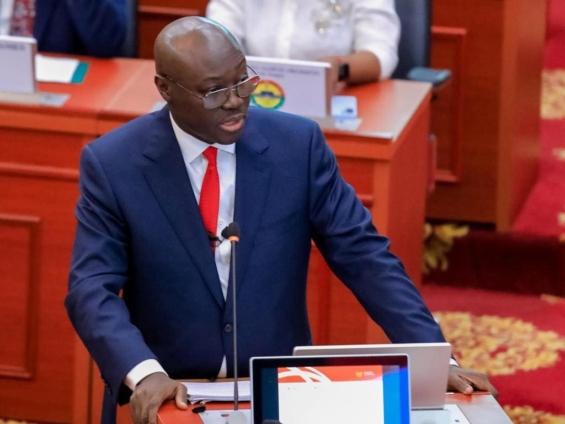
Presenting the 2026 Budget Statement and Economic Policy to Parliament, Finance Minister Dr Cassiel Ato Forson said the new target reflects the government’s commitment to consolidate macroeconomic stability and sustain the gains made under the “Reset Agenda”.
“Mr. Speaker, Total Revenue and Grants for 2026 is projected at GH¢268.1 billion, up from GH¢226.5 billion in 2025. This represents a strong revenue performance supported by new non-oil tax policy measures expected to yield at least 0.6 percent of GDP”, he said.
According to the 2026 budget statement, non-oil tax revenue will remain the largest source of government income, projected at GH¢216.1 billion, an increase of 18.8 percent over 2025 levels.
“Non-oil tax revenue, which accounts for about 80.6 percent of total revenue, is projected at GH¢216.1 billion, reflecting a robust 18.8 percent annual growth. 720. Mr Speaker, non-tax revenue (non-oil) is estimated at GH¢20.9 billion, representing about 7.8 percent of domestic revenue. Of this amount, GH¢18.2 billion will be retained by MDAs to support operations, while GH¢2.8 billion will be lodged into the Consolidated Fund. The IGF Capping Policy is expected to yield an additional GH¢329.6 million to the budget", he said.
This growth is expected to be driven by improvements in the Value Added Tax (VAT) regime, enhanced customs administration, and the rollout of a digital compliance monitoring system across major sectors.
Non-tax revenue, including fees, levies, and internally generated funds (IGFs), is projected at GH¢20.9 billion, while oil revenue is expected to contribute GH¢13.6 billion, supported by stable crude prices averaging around US$70 per barrel. Grants and other inflows from development partners are expected to supplement domestic resources.
Dr Forson emphasised that the government’s revenue strategy for 2026 will focus on equity and simplicity, ensuring that the tax system supports business growth while securing fiscal space for social and capital investments.
The finance minister also outlined several policy interventions to achieve the new revenue target, including VAT reforms, including the abolition of VAT on mineral exploration and the extension of zero-rated VAT on local textiles to 2028, to promote investment and protect jobs.
With revenue targets set high, the government faces the dual challenge of mobilising resources while ensuring that taxation does not stifle the private sector’s capacity to create jobs and growth.
Latest Stories
-
Russia launches largest attack on Ukraine energy infrastructure since spring
12 seconds -
GHABA launches first national Hair and Beauty Festival to promote skills and enterprise development
15 seconds -
ICU urges GHABA members to transform hairdressing skills into sustainable enterprises
14 minutes -
Ghana eyes stronger trade ties as Australia hosts multicultural trade and investment forum
23 minutes -
Margaret-Marie Krakue
26 minutes -
Ayariga announces plans for live broadcast of MMDAs’ meetings on local radio stations
29 minutes -
Mrs Anna Tackie
31 minutes -
Ghana links Afghan heroin and Brazilian cocaine to global drug markets – Global Organised Crime Index
38 minutes -
NHIA launches nationwide inter-school quiz to deepen students’ knowledge of NHIS
45 minutes -
Political protection could be masking Ghana’s cocaine trade – Global Organised Crime Index
50 minutes -
AFCON 2027Q: ‘We have to dissolve the GFA’ – Effia MP after Black Stars lose to Gambia
52 minutes -
NPP announces voting schedule and ID requirements for October 3 national elections
54 minutes -
Lupus can mimic HIV symptoms and damage kidneys if untreated – KNUST expert
57 minutes -
Focus on Sickle Cell Foundation seeks to introduce sickle cell education through comics in Ghanaian schools
1 hour -
NPP rewrites the campaign playbok as opposition reality shapes National Executive contest
1 hour