

Audio By Carbonatix
Documents relating to the Duke of Sussex's US visa application have been unsealed in court.
They are heavily redacted, however, and no details have been given as to what Prince Harry put on his immigration form.
A US court had ordered the release of the documents based on a freedom of information request by the Heritage Foundation, a conservative US think tank in Washington DC.
The foundation alleges that the prince concealed his past use of drugs, which should have disqualified him from obtaining a US visa.
The allegations centre around his claims in his memoir Spare, where he referred to taking cocaine, marijuana and psychedelic mushrooms.
Application forms for US visas specifically ask about current and past drug use.
Admissions of drug use can lead to non-immigrant and immigrant visa applications being rejected, although immigration officers have the discretion to make a final decision based on different factors.
In the event, very little information was disclosed in the documents which were released on Tuesday.
The prince's visa form has not been released.

Instead, the documents that were released are supporting declarations and court transcripts created in the course of the Heritage Foundation's case.
They reveal that the US government previously told a court that the duke could be subjected to harassment if his visa records were made public.
A chief freedom of information officer within the US Department for Homeland Security (DHS) could be seen to argue that releasing the material "would potentially expose the individual to harm from members of the public".
The declaration from Jarrod Panter, submitted to the court in April last year, reads: "The USCIS (United States Citizenship and Immigration Services) routinely protects from disclosure the non-immigrant/immigrant status sought by third parties who do not have permission from the beneficiary to receive this information.
"To release such information would potentially expose the individual to harm from members of the public who might have a reason to manipulate or harass individuals depending on their status in the United States."
The declaration added: "To release his exact status could subject him to reasonably foreseeable harm in the form of harassment as well as unwanted contact by the media and others."
Sam Dewey from the Heritage Foundation told the BBC that he believes the DHS has not provided all its papers. He said he is "frustrated" and that this is "not the end of the road".
Dewey expects the next move to be a "sort of filing" that could lay out the next steps, adding: "We may well have another lawsuit against Department of Homeland Security."
He accuses the prince of privilege, alleging he has benefitted from his "wealth and status" by being allowed to live in the US.
'It wasn't much fun'
In his controversial memoir, published in January 2023, Prince Harry wrote that he first tried cocaine at the age of 17.
"It wasn't much fun, and it didn't make me particularly happy, as it seemed to make everyone around me, but it did make me feel different, and that was the main goal," he added.
He also wrote about using marijuana, saying "cocaine didn't do anything for me", but "marijuana is different, that actually really did help me".
The court's decision that the files be released came after a 2024 ruling which said there was not enough public interest in disclosing Prince Harry's immigration records.
The Heritage Foundation contested that ruling and pushed for the judgement to be changed.
Prince Harry moved to the US with his wife Meghan in 2020 after stepping down as a working royal. It is not clear what visa he entered the country on, while the duchess is a US citizen.
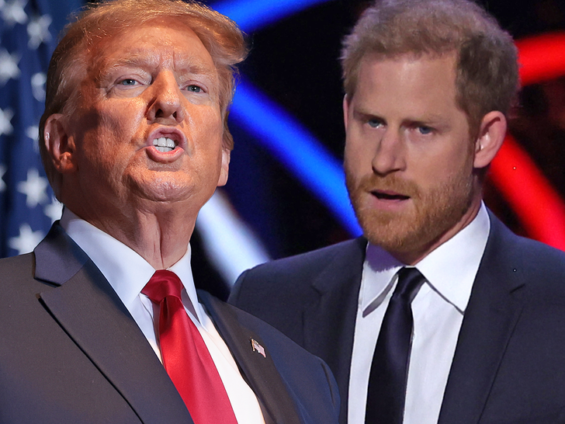
President Donald Trump previously ruled out deporting Prince Harry in February, telling the New York Post: "I'll leave him alone... He's got enough problems with his wife. She's terrible."
Meghan has been a vocal critic of Trump in the past, labelling him a "misogynist".
The BBC has contacted the duke's office for comment.
Latest Stories
-
President Mahama ends Resetting Ghana tour of Ahafo Region
59 minutes -
African negotiators seek delivery of climate commitments at COP31
1 hour -
BoG develops AI rules for financial sector
1 hour -
‘Big Push’: Government assures contractors of prompt payments
1 hour -
Court fines miner for breaking into gold buying shop
1 hour -
Tarkwa court jails labourer for three years over GH¢123,000 theft
2 hours -
GAEC must retain nuclear scientists for Ghana’s nuclear ambitions – Minister
3 hours -
Man reportedly mistaken for game and shot by hunter dead in forest
3 hours -
19-year-old mason jailed 15 years for defiling seven-year-old pupil
3 hours -
Ghana’s banking sector assets rise 20.47% to GH¢500.2bn – BoG Governor
3 hours -
22 injured as Sprinter bus overturns at Sege after tyre burst
3 hours -
UN housing expert urges Ghana to strengthen Rent Control Department amid housing affordability concerns
3 hours -
Delta-BCI partnership reaches 166,000 people with breast cancer education
3 hours -
Power restoration fault suspected in Kumasi Central Market fire
8 hours -
The 7-foot giant of Ngleshie Amanfro: Seven-foot Ghanaian Ephraim Saawa dreams of joining the national basketball team
9 hours