

Audio By Carbonatix
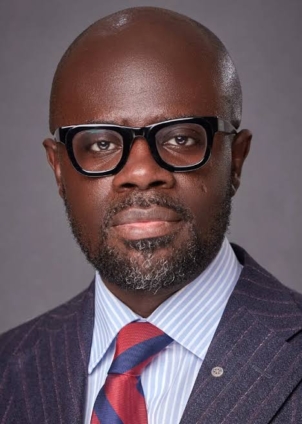
The Dean of UPSA Law School, Prof. Kofi Abotsi, has highlighted the challenges of holding political actors accountable for their promises to citizens.
According to the Dean, politicians often make grand promises to win votes but fail to honour them once in power because no one holds them accountable.
In an interview with Joy FM’s Super Morning Show on Tuesday, Prof. Abotsi explained that, “Today we govern through institutions, and the institutional interface is the only way to achieve success if we truly desire it.
"However, it is not easy to get political actors to make commitment by which they will stand that’s the total of the matter," he added.
Mr Abotsi noted that it is impractical for all Ghanaians to individually demand accountability from politicians. Instead, he emphasised the role of institutional frameworks.
He identified two types of institutions: the “hard” institutional surface, which includes Parliament, the Judiciary, the Auditor General, and other bodies established by the constitution to ensure accountability.
While Parliament can hold political actors accountable for official promises and actions, it struggles to enforce pre-election promises made on campaign platforms.
He asserted that the media plays a crucial role in holding politicians accountable before and after elections.
The media's power lies in its ability to remind politicians of their promises and check if they have fulfilled them using specific benchmarks. This role has seen successes and failures.
On the one hand, the media has helped focus public attention on key issues, encouraging politicians to be more careful with their promises.
On the other hand, the media is often fragmented and politically influenced, leading to a distorted public conversation.
Mr Abotsi stressed that while the media can guide Ghanaians on the path of accountability, its effectiveness is hampered by political infiltration, which dilutes and convolutes public discourse.
He pointed out that state institutions, particularly Parliament, have largely failed to hold the government accountable. The majority party in Parliament often views itself as an extension of the executive, weakening Parliament's role across successive regimes.
Read also : Kwame Sowu: The Challenge of Political Promises and the Complex Realities of Governance
Latest Stories
-
Manhyia South MP charged with conspiracy, financial loss and money laundering
2 minutes -
Attorney-General charges Manhyia South MP over alleged GH¢9.85m financial loss
5 minutes -
Food Security: Buffer Stock CEO calls for more investment in Agri-Tech
5 minutes -
Three missing children found dead in parked vehicle in Tamale
15 minutes -
Nana Akomea denies reports linking his absence from NPP executives’ introduction to Kojo Bamba
16 minutes -
2026 U-17 WWC: Black Maidens arrive in Morocco for tournament
18 minutes -
GSA suspends pre-shipment inspection of imported used vehicles
25 minutes -
Elevate Africa confirms presidents, vice presidents and ministers for 2026 Annual Convening in Accra
49 minutes -
Keta MP commissions 60-seater kindergarten facility to replace unsafe structure
54 minutes -
Salomey Awiti-Baffoe’s lawyers welcome GH¢100,000 bail after earlier rejection
55 minutes -
Domestic tourism and its impact on the local economy
1 hour -
Top-Up Pharmacy wins Community Pharmacy Chain of the Year at 2026 PSGH Pharma Excellence Awards
1 hour -
Nigeria military aircraft with 32 on board crashes
1 hour -
Black Stars need a coach who can inspire players to perform – Ignatius Osei Fosu
1 hour -
Revenue collector crushed to death on Kasoa-Winneba highway
1 hour