

Audio By Carbonatix
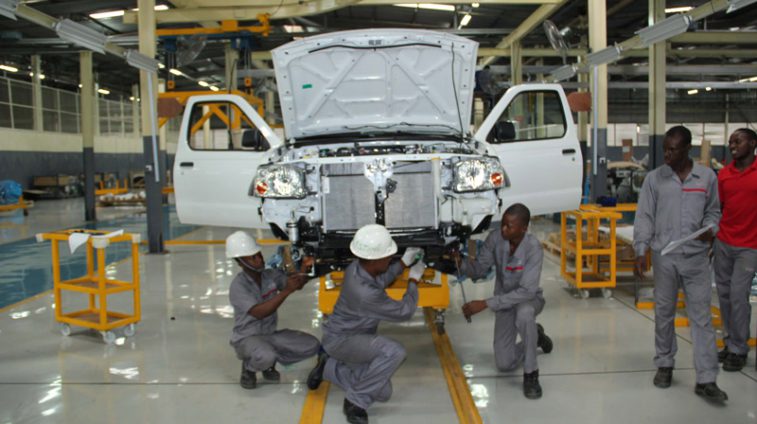
The second edition of the Ghana Automotive Summit, themed “Towards the Future of Mobility,” is set to take place on June 3, 2025, in Accra. Launched this week, the summit aims to highlight the progress and potential of Ghana’s fledgling automotive sector — including the achievements of vehicle assemblers, expansion of brands and models produced locally, and the broader vision for job creation through industrialization. But while the summit signals a commitment to growth, it also arrives at a moment of reflection. Key challenges continue to stifle the industry’s development, from low demand and policy uncertainty to mounting competition from used vehicle imports. Addressing these bottlenecks is now crucial if the sector is to fulfíil its promise.
Ghana’s automotive industrialization strategy is supported by the Ghana Automotive Development Policy (GADP), under the Ghana Manufacturing Development Programme (GMDP). These policies were designed to attract assemblers and build a foundation for a competitive local industry. The Customs (Amendment) Act, 2020, which bans the import of salvaged vehicles and vehicles over 10 years old, was meant to reinforce this ambition—protecting new entrants from a flooded used-car market and encouraging demand for locally assembled vehicles.
But beneath this policy architecture, the sector faces challenges that limit its potential. Despite assembly plants being operational, local patronage remains low. Dr. I ¹ssaka Lawerh Tetteh stated that affordability is a major constraint[1]: many Ghanaians cannot afford new locally assembled cars. The Ghana Automotive Development Policy envisioned asset-based vehicle financing and tax reliefs to close this gap, but these have either been slow to materialize or ineffective in stimulating mass adoption.
READ ALSO: 3 confirmed dead in Adentan flood, MCE blames construction on waterways
The Customs (Amendment) Act, 2020, which banned the import of salvaged and over-aged vehicles, was designed to protect local assemblers by limiting cheap used car imports. However, the law was enforced unevenly and met with strong opposition from spare parts dealers and used car importers in hubs like Abossey Okai and Suame Magazine. President Mahama’s recent pledge to review and repeal this ban, sends mixed signals. Reversing the ban without new safeguards could undermine the competitiveness of local assemblers, whose business models depend on controlling used vehicle inflows.
Used vehicle imports — typically older, cheaper, and more accessible — dominate the Ghanaian car market, accounting for over 70% of annual car imports. These imports, particularly salvaged vehicles, offer a direct threat to the competitiveness of locally assembled vehicles. The lack of strong disincentives or regulation around emissions and roadworthiness further tilts the market in favour of secondhand cars.
For Ghana’s automotive industry to move from assembling vehicles to building a vibrant, competitive ecosystem, a few strategic shifts are necessary.
First, there must be deliberate efforts to stimulate demand. Without a strong domestic market, local assembly plants will continue to operate below capacity. This means expanding access to vehicle financing scheme for locally assembled vehicles to ensure affordability for vehicle buyers. Such interventions could help convert interest into actual purchases.
At the same time, clarity and consistency in policy are essential. The industry cannot thrive if manufacturers are unsure whether the protections and incentives they were promised will endure. Any review of the Customs (Amendment) Act, 2020, which currently restricts the import of salvaged vehicles, must be carefully managed. If the ban is to be lifted, it should be replaced with clear regulations that discourage the most problematic imports (such as unsafe or highly polluting vehicles and age limits), while balancing the interests of the informal vehicle economy and the goals of industrialization.
Another critical area is skills development. As echoed by industry leaders, the future of this sector hinges not just on assembly lines, but on the ability to grow a pipeline of technicians, engineers, and parts manufacturers. Without these, Ghana risks being stuck at the basic assembly stage, with limited local value added. Investing in tailored vocational training and automotive engineering programmes can help shift this trajectory.
Finally, public procurement could play a stronger role. Government institutions purchasing locally assembled vehicles would not only demonstrate confidence in the policy, but also help generate the volumes needed to sustain production lines.
The Ghana Automotive Summit presents an important platform to celebrate progress — but more importantly, to chart a realistic path forward. The sector’s success will depend not just on the presence of multinational assemblers, but on resolving core structural challenges: demand, affordability, policy clarity, and industrial depth. Without action, the summit risks becoming a ceremonial event rather than a turning point for transformative reform.
Latest Stories
-
GPL 2025/26: Dreams FC stage stunning comeback to hammer Eleven Wonders
20 minutes -
Livestream: The Probe examines Kumasi’s looming water crisis
23 minutes -
MTN Ghana gears up to lead Africa’s AI revolution
24 minutes -
Philanthropist Alhaji FuZak donates Da’wah bus to Ambariya Sunni community
32 minutes -
GUTA calls for suspension of Publican AI system over trade disruptions
34 minutes -
TTAG raises alarm over proposed recruitment of 7,000 teachers, demands national posting roadmap
1 hour -
Civilians feared killed after reports of air strike on Nigerian market
1 hour -
Bishop Simon Kofi Appiah installed as new Jasikan Diocese Bishop
1 hour -
Trump’s Strait of Hormuz blockade threat raises risks and leaves predicaments unchanged
1 hour -
US Court backs extradition of former MASLOC CEO Sedina Tamakloe-Attionu to Ghana
2 hours -
Seven arrested as NAIMOS dismantles illegal mining camp, seizes firearms at Boin River
2 hours -
Fire erupts at Madina Ritz Junction, destroys multiple wooden structures and containers
2 hours -
Daniel-Kofi Kyereh returns from long-term injury, registers assist for Freiburg U23
2 hours -
Knifeman calling himself ‘Lucifer’ slashes three at NYC’s Grand Central
2 hours -
Brands are built from within to without
2 hours