

Audio By Carbonatix
Ghana is not a poor country. It is a resource-rich nation trapped in what Professor Paul Yegandi Imhotep Paul Alagidede describes as a crisis of economic thinking rather than a crisis of wealth.
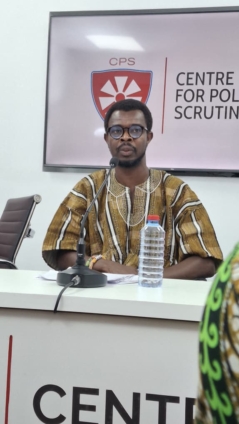
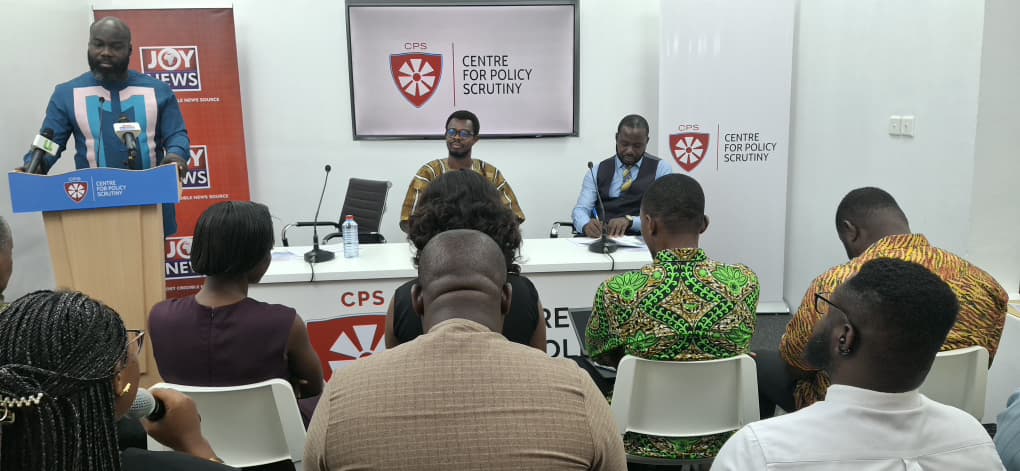
Speaking at a public lecture organized by the Centre for Policy Scrutiny (CPS) in partnership with Joy Business, the Professor of Finance and Bank of Ghana Chair in Finance and Economics at the University of Ghana argued that Ghana’s persistent liquidity challenges stem from how the country measures and understands its economy.
“In the midst of abundant gold, we are the liquidity trap,” he said, setting the tone for a lecture that questioned decades of orthodox economic practice.
According to him, Ghana’s development trajectory since independence has largely been shaped by two dominant traditions: orthodox and heterodox economics. While both have contributed to progress, neither has succeeded in lifting the country into sustained, high-level growth.
“These models have been quite limited in their ability, especially to take developing countries like Ghana or Rwanda into high-level, sustainable and steady-state growth,” he noted.
The result, he explained, is what he calls the paradox of scarcity in the midst of progress — an economy that shows growth on paper but remains perpetually short of liquidity.
Ghana’s repeated recourse to the International Monetary Fund (IMF) illustrates the problem. Over the past 60 years, the country has entered IMF programmes about 18 times, including 10 in the last 35 years of democratic governance.
“This is an economy that, at the same time, has a tremendous amount of resources that can be unlocked for domestic liquidity,” he said.
“But the accounting system and the economic thought running it are among the key problems that keep us returning outside for liquidity to finance an economy that is already rich.”
At the heart of the problem, Professor Alagidede argued, is the System of National Accounts, which measures economic performance largely through flows of goods and services. Under this system, Ghana’s Gross Domestic Product is valued at about US$82 billion, a figure he says ignores vast areas of economic activity.
“The current system of national accounting only counts visible gold that leaves our shores,” he said.
“That means we are forced to go for paper from abroad while sitting on the bedrock of wealth at home.”
In his view, this narrow framework creates an illusion of poverty. "Credit rating agencies focus on Ghana’s roughly US$60 billion in official reserves while ignoring an estimated US$1.5 trillion worth of gold and other natural assets embedded in the economy".
“Ghana is not a poor country,” he declared. “This is a very rich nation. It’s a rich house with a locked door.”
Latest Stories
-
Livestream: The Law discusses Supreme Court @150
22 minutes -
MTN Momo staff walk to promote wellness and fitness
38 minutes -
Assafuah: Sedina Attionu’s return from Nevada will test government’s commitment to accountability
43 minutes -
How GRA’s Modified Taxation Scheme is boosting revenue compliance & SMEs competitiveness
59 minutes -
Stonebwoy Can Do It: A call to unite behind 2026 BHIM Fest
1 hour -
World Shea Expo returns to Tamale for 2026 edition
1 hour -
Prioritise cocoa sector with better prices, timely payments-Annoh-Dompreh urges NDC
2 hours -
Lands and Mines Watch Ghana endorses Heath Goldfields’ mining capacity
2 hours -
Gbintiri residents protest alleged diversion of 24-hour market project
3 hours -
Justin Bieber headlines Coachella with nostalgia-fuelled set
3 hours -
Ukraine and Russia accuse each other of hundreds of ceasefire violations
3 hours -
Asha Bhosle: The sound of Bollywood dies aged 92
3 hours -
Fire destroys section of 4-bedroom apartment at Tantra Hill
3 hours -
Safe city: Unnoticeable protection
3 hours -
North East Regional Police Commander raises alarm over burning of checkpoints
3 hours