

Audio By Carbonatix
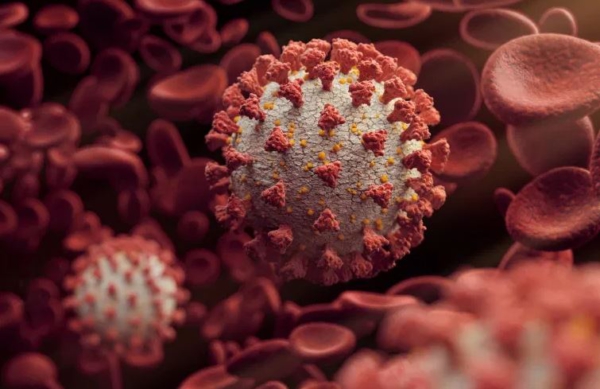
Amidst the emerging cases of new Covid-19 variants, the World Health Organisation, WHO, has charged African governments to step up their testing and sequencing efforts in order to enable quick spotting, tracking and tackling of the variants as soon as they appear.
The call came as the cumulative COVID-19 cases in Africa topped three million with daily case numbers exceeding the first wave peak.
Making the call on Thursday, the World Health Organisation, WHO, Regional Director for Africa, Dr Matshidiso Moeti, said revamped public health measures are ever more critical to avert a runaway surge in infections that could stretch health facilities to the breaking point.
“We call on all countries to increase testing and sequencing of the virus to swiftly spot, track and tackle new Covid-19 variants as soon as they appear.
To defeat an agile, adaptive, and relentless enemy, we must know and understand its every move, and double down on what we know works best against all variants of the virus.
” Moeti who spoke during a virtual press conference facilitated by APO Group, warned against complacency. “We must not become complacent.
We must persist with the proven public health measures that helped stop the spread of the virus during the first wave – that’s physical distancing, constant hand washing, and wearing masks in public spaces.”
Moeti observed that an average of 25,223 cases was reported each day between the 28th of December 2020 and the 10th of January, 2021 in Africa, which is nearly 39 percent higher than the July 2020 two-week peak of 18,104 daily average cases.
She noted that overall cases in the region have risen steadily since mid-September 2020, with a steeper rise from late November. In addition, a new variant of the virus called 501Y.
V2 is circulating widely in South Africa, accounting for most of the new infections during the second wave. “Mutations of the virus are unsurprising as the more the pandemic spreads the higher the likelihood of changes.
However, preliminary analysis finds the 501Y.V2 variation to be more transmissible. Genomic sequencing has found the variant present in Botswana, the Gambia, and Zambia.”
Although deeper investigations are underway to fully understand the epidemiological implications, Moeti said at present there are no indications the new variant increases the severity of the disease.
“Even if the new variant is not more virulent, a virus that can spread more easily will put further strain on hospitals and health workers who are in many cases already overstretched.
“This is a stark reminder that the virus is relentless, that it still presents a manifest threat, and that our war is far from won.”
Nigeria is currently investigating a variant identified in samples collected in August and October 2020 and while for now there are no reports of the Covid-19 variant circulating in the UK, cropping up in the African region, Moeti said further investigation is needed.
With support from the WHO, African countries are reinforcing genome sequencing efforts, which are key to finding and understanding new variants as they emerge and to help blunt their impact.
The WHO and the Africa Centres for Disease Control and Prevention network of genome sequencing laboratories in Africa are supporting governments with training and data analysis on genome sequencing, bioinformatics, and technical expertise.
The WHO has also developed guidance on containing new variants and is assisting countries to manage and safely transport samples for sequencing and analysis.
While much progress is being made in building genome sequencing capacity, the more than 5000 sequences which have been conducted so far in the region account for just 2 percent of global sequencing data.
As of 4.40 pm on Thursday, South Africa, with 1,278,303 confirmed cases and 35,140 deaths was the most affected African country followed by Morocco with 455,055 cases and 7,810 deaths.
In third place was Tunisia with 168,568 cases and 5,415 deaths. Nigeria with 103,999 cases and 1,382 deaths was in fifth place.
Latest Stories
-
What everyone should know about C-sections
13 minutes -
Health Ministry engages Ga Mantse ahead of Free Primary Healthcare launch
43 minutes -
We can tackle multiple priorities – Sam George defends Anti-LGBTQ Bill push
1 hour -
Statement: Ghana Chamber of Mines’ Response to Claims in Joe Jackson’s “Ananse Stories about the Economy of Ghana”
1 hour -
GES opens 2026 teacher recruitment for licensed B.Ed graduates
1 hour -
Ghana must value skilled trades, build resilient learners — Ibn Chambas
1 hour -
Ghana must rethink education around relevance, resilience and responsibility — Ibn Chambas
2 hours -
Prince Harry faces defamation lawsuit from charity he co-founded
2 hours -
South Korea deploys thermal cameras to track escaped zoo wolf
2 hours -
Calls for royal meeting with Epstein survivors grow ahead of US visit
2 hours -
Ibn Chambas advocates blend of technology and human values in education
2 hours -
UMA improves healthcare access in Asutifi North with GH₵700k ‘Kim Taylor Legacy’ Walkway
2 hours -
Scholarships Authority and Fanaka University offer sponsorship for procurement and supply chain studies
2 hours -
Bisa Kdei drops new single ‘Go N Look’ featuring Medikal
2 hours -
Benin facing rising terrorism in north as French military presence faces growing criticism
2 hours