

Audio By Carbonatix
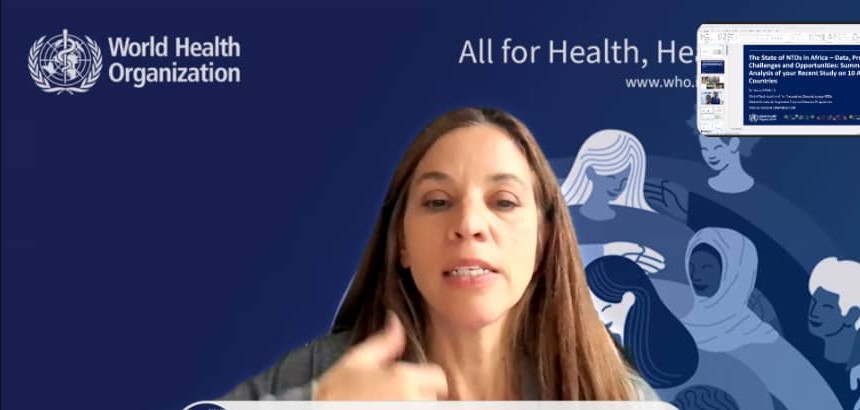
During the opening ceremony held via webinar on Tuesday, 25 November 2025, Dr. Maria Rebollo Polo, a leading WHO expert, delivered an uncompromising assessment of the current state of Neglected Tropical Diseases (NTDs), warning of the fragility of recent progress in the face of collapsing international funding.
The presentation delivered at the opening of the REMAPSEN Media Forum by Dr. Rebollo Polo provides a precise and alarming overview of the current global and African situation regarding NTDs. According to her, despite notable advances, progress remains fragile and is now threatened by a historic decline in international financial support. NTDs, which still directly or indirectly affect more than one billion people, continue to impose a heavy human and economic burden—particularly in Africa, where the vast majority of the global disease burden is concentrated.

Striking figures…
Since 2010, the number of people requiring intervention for NTDs has fallen by 695 million, including 239 million between 2020 and 2023 alone. This evolution, largely sustained by mass chemoprevention campaigns, reflects an encouraging trend. Between 2022 and 2023, a further reduction of 122 million people was recorded. Additionally, the WHO has to date validated 58 countries for eliminating at least one NTD—a significant step toward the target of 100 countries by 2030. The year 2025 is particularly noteworthy, as nine new countries obtained elimination validation, including Niger for onchocerciasis; Guinea for trypanosomiasis; Mauritania and Burundi for trachoma; and Senegal, Kenya, Egypt, and Papua New Guinea for other pathologies.
However, the global burden remains high, with 119,000 deaths attributable to NTDs in 2021 and more than one billion people still living with at least one of these diseases. Disability-Adjusted Life Years (DALYs) are equally concerning, reaching 14.14 million in 2021. In 2024, 1.437 billion preventive treatments were administered worldwide, covering 864.6 million individuals for at least one NTD. The chemoprevention coverage rate stands at 62.7%. Beyond chemoprevention, approximately 7.5 million patients received individual case management, underscoring the importance of the two complementary approaches recommended by the WHO.
Dr. Rebollo also drew attention to the dramatic decline in global financing. Between 2018 and 2023, international support dedicated specifically to NTDs fell from USD 531 million to just USD 260 million—a 41% decrease. This budget contraction severely affects national programmes, particularly in Africa. The reduction or termination of initiatives such as USAID’s Act to End NTDs has slowed down mass drug distribution campaigns and weakened national capacities—especially in countries where NTDs already impose a substantial strain on health systems.
To address these challenges, several countries are developing innovative integration models to better leverage existing health platforms. Ethiopia, Kenya, and Uganda have begun integrating NTD interventions into their primary health care systems. Other countries, such as Benin and Niger, are using school-based and community-based platforms to deliver campaigns. Madagascar has combined NTD activities with vaccination drives, while Tanzania has integrated them into nutrition programmes. Rwanda and Togo, for their part, are developing multisectoral approaches linking health, education, water, and sanitation services. For Dr. Rebollo, the key lies in strong national leadership, improved coordination, and meaningful community engagement.
Structural challenges persist…
Limited political visibility of NTDs, donor dependency, insufficient qualified personnel, weak integration into national health systems, and the fragility of WASH services continue to hinder elimination efforts. Long-term sustainability requires countries to fully integrate NTDs into national policies, allocate dedicated budget lines, strengthen supply chains, promote digital reporting, and adopt transition plans to gradually reduce reliance on international donations. Each country must also reinforce surveillance, adapt strategies to local contexts, and mobilize communities to ensure lasting change.
Throughout her presentation, Dr. Rebollo issued a call for urgent and collective mobilization. In her view, the future of the fight against NTDs now rests on three pillars: strong national leadership, anchoring interventions within primary health care systems, and diversifying financial resources. Without these, the hard-won gains of the past decade may be lost, exposing vulnerable populations once again to preventable diseases. She reminded participants that combating NTDs is a cross-cutting investment in equity, education, productivity, and health sovereignty. Africa, she stressed, has the capacity to succeed, but collective responsibility must be strengthened.
Latest Stories
-
Ecobank Junior Saver Big Pitch to reward 10 winners with GH¢2,000 each
2 minutes -
AMA demolishes unauthorised pigsty obstructing Agbogbloshie waste evacuation exercise
2 minutes -
I was filled with disbelief – Akosua Achia Sarpong Esq. shares her first reaction
3 minutes -
Snake Village: A look at Volta Region’s hidden snake village and its tourism potential (Video)
10 minutes -
Election Watch Ghana calls for constitutional reforms to strengthen Electoral Commission independence
12 minutes -
NACOC, Postal and Courier Services Regulatory Commission intensify efforts to curb drug trafficking
14 minutes -
Ga Mantse chairs committee to drive Accra Green and Clean City Initiative
15 minutes -
Drivers threaten to remove traders from lorry stations over TrafficTech concerns
18 minutes -
AI could create 10 to 20 times more jobs despite current recruitment slowdown – Hubtel CEO
21 minutes -
Sexual abuse in schools persists because perpetrators are not held accountable – Dr Nyarkoa
28 minutes -
Chief Justice has designated Achimota Court to handle petroleum diversion cases – NPA CEO
31 minutes -
Philip Nai and friends gear up for bigger seventh Christmas outreach
33 minutes -
GSA strengthens electricity meter testing to protect consumers and improve energy reliability
34 minutes -
‘Dismissed or suspended? Ghanaians deserve clarity’ – NPP demands clarity on Ampofo Ankrah’s fate
37 minutes -
Teach consent and sexual boundaries from pre-school to prevent abuse – Gender advocate
43 minutes