

Audio By Carbonatix
An industrialist, Dr. William Mensah-Ansah, has condemned the undue political interference in the affairs of the Tema Oil Refinery (TOR), which has weakened its operational capacity.
He said TOR had not been able to put into productive use the reconstructed crude oil furnace, which exploded in January 2017, forcing it to reduce its production.
TOR, which is the only refinery in Ghana with a capacity of 45,000 barrels per stream day, was currently producing below capacity.
Dr. Mensah-Ansah, in an interview with the Ghana News Agency, on recent developments at TOR, noted that the frequent change of leadership was the main problem.
He said between 2009 and 2016, the refinery was managed by four chief executive officers but had between 2017 and 2023 gone through the hands of five MDs while the sixth MD had just assumed office.
Dr. Mensah-Ansah noted that "as a result of the constant change of leadership, new managements are not able to roll out their strategic plans before they are kicked out or forced to resign."
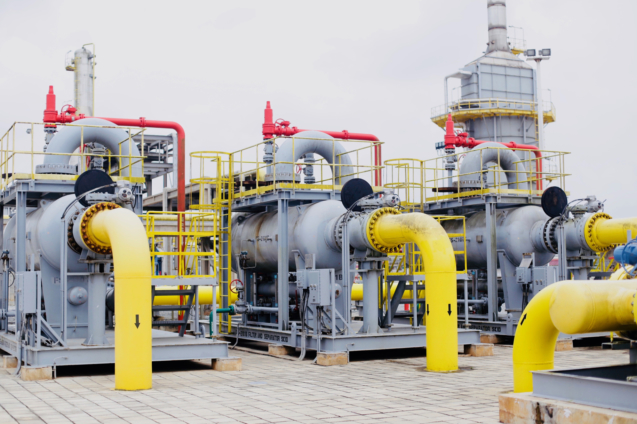
He explained that with two plants made up of the Crude Distillation Unit (CDU) and the Residual Fluid Catalytic Cracker (RFCC), and with the installation of the furnace to give the plants a faster turnaround time to produce at full capacity, the refinery should not be struggling.
He said TOR had the capacity to produce over 45,000 barrels per stream day for the CDU, while the RFCC also had the capacity to do 14,000 barrels.
"TOR remains a national strategic installation that must be protected from political manipulations.”
He said the core business of the refinery is to refine crude oil, which it either acquired or acquired from third parties to be able to serve the Ghanaian market, the sub-region, and beyond by marketing the finished products to Bulk Distribution Companies and Oil Marketing Companies.
Dr. Mensah-Ansah said the refinery had an efficient work interlink system from the commerce department to the production department, storage, and CDU for distillation of heavy residue, gasoil, heavy and light naphtha, aviation turbine kerosene, and domestic kerosene.
He added that even the by-product from CDU, which was the heavy residue, was taken to the catalytic cracker for further refining into the two major products, LPG and gasoline (super).
Dr. Mensah-Ansah appealed to the government to roll out a plan to revamp the refinery to become vibrant again.
Latest Stories
-
Power restoration fault suspected in Kumasi Central Market fire
1 hour -
The 7-foot giant of Ngleshie Amanfro: Seven-foot Ghanaian Ephraim Saawa dreams of joining the national basketball team
2 hours -
Government promises support for Kumasi Central Market fire victims
2 hours -
Vibes The Movie: Big Ghun’s Ghanaian film earns five nominations at 2026 REFFA
3 hours -
MamaCare CEO warns unresolved conflicts among health workers could undermine maternal and neonatal care
3 hours -
Health professionals urged to translate medical knowledge into practice to save mothers
3 hours -
Conflicts among care providers linked to maternal, neonatal deaths – Expert
5 hours -
GIS marks 10th TIME conference, champions improved teaching practices
5 hours -
BRICS Or Balance? What Ghana’s bid really means
5 hours -
GPRTU wants full TRAFFITECH-GH implementation to start in 2027
6 hours -
Mahama announces plans to import electric wheelchairs for PWDs
6 hours -
KGL U17 Colts 2026: Western beat Prempeh Elite Academy to set up final final with Greater Accra Region
6 hours -
Late Solanke strike salvages 10-man Spurs draw at Man United
6 hours -
Gender Ministry to monitor welfare of Nana Akua Addo’s children amid domestic violence case
6 hours -
Benedict Okyere Yeboah: Ghana’s football problem goes beyond sacking a coach
6 hours