

Audio By Carbonatix
Smock producers and their fabric weavers in the Upper West region have expressed concern over the rising cost of raw materials needed to produce traditional garments.
Inflationary pressures and high exchange rates are the primary attributable causes of the soaring cost of the items.
The ballooning costs are consequently impacting the sale of smock which has seen at least 20% upward adjustment in price.
It was a busy morning at Comfort Nyuur’s weaving shop in the Upper West regional capital, Wa.
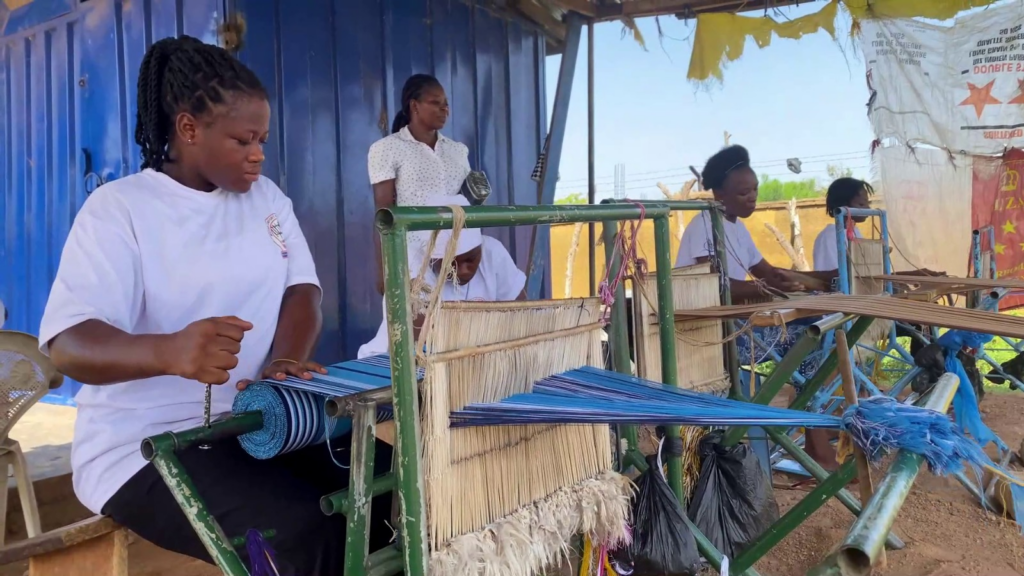
The four young apprentices at the shop were fixated on getting the long stretch of threads wound to a stone loomed into a full piece of cloth.
The fabrics will be used for what is popularly known as smocks.
“There is Dabonye and Wale Dabonye, costing either 400 or 450 cedis,” Ayambilla, a smock producer, said.
The Ghanaian smocks, locally called ‘fugu’ or ‘bakatari’, are common traditional wears notable among natives of Ghana’s regions of the north.
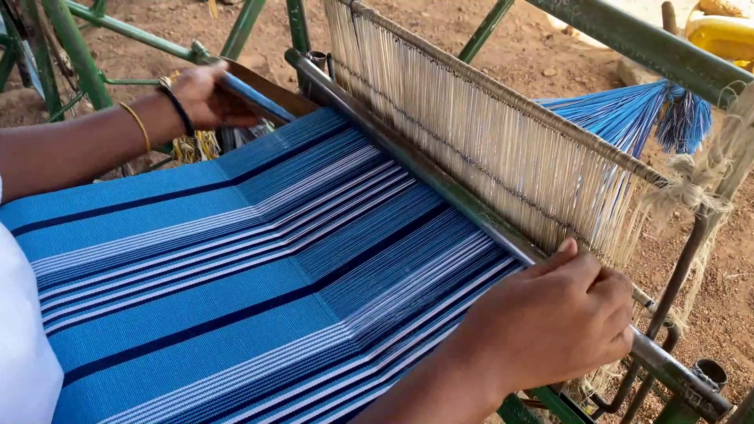
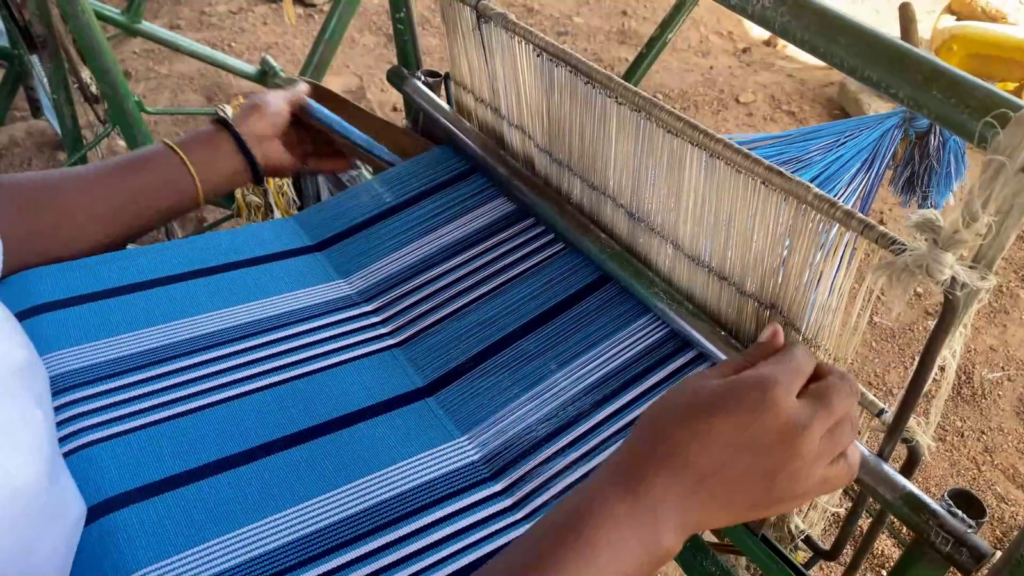
They are made from hand-loomed strips comprising a unique blend of coloured and undyed cotton yarns.
But the cost of materials used in making these beautiful fabrics is ballooning.
Lariba is almost a year and a half in the weaving industry. She explains the increasing cost of materials is impacting her sales.
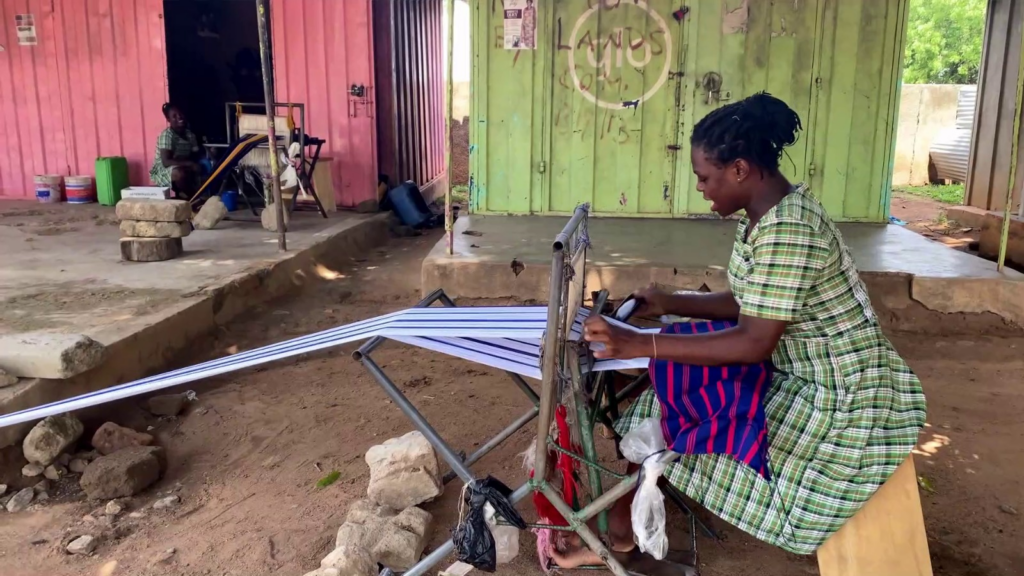
“The threads are expensive now. If you don’t calculate well in making the cloth, you’ll incur losses. Now, the threads aren’t even enough and expensive as well,” she said.
The hand-loomed yarns are intricately sewn together by hand to create a distinctive plaid pattern that characterizes the smock.
Despite the beautifully crafted clothes, the embroidery adorning the neckline creates a distinct look for the attire.
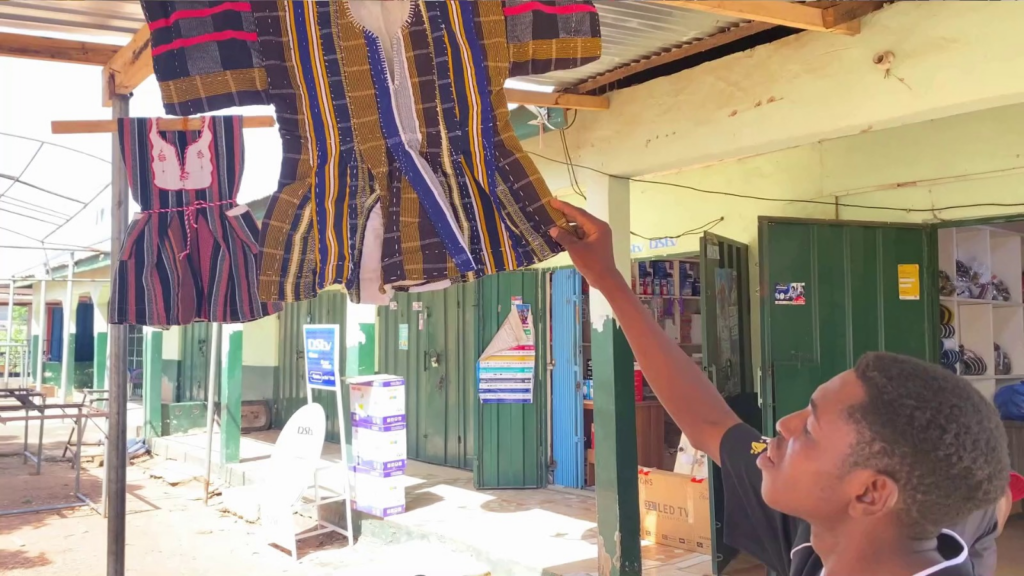
“For the females, you can get some of the smock at 180 or 250 cedis and 350 cedis. Those of high quality are usually expensive. Because we invest enough money buying the raw materials, the prices keep shooting up. It’s not our fault the prices keep rising,” Ayambilla said.
Smock weaving is one of the major trades in the region with several weaving machines dotted across various market centres and homes.
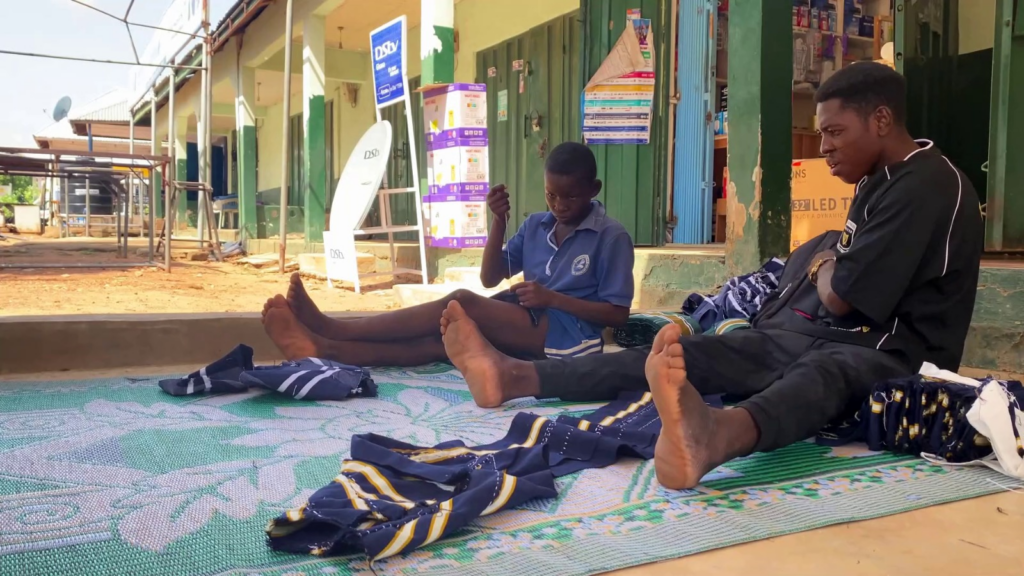
However, the increasing cost is negatively impacting the once vibrant market.
“Things are expensive now. Let’s say if I want to buy one myself, because it’s expensive I wouldn’t buy it and later find it difficult to get something to feed myself. The market is bad now. Sometimes only two people bring their clothes here for me to sow,” he added.
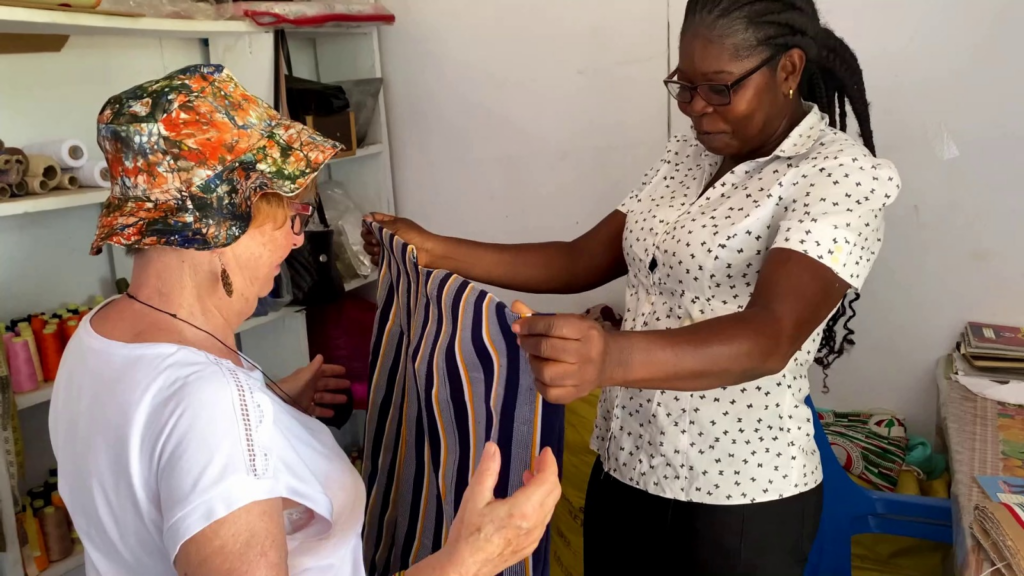
Despite the prevailing economic quagmire, these vendors are unperturbed as they continuously craft and preserve their rich cultural heritage.
Latest Stories
-
The man who saw tomorrow: How Dr Bawumia built for Ghana what America and Nigeria are building today
18 minutes -
Kumasi drivers demand price controls for goods, brand some traders as real ‘Kalabule’
21 minutes -
Consumer Protection Agency commends FDA for destroying illegal bales of diapers
25 minutes -
GNFS rescues stranded persons after flooding in Hohoe
46 minutes -
Baffour Awuah deliberately refused to honour EOCO invitation – Deputy AG, Srem-Sai
1 hour -
‘Believe in these players’ – Carlos Queiroz tells Ghanaians after leaving Black Stars job
1 hour -
ECG announces planned maintenance outage in parts of Accra on Friday
1 hour -
Carlos Queiroz sacked as Black Stars head coach
1 hour -
Parliamentary Sports Committee to ‘interrogate’ Black Stars struggles with Ministry, GFA invitations
1 hour -
Asutifi North Police arrest 7 in crackdown on suspected drug activities
2 hours -
Attijariwafa Bank: What to know about the Moroccan Group taking over SG Ghana
2 hours -
University Librarians Ghana honours past leaders for distinguished service
2 hours -
Seychelles President leads high-level dialogue on Africa’s digital future at FALS Global Conversations in New York
2 hours -
24-hour economy requires faster justice for commercial cases – Chief of Staff
2 hours -
Five Agric Colleges receive digital tools to drive climate-smart farming
2 hours