

Audio By Carbonatix
Just beyond the tree line that borders the forest reserve, Samuel Tobi stays on the farm alone while it rains, with his boots crunching over the wet, dead leaves on the ground.
“They say we’re using children, but who else will help me fetch water today if I have to spray tomorrow?” Tobi asks.
Tobi owns 17 acres of farmland in the Assin Fosu cocoa district, bordering a forest reserve. With luck and labour, the land yields up to 300 bags of cocoa annually, enough to sustain his family, but never without strain. Lately, the strain has become something more: the weight of being watched.
Labour or Culture?
On Saturdays, Tobi’s children walk with him to the farm. Not with machetes, but with empty water gallons. “We fetch water together, if I am to spray tomorrow, they’re not allowed near the field. We have to teach them and they have to learn,” he explains.
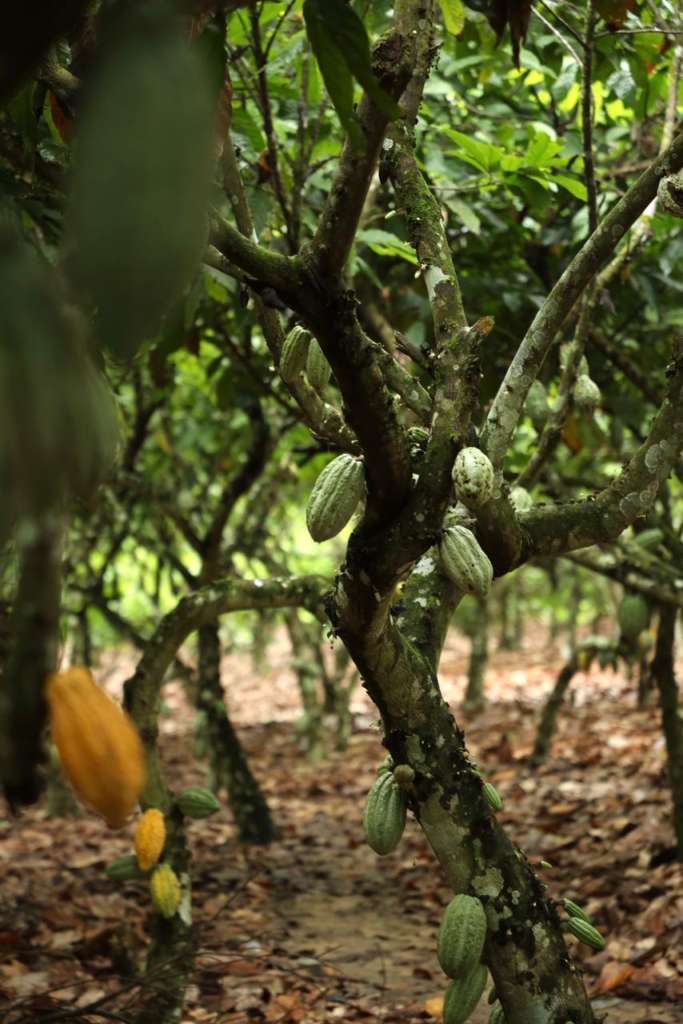
The line between help and harm is thin, and Tobi knows it. So do most farmers.
“It’s not child labour when a son helps his father to fetch water,” says Abdul Rahman, an officer with COCOBOD’s Cocoa Health and Extension Division (CHED). “It’s culture. But if that child misses school or carries the load of an adult, then it becomes something else.”
As the world demands more transparency in the cocoa supply chain, child labour has become a hot-button issue. From chocolate manufacturers to global watchdogs, pressure is mounting to clean up production.
But on the ground, farmers say the narrative is far more complicated.
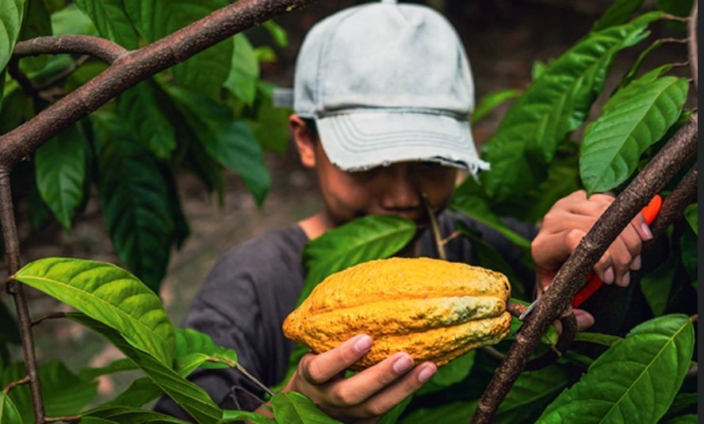
“Our children come to the farms on weekends or after school. We need to teach them. We don’t give them cutlasses or make them skip school. If I need to spray, I go alone. But they must learn, and they are happy to help,” Tobi says.
In rural Ghana, it is common, even expected, for children to support their families. But the line between tradition and abuse could be misunderstood by a foreigner.
Abdul Rahman puts it plainly: “In our culture, it is ethical for children to help their parents, as long as it doesn’t take them out of school or burden them with adult work.”
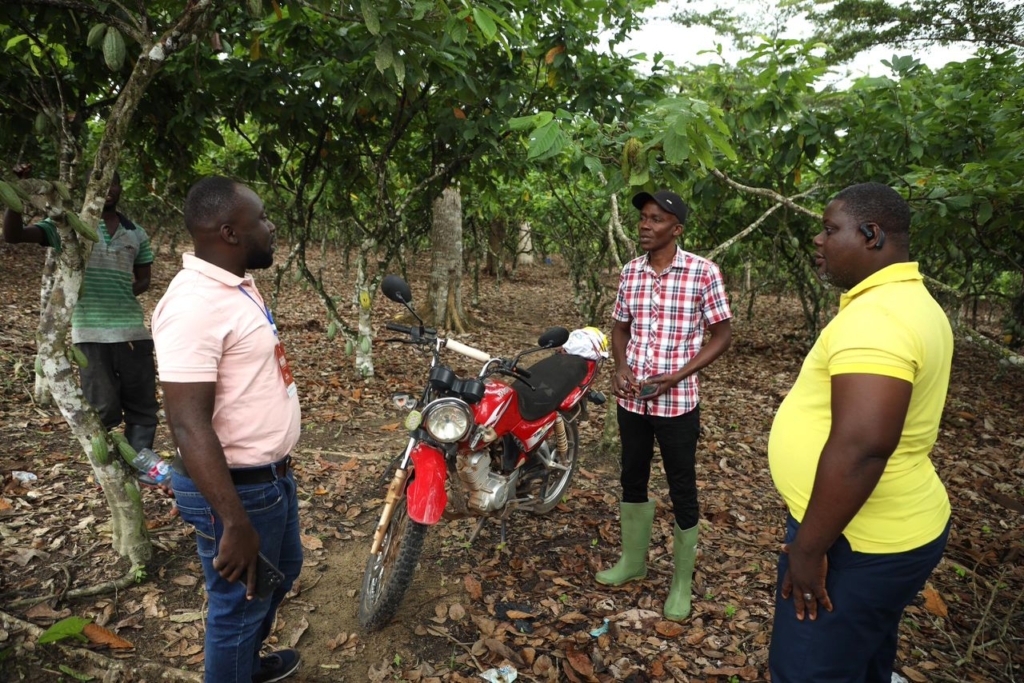
CHED officers provide training across cocoa communities, educating farmers on what constitutes harmful labour and when support becomes exploitation.
“A child on a farm during school hours is bad, and the farmer knows that. But a child fetching water on a Saturday? That’s not abuse, that’s upbringing,” Rahman says.
A System Under Strain
To address child labour and ensure ethical sourcing, Ghana is rolling out a national Cocoa Traceability System. By the end of 2025, all cocoa will need to be traceable from farm to port as part of compliance with the European Union’s deforestation and labour regulations.
If the cocoa beans do not meet the EU’s regulations, they risk being rejected. Considering that the EU purchases about 70% of Ghana’s cocoa exports, this places significant pressure on Ghana’s cocoa sector to comply with stringent standards, leaving little room for non-compliant produce to find alternative markets.
Ironically, it’s the farmers who seem to celebrate the traceability system more than they should, more so than exporters or regulators. Many farmers believe it will finally put an end to cheating, underpayment, and other long-standing challenges in the cocoa supply chain.
“I think the traceability will protect us, not is not meant to scare us,” Tobi says.
Exporters and regulators, on the other hand, acknowledge that the system streamlines their work and reduces their exposure to risk. After all, with traceability, responsibility for any irregularities can now be traced directly back to the farm.
Poverty, Not Malice
Experts agree that child labour is not rooted in parental cruelty; it’s rooted in poverty. When farmers are underpaid, they cannot hire labourers. When schools are far, children stay home. When income is uncertain, families rely on each other.
According to the International Cocoa Initiative (ICI), low incomes, rising costs, and poor access to services drive families to rely on child labour.
Similarly, the Rainforest Alliance points to widespread poverty among cocoa farmers, who often lack both the scale of production and the means to afford paid help as the underlying cause compelling them to use child labour .
The government’s price increase and support programs are a start. But many farmers say follow-through is what matters.
“They have started giving us the fertilizers, so I am hopeful they will follow through with the other promises,” Tobi says nodding.
Inputs must arrive on time. Scholarships must reach the right hands. And policies must recognize the realities on the ground.
The Human Cost of Chocolate
Behind every cocoa pod lies a story, not just of trade and export, but of parenting and a lot of compromise. For farmers like Samuel Tobi, who has been in the industry for over a decade, cocoa is more than a crop. It is legacy, identity, and survival.
“Some of our children study agriculture in school,” Samuel Tobi says. “We know where to draw the line. We are farmers, but we are parents too.”
Filed under the GIZ Sustainable Cocoa Media Training Workshop — August 2025
Latest Stories
-
IMMILAC president recounts personal losses as security women lead breast cancer awareness campaign in Wa
1 minute -
University of Ghana postpones October 12 reopening as GAUA strike persists
16 minutes -
Bahass Foundation launches vocational skills training to support mental health recovery in Wa
48 minutes -
NPP orders parliamentary aspirants and their supporters to suspend campaign activities
1 hour -
Techiman unites against child marriage: Joy Impact Makers Awardee leads charge on International Day of the Girl Child
2 hours -
Ghana Psychological Association calls for greater involvement of people with lived experience in mental health care
3 hours -
Ablakwa says Ghana could evacuate more citizens from South Africa if the situation worsens
3 hours -
Violence against girls must be tackled through individual responsibility – Gender advocate
3 hours -
Ghana’s BRICS bid must be guided by national interest – International Affairs Analyst
3 hours -
Journalists look back on a decade of breast cancer reporting in Ghana
4 hours -
President Mahama ends Resetting Ghana tour of Ahafo Region
6 hours -
African negotiators seek delivery of climate commitments at COP31
6 hours -
BoG develops AI rules for financial sector
6 hours -
‘Big Push’: Government assures contractors of prompt payments
6 hours -
Court fines miner for breaking into gold buying shop
6 hours