

Audio By Carbonatix
The United Nations Development Programme (UNDP) is supporting African countries by collaborating with their governments to develop and implement policies for structural economic transformation.
Africa remains the least industrialized continent, with a less endowed production capacity accounting for only 2.1 percent of global manufacturing.
This situation, experts say, is further complicated by an almost non-existent trade among African countries, resulting in a less-desired economic performance.
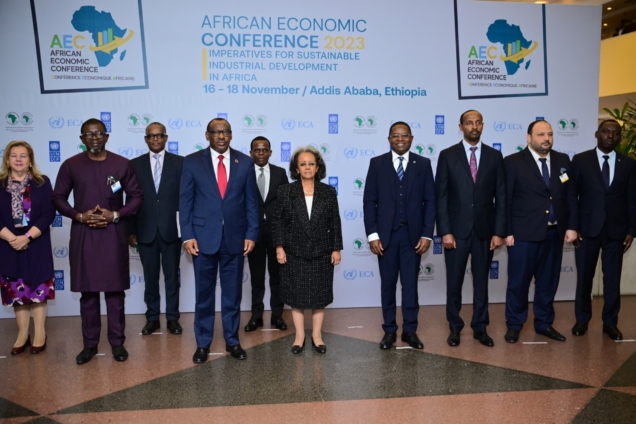
At the 2023 African Economic Conference (AEC), jointly organized by the African Development Bank (AfDB), the Economic Commission for Africa (ECA), and the United Nations Development Programme (UNDP), stakeholders are making a strong case for liberalizing trade and promoting intra-African trade, which has been identified as a prerequisite for Africa’s industrial revolution.

“Now is the time to invest in Africa’s value addition - because it is the only way that Africa will change the status quo – investing in its abundant raw materials and commodities that have transformed the economies of several advanced economies,” Matthias Naab, Director, Regional Service Center - UNDP Regional Bureau for Africa noted while adding that Africa must ensure that this value addition is also based on the regional value chains approach.
He also noted that “UNDP is supporting African countries – thanks to our presence in all African countries – working with governments to develop and implement policies for structural economic transformation. With specific regard to intra-African trade, we are invested – working with sister agencies in the UN Country Teams, in ensuring that the UN Sustainable Development Cooperation Frameworks and our own UNDP Country Programme Documents identify trade, investment and industry – as critical levers for economic growth and sustainable development”.

In 2021, UNDP published the Futures Report in collaboration with the African Continental Free Trade Area (AfCFTA) Secretariat, highlighting the critical importance of maximizing a Made in Africa Revolution. The sectors identified as emerging include automobiles, lithium-ion batteries, leather and leather products, clothing and textiles, soya, cocoa, pharmaceuticals, vaccines, mobile financial services, and entertainment services. This revolution will need to be underpinned by new investment ventures in goods and services that promote value addition and beneficiation.
Also present at the event was Sahle-Work Zewde, President of the Federal Republic of Ethiopia, who added her voice to the African Industrialization agenda, stating that "It is increasingly evident that industrial development is not a luxury but an essential component for sustained and inclusive economic growth."

The diplomat also urged her fellow African leaders and captains of industry to closely collaborate to adopt a more efficient strategy towards achieving import substitution while promoting intra-African trade.
Participants at this year’s African Economic Conference are reflecting on the theme: “Imperatives for sustainable industrial development in Africa,” presenting the opportunity for participants to think creatively about Africa’s experience with industrialization, the political will variously expressed at national, regional, and global levels, as well as the evidence of where it has been successful globally, but particularly on the African continent, to help accelerate towards the achievement of the SDGs and aspirations of the African Union’s Agenda 2063.
Latest Stories
-
Fire guts auto parts warehouse at Bubuashie, one fire officer injured
3 minutes -
I owe my victory to coach Ofori Asare – Allotey after winning WBA Africa Gold Super Flyweight belt
7 minutes -
Church of Pentecost supports over 2,000 BECE candidates in Obuasi with career guidance seminar
2 hours -
Brandon Asante and Coventry all but promoted to Premier League despite Sheffield Wednesday draw
2 hours -
GPL 2025/26: Late Kwartemaa strike downs Hearts in Tema
2 hours -
Ghana Faces Sierra Leone Moment as Prosecutorial Powers come under strain
2 hours -
Don’t consume fish or seafood from Tema Shipyard until further notice – FDA warns
2 hours -
Why volunteering might be Africa’s most underrated career accelerator
3 hours -
ActionAid Ghana raises concern over gender gaps in Feed Ghana Programme
3 hours -
Windstorm wreaks havoc in Gushegu, displacing nearly 2,000 residents and damaging schools
3 hours -
Friends of Bridget Bonnie Marks her 35th birthday with donation to Kasseh Model Health Centre
3 hours -
From Ekumfi Kokodo to the Pulpit Stage: Essi Donkor’s gospel journey takes shape
4 hours -
Landfilling waste management creates no value, it’s an economic waste
4 hours -
Photos: Speaker Bagbin Commissions MPs constituency office under parliamentary decentralisation programme
4 hours -
Black Stars technical advisor Winfried Schäfer sacked as GFA shakes up backroom staff
4 hours