

Audio By Carbonatix
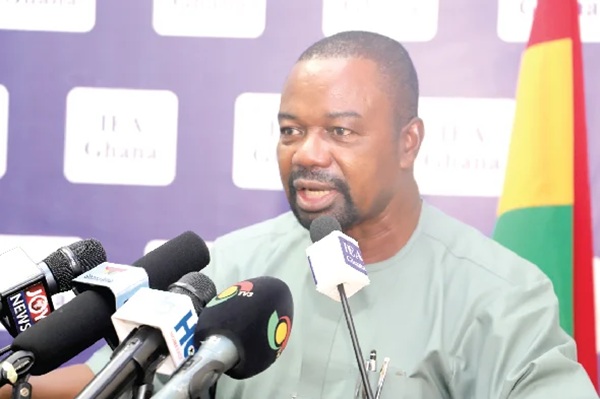
Renowned international relations expert and security analyst Prof. Vladimir Antwi-Danso has criticised the African Union’s (AU) silence following the assassination of Iran’s Supreme Leader, Ayatollah Ali Khamenei and argued that retaliatory attacks by Iran are justified.
Speaking as the Middle East teeters on the brink of total war, Prof. Antwi-Danso argued that under international law, Iran has a "legitimate right" to strike U.S. and Israeli military installations across the Gulf States.
The analyst’s comments in an interview on The Pulse on JoyNews come amid a wave of retaliatory Iranian missile strikes hitting U.S. bases in countries like Qatar, Bahrain, Kuwait and the UAE, following a joint U.S.-Israeli operation that targeted the heart of the Iranian leadership in Tehran.
The ‘Irony of Sovereignty’: Why Gulf bases are targets
Prof. Antwi-Danso dismissed condemnations of Iran’s retaliatory actions, pointing to the legal principle that any territory providing a launchpad for an aggressor becomes a valid military objective.
He contended on Monday, March 1, that the Gulf States, by hosting U.S. military infrastructure used in the 'Epic Fury' strikes, have effectively waived their immunity from Iranian counterattacks.
“Iran has every legitimate right to attack the bases of the US or Israel in any country around Iran or even far off,” the Professor asserted. “The base of US in the Gulf states are legitimate targets because a territory that has given an enemy [space] to operate is a target.”
He clarified that Iran’s actions do not constitute an attack on the sovereign nations of the Gulf themselves but rather a surgical response to the specific points of origin for U.S. aggression.
“They are not attacking those countries. They are attacking the base from where US attacks can come, and that is very legitimate,” he added.
Invoking Article 51: The right to self-defence
Central to the analyst's argument is Article 51 of the United Nations Charter, which guarantees a nation’s inherent right to individual or collective self-defence if an armed attack occurs.
Prof Antwi-Danso questioned the legal basis of the U.S. operation that reportedly killed the Ayatollah, contrasting it with Iran's documented reasons for retaliation.
“International law allows it. Article 51 of the UN charter allows this clearly, and they can make reference to it and do the attack... How legitimate is the US in attacking the house or office of the Ayatollah and killing him? What is the legitimacy?”
In his most provocative remarks, Prof. Antwi-Danso accused the African Union of being too financially compromised to take a principled stand against Western aggression.
He suggested that the AU's heavy reliance on European and Western funding for its conflict resolution budget has rendered the continental body boldness-deficient.
“We always lick the asses of our benefactors. More than 60 to 70% of the AU budget on conflict is from the EU and from the west. As a result, we are unable to be bold where it matters,” he lamented.
He argued that this financial dependency prevents the AU from condemning the assassination of a sovereign religious and political leader, despite the clear violation of international norms.
Escalating Global Tensions
The Professor’s analysis adds a layer of intellectual gravity to a weekend defined by chaos.
With flights cancelled and global oil prices surging, the legitimacy of the strikes on the Strait of Hormuz and Gulf bases is no longer just a legal debate—it is an economic reality.
As the U.S. vows to continue pinpoint bombing, the international community remains divided. While the West frames the strikes as a blow against "bloodthirsty thugs", analysts like Prof. Antwi-Danso warn that ignoring the legal framework of sovereignty and self-defence invites a cycle of violence that international law was designed to prevent.
Latest Stories
-
IMANI Africa President urges greater awareness and support for Parkinson’s Disease patients
4 minutes -
T-bills: Government records undersubscription of 29%; interest rates continue to surge
6 minutes -
Perceptions of Judicial partisanship ‘unfortunate’ – Justice Adjei-Frimpong urges greater public engagement to build trust
9 minutes -
Ghana to honour Christina Hammock Koch for historic Artemis II mission
1 hour -
Supreme Court appointments require more than 15 years’ experience – Justice Adjei-Frimpong
1 hour -
Fire destroys 3-bedroom house at Bogyawe
2 hours -
Why the Supreme Court is a “policy court” – Justice Richard Adjei-Frimpong breaks it down
2 hours -
Playback: The Law discussed Supreme Court @150
3 hours -
MTN Momo staff walk to promote wellness and fitness
3 hours -
Assafuah: Sedina Attionu’s return from Nevada will test government’s commitment to accountability
3 hours -
How GRA’s Modified Taxation Scheme is boosting revenue compliance & SMEs competitiveness
4 hours -
Stonebwoy Can Do It: A call to unite behind 2026 BHIM Fest
4 hours -
World Shea Expo returns to Tamale for 2026 edition
4 hours -
Prioritise cocoa sector with better prices, timely payments-Annoh-Dompreh urges NDC
5 hours -
Lands and Mines Watch Ghana endorses Heath Goldfields’ mining capacity
5 hours