


Audio By Carbonatix
Israel has scrapped a plan to forcibly deport tens of thousands of illegal African migrants.
In a written response to the country's Supreme Court, the government said forced removal of the migrants "is no longer on the agenda".
However, Israel's immigration authorities are still seeking ways to deport migrants voluntarily, it said.
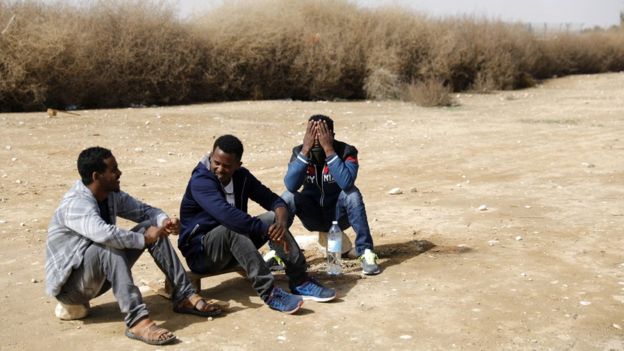
The fate of Israel's roughly 30,000 illegal African migrants has become a hugely contentious issue.
The supreme court previously suspended a plan to expel the migrants - mostly from Eritrea and Sudan - unless they voluntarily accepted a cash lump sum and a plane ticket out of the country.
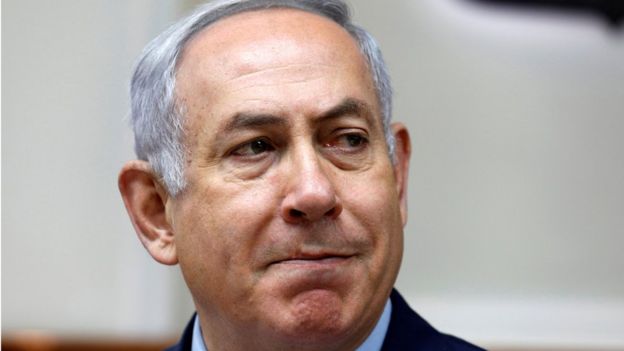
Prime Minister Benjamin Netanyahu then cancelled a UN deal to resettle the migrants in Western nations.
Under the deal, Israel would give "temporary residence" to a migrant in Israel for each migrant resettled abroad.
On Monday, 18 Democratic members of the US House of Representatives reportedly wrote to Mr Netanyahu saying they were "dismayed" and "disappointed" that he had dropped the UN proposal, saying it left the migrants "in limbo, with no clear next step".
Where are the migrants from?
Most of the African migrants in Israel are from Eritrea - a one-party state whose leaders have been accused of crimes against humanity by a UN inquiry - and war-torn Sudan.
They say they fled danger at home and that it is not safe to return to another African country, but Israel considers the majority of African asylum seekers to be economic migrants.
Most of them entered from Egypt several years ago, before a new fence was built along the desert border. This has ended most illegal crossings.
How controversial is this issue?
A decision in January to offer the migrants a cash lump-sum and a plane ticket to leave Israel voluntarily or otherwise face forced expulsion has been criticised in Israel.
Some critics in the country and among the Jewish community abroad - including former ambassadors and Holocaust survivors - said the plan was unethical and a stain on Israel's international image. The UN refugee agency said it violated local and international laws, and large protests were held in Israel.
Mr Netanyahu said the opposition was "baseless and absurd" and that Israel would resettle "genuine refugees".
Activists, however, noted that only a handful of Eritreans and Sudanese had been recognised as refugees by Israel since the country took over the processing of applications from the UN in 2009.
Latest Stories
-
White House bars CNN from travelling with Trump on Air Force One
39 minutes -
Fennis wins second consecutive ITF J60 title in Accra
43 minutes -
Spain beat England in thriller after Kane penalty miss
49 minutes -
GPL 2026/27: Zaidan’s late goal ends Hearts of Oak unbeaten start
53 minutes -
CEOs demand clarity on pay harmonisation, board autonomy as FWSC engages SOEs bosses over IPEC transition
55 minutes -
2026 Women’s Super Cup: FC Savannah, Epiphany Warriors maintain top spots ahead of final group games
1 hour -
‘Is EOCO responsible for determining lawyers’ fees?’ – Baffour Awuah
1 hour -
David Beckles claims second J60 Accra title
2 hours -
No France cocaine suspect linked to Mahama, Vice President’s security details – NACOC
2 hours -
Anwelle Foundation launched in Jirapa to tackle poverty, youth unemployment
2 hours -
Joy Sports Editor Fentuo Tahiru Fentuo to moderate inaugural Music Meets Football Summit in Zambia
2 hours -
Court premises too volatile for Baffour Awuah’s attempted arrest by EOCO – Inusah Fuseini
2 hours -
Drug bust: Under no circumstances will NACOC leadership be compromised – Twum-Barimah
2 hours -
VIDEO: EOCO’s attempted arrest of Baffour Awuah was flawed beyond saving – Law Lecturer
2 hours -
Genuine Ghanaian exporters may face heightened foreign inspections over drug busts – Lawyer
2 hours