

Audio By Carbonatix
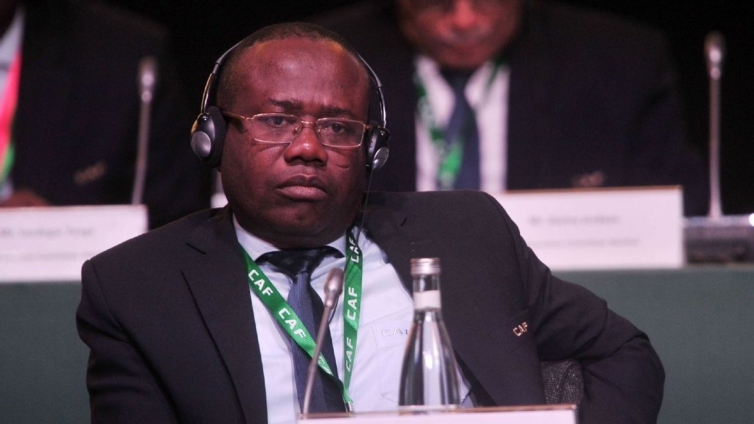
Former President of the Ghana Football Association (GFA), Kwesi Nyantakyi, has described the Disciplinary Committee ruling in the controversial case between Dreams FC and Tema Youth FC involving Cudjoe Mensah/Daniel Gozar as a “bad decision” that ultimately dented the image of the GFA.
The case which was heard by now General Secretary of Ghana Football Association (GFA) Prosper Harrison Addo as Chairman of the Disciplinary Committee in 2015, banned the player from all football-related activities, but did not sanction Dreams FC which per facts later uncovered by CAS changed the identity of the player from Daniel Gozar to Cudjoe Mensah.
Tema Youth appealed the ruling of the Disciplinary Committee at the Appeals Committee which was rejected on November 5, 2015 —an outcome that triggered public outrage and fuelled claims of bias and manipulation.
The club proceeded to CAS and on July 13, 2016, the sports adjudicatory body directed the FA to reconstitute a committee to hear the matter. The newly reconstituted committee demoted Dreams FC to Division One, and they were replaced by Tema Youth for the 2017/18 Ghana Premier League campaign.
Dreams FC official, Ibrahim Dossey was also banned for five years from all football-related activities
Speaking publicly on the matter for the first time since it happened in 2016, Nyantakyi made the remarks in an interview with Muftawu Nabila Abdulai.
Nyantakyi, under whose tenure the decision was taken, denied any involvement in the case and suggested that the ruling, led by the then-chairman of the Disciplinary Committee and now GFA General Secretary, Prosper Harrison Addo, was fundamentally flawed.
“The interesting thing is that I didn’t know anything about the [Cudjoe Mensah/Daniel Gozar] case [between Tema Youth and Dreams FC] and I had no role at all in it.
"I have heard rumours to the fact that I engineered or manipulated the Disciplinary Committee to pass that decision [of banning player without sanctioning Dreams FC],” Nyantakyi said.
“I didn’t even understand the case, I didn’t know the facts of the case. I knew there was a case at the Disciplinary Committee and that was the extent of my knowledge.
"I have a good relationship with [Wilfred Kwaku Osei] Palmer and I was even in the ExCo with Palmer before Kurt [Okraku] came so if there was any help I could give, I probably could have given it to Palmer, but I didn’t give help or attempt to influence any decision at the FA in favour of anybody.
“That was a decision taken by the Disciplinary Committee headed by now General Secretary [Prosper Harrison Addo] and with the benefit of hindsight, it was a bad decision which cannot be supported any day by law and CAS [ruling] exposed the weakness in the decision and I think that time has really vindicated that it was a bad decision.”
The fallout from the ruling led to scrutiny of the GFA’s judicial process and calls for structural reforms. Nyantakyi, while acknowledging that most GFA members have ties to football clubs, defended the creation of independent judicial committees during his tenure.
“The President of the FA and other members of the FA are all club people or most of them are club people. Once club people begin to tamper with decisions, then there will be allegations of favouritism here and there.
“Though those allegations are still there, it would have been more than that if we hadn’t created independent committees to adjudicate cases at the FA.”
He also noted that even independent bodies are not immune to error, comparing the GFA’s committee system to the country’s court hierarchy.
“Now you have people who are supposed to be independent of the FA. They don’t hold any position in any club, they are making those decisions, but you should also appreciate that even in our regular court system in the country—High Court, Appeals Court—they make mistakes sometimes and you can only change it when you go to a higher court.
"That’s why we have the hierarchy of courts. So we created the same arrangement, hierarchy of committees at FA, that if you’re dissatisfied, you can appeal. The Supreme Court even makes mistakes. The Supreme Court of Ghana has made mistakes before.
“In 1961, there’s a famous case Re: Akoto. The case decided that the bill of rights in the constitution at the time were not justiciable; they were not enforceable in law until 1993 when the Supreme Court of Ghana said that the decision was wrong.
“When the Supreme Court takes a decision, whether right or wrong, whether mistake or no mistake, that is it—you can’t do anything about it. You live with it.”
The Dreams FC-Tema Youth saga, which ended with the Court of Arbitration for Sport (CAS) overturning the GFA’s ruling, remains one of the most controversial episodes in Ghanaian football.
Latest Stories
-
A source of excellence across generations – Vice President Opoku-Agyemang lauds Mfantsipim
19 minutes -
(Photos) Mfantsipim School launches historic 150th anniversary
43 minutes -
Knights and Ladies of Marshall group backs Catholic Bishops’ stance on anti-LGBTQ+
2 hours -
Bright Simons writes: All the Filla in the Ibrahim Mahama/E&P – Gold Fields Saga
2 hours -
Monetise Idiocy In Ghana
2 hours -
The Ghanaian prophet and the mysterious death of his scottish wife Charmain Speirs
3 hours -
Nearly 400 sentenced in Nigeria for links to militant Islamists
3 hours -
Ghana’s recovery supported by gold strength despite global oil price pressures – Standard Bank Research
3 hours -
Methodist Church hails Mfantsipim@150; calls for “fresh consecration” to excellence
4 hours -
‘Excellence is our inheritance’ – Nana Sam Brew-Butler hails Mfantsipim’s 150-year reign in leadership
4 hours -
Kwaku Azar writes: A-G vs OSP
4 hours -
Mfantsipim–Adisadel rivalry built excellence, not division – Sam Jonah
4 hours -
Vice President launches Mfantsipim’s 150 years of shaping Ghana’s greatest mind
5 hours -
I assure Otumfuo, Mahama will join him to commission KNUST Teaching Hospital by end of this year – Haruna Iddrisu
5 hours -
Barcelona dominate derby to extend La Liga lead
6 hours