

Audio By Carbonatix
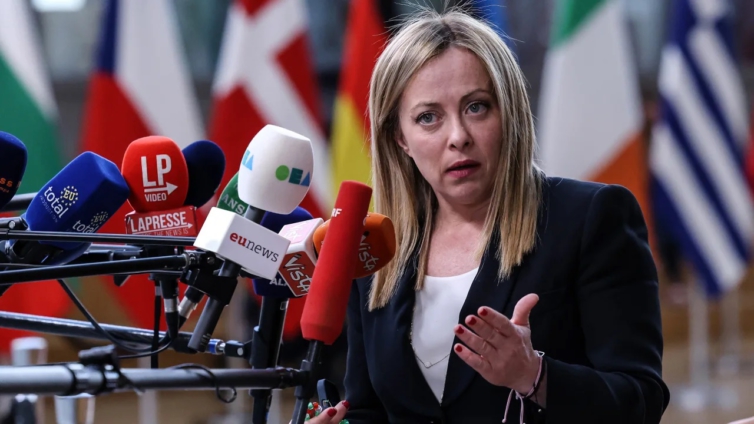
Italians who use English and other foreign words in official communications could face fines of up to €100,000 ($108,705) under new legislation introduced by Prime Minister Giorgia Meloni’s Brothers of Italy party.
Fabio Rampelli, a member of the lower chamber of deputies, introduced the legislation, which is supported by the prime minister.
While the legislation encompasses all foreign languages, it is particularly geared at “Anglomania” or use of English words, which the draft states “demeans and mortifies” the Italian language, adding that it is even worse because the UK is no longer part of the EU.
The bill, which has yet to go up for parliamentary debate, requires anyone who holds an office in public administration to have “written and oral knowledge and mastery of the Italian language.” It also prohibits use of English in official documentation, including “acronyms and names” of job roles in companies operating in the country.
Foreign entities would have to have Italian language editions of all internal regulations and employment contracts, according to a draft of the legislation seen by CNN.
“It is not just a matter of fashion, as fashions pass, but Anglomania has repercussions for society as a whole,” the draft bill states.
The first article of the legislation guarantees that even in offices that deal with non-Italian-speaking foreigners, Italian must be the primary language used.
Article 2 would make Italian “mandatory for the promotion and use of public goods and services in the national territory.” Not doing so could garner fines between €5,000 ($5,435) and €100,000 ($108,705).
Under the proposed law, the Culture Ministry would establish a committee whose remit would include “correct use of the Italian language and its pronunciation” in schools, media, commerce and advertising.
This would mean that saying “bru-shetta” instead of “bru-sketta” could be a punishable offense.
The move to safeguard the Italian language joins an existing bid by the government to protect the country’s cuisine.
It has introduced legislation to ban so-called synthetic or cell-based cuisine due to the lack of scientific studies on the effects of synthetic food, as well as “to safeguard our nation’s heritage and our agriculture based on the Mediterranean diet,” Meloni’s Health Minister Orazio Schillaci said in a press conference.
Latest Stories
-
Church of Pentecost supports over 2,000 BECE candidates in Obuasi with career guidance seminar
1 hour -
Brandon Asante and Coventry all but promoted to Premier League despite Sheffield Wednesday draw
1 hour -
GPL 2025/26: Late Kwartemaa strike downs Hearts in Tema
2 hours -
Ghana Faces Sierra Leone Moment as Prosecutorial Powers come under strain
2 hours -
Don’t consume fish or seafood from Tema Shipyard until further notice – FDA warns
2 hours -
Why volunteering might be Africa’s most underrated career accelerator
2 hours -
ActionAid Ghana raises concern over gender gaps in Feed Ghana Programme
2 hours -
Windstorm wreaks havoc in Gushegu, displacing nearly 2,000 residents and damaging schools
2 hours -
Friends of Bridget Bonnie Marks her 35th birthday with donation to Kasseh Model Health Centre
3 hours -
From Ekumfi Kokodo to the Pulpit Stage: Essi Donkor’s gospel journey takes shape
3 hours -
Landfilling waste management creates no value, it’s an economic waste
3 hours -
Photos: Speaker Bagbin Commissions MPs constituency office under parliamentary decentralisation programme
3 hours -
Black Stars technical advisor Winfried Schäfer sacked as GFA shakes up backroom staff
4 hours -
Wenchi water project almost complete, critical to gov’t agenda – GWL MD
4 hours -
Anti-LGBTQ+ bill not part of government’s legislative agenda – Inusah Fuseini
4 hours