

Audio By Carbonatix
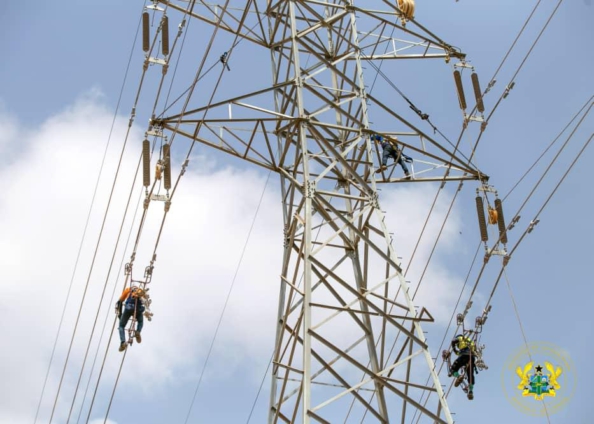
The Japan Bank for International Cooperation (JBIC) has expressed interest in investing in Ghana’s energy transmission to contribute to electricity stability and engender productivity and economic growth.
Through semi-commercial loans, JBIC would support the financing of bankable projects, including the establishment of sub-stations as well as the provision of energy efficiency technology, which has worked in Japan to Ghana.
Other areas of interest to the bank include oil and gas, manufacturing, green projects, including automobiles, energy transition and clean cooking, and health infrastructure development.
Ms Fukaya Satoko, Division Director, Energy and Natural Resources Finance Group, JBIC, disclosed this exclusively to the Ghana News Agency on the margins of the 2024 Africa Investment Forum (AIF) market days in Rabat, Morocco.
“A lot of Japanese companies have a kind of high technology to stabilise electricity, especially for the transmission lines. We can finance these projects if the government is interested,” Ms Satoko said.
She attributed the country’s capacity to make repayment, track record of coming out of crisis, and the need to expand the Bank’s reach in Africa as reasons for the interest to invest in Ghana.
“The Ghana government has tried to build up some kind of track record in coming out of crisis, and we can rely on that to invest in the country and support economic growth,” she said.
At the 2024 Annual Meetings of the International Monetary Fund (IMF) and the World Bank Group (WBG), Dr Mohammed Amin Adam, hinted of the government’s willingness to allow private participation in the energy sector, which is faced with a US$1.9 billion financing gap.
“If the government has the right policies, we are ready to collaborate and bring Japanese companies into the country and ensure that things are made possible,” said, Ms Satoko.
She expressed optimism that a partnership between the government of Ghana, JBIC and Japanese companies would go a long way in reducing the energy sector challenges, and positioning, particularly, the electricity sector to support industrial growth.
Latest Stories
-
GTA sensitises taxi drivers in ‘Know Ghana’ tourism campaign
11 minutes -
Archbishop Agyinasare calls for responsible speech amid growing social media abuse
16 minutes -
‘It will be inexcusable for gov’t not to honour payment of teachers’ arrears by 30th October’ – Haruna Iddrisu
24 minutes -
Forbes’ World’s Best Employers 2026: No Ghanaian firm ranked among 900 companies
26 minutes -
Electronic processing of teachers’ data: ‘The decision is the Controller’s’ – GES boss
30 minutes -
Teachers’ Strike: Haruna Iddrisu questions paper-based processing of promoted teachers’ data
43 minutes -
Teachers’ strike: GES targets Monday deadline to submit promotion data to Controller
51 minutes -
Inflation to average 11.3% in 2027 – Fitch Solutions
1 hour -
I didn’t campaign for NDC to come and do this nonsense – Kpebu on EOCO
1 hour -
Fitch Solutions maintains policy rate forecast of 14% by December 2026
1 hour -
Diaspora Nasara Caucus congratulates Mohammed Ali Suraj, new NPP executives
3 hours -
Dr Antwi-Boasiako’s cybersecurity book showcased at UN crime prevention congress
3 hours -
We will empower the grassroots and protect every vote – NPP’s 1st Vice Chair Kojo Bamba
3 hours -
I do not see myself as better than anyone – NPP’s 1st Vice Chair Kojo Bamba
4 hours -
Police blur the line between invitations and arrests – Reindorf Twumasi Ankrah
4 hours