

Audio By Carbonatix
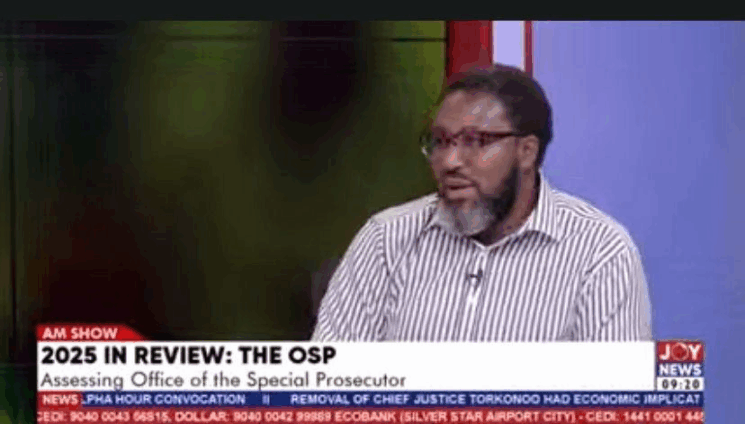
An energy analyst, Lom-Nuku Ahlijah, says the Energy Sector Levies Act (ESLA) has played an important role in supporting Ghana’s energy sector, but insists it has not been enough to resolve the long-standing debt burden completely.
Speaking on JoyNews's AM Show, Mr Ahlijah explained that although the sector is performing better compared to previous years, significant legacy debt still remains.
He noted that recent renegotiation of power purchase agreements has provided some relief, as the savings made from these renegotiations have reduced the amount government would otherwise have paid to the Electricity Company of Ghana (ECG).
According to him, ESLA was introduced primarily to help “plug the hole” in the energy sector’s finances. Since its introduction in 2015, levies collected under ESLA have been used to service energy sector debts.
He added that the government’s recent amendment to increase fuel levies by one cedi is also aimed at strengthening the ESLA framework and addressing funding gaps in the sector.
However, Mr Ahlijah cautioned that the debt situation is not static. He explained that the sector cannot fix the debt at a particular figure and rely solely on ESLA to clear it, because Independent Power Producers (IPPs) continue to operate and generate power. As a result, unpaid obligations to IPPs are added to the debt stock whenever payments are delayed.
He further pointed out that while the cash waterfall mechanism has been implemented to ensure that key players in the energy value chain, particularly power producers, are paid more regularly, a funding gap still persists.
“The gap will remain,” he said, explaining that ECG is unable to collect enough revenue to fully meet its payment obligations.
He attributed this largely to power theft and distribution losses," he said on December 31.
Ahlijah noted that if IPPs generate power worth 100 million cedis for ECG to supply to households and industries, but a portion of that power is stolen or goes unbilled, ECG cannot collect the full 100 million cedis. This shortfall, he said, directly affects ECG’s ability to pay IPPs, leading to the continuous accumulation of debt.
He stressed that while measures such as ESLA, contract renegotiations, and the cash waterfall mechanism have improved the situation, addressing power theft and improving revenue collection remain critical to closing the persistent financial gap in the energy sector.
Latest Stories
-
WAFU B U17: Ghana top Group A after win over Togo
7 minutes -
Ho Central Mosque reopens amid unresolved leadership dispute that led to closure
1 hour -
Minority caucus questions GH¢16.4m in Ablakwa’s SA evacuation spending, demands independent audit
1 hour -
Gender Ministry meets Nana Akua Addo’s husband over domestic violence after hospital discharge
2 hours -
UG Vice-Chancellor urges swift operationalisation of National Research Fund
3 hours -
Pope Leo to have surgery after lump found in lung
3 hours -
Joseph Cudjoe writes: Ghana must break free from the dangerous mindset that natural resources are the foundation for wealth
3 hours -
Children among 109 dead after boat capsizes off Djibouti, UN says
3 hours -
OmniBSIC Bank’s 11th health walk promotes fitness and business growth
3 hours -
2026 World Maritime Day: Danish Embassy organises “The Gulf of Guinea Speaks”
4 hours -
New Economy will tackle unemployment and restore hope – Ato Forson
4 hours -
IMMILAC president recounts personal losses as security women lead breast cancer awareness campaign in Wa
4 hours -
University of Ghana postpones October 12 reopening as GAUA strike persists
4 hours -
Bahass Foundation launches vocational skills training to support mental health recovery in Wa
5 hours -
NPP orders parliamentary aspirants and their supporters to suspend campaign activities
5 hours