

Audio By Carbonatix
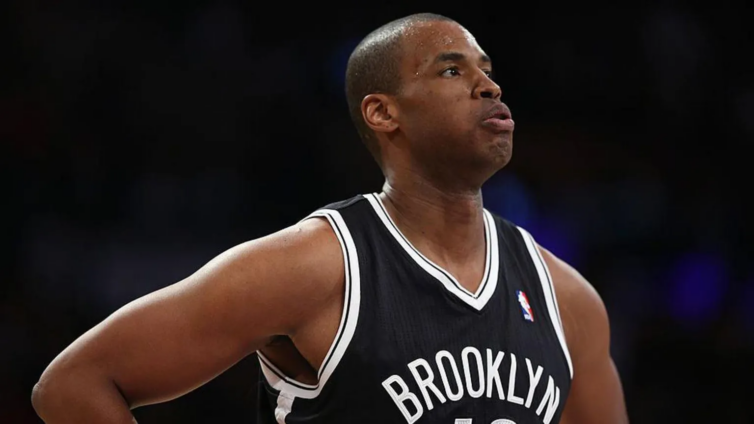
Former pro-basketball player Jason Collins, the first active male athlete on a major American professional team sport to come out as gay, has died aged 47.
Collins died after a "valiant fight with glioblastoma", an aggressive form of brain cancer, his family said in a statement shared by the National Basketball Association (NBA).
He announced last year that he had been diagnosed with cancer and was undergoing treatment to stop the spread of the inoperable disease.
"Jason Collins' impact and influence extended far beyond basketball as he helped make the NBA, WNBA and larger sports community more inclusive and welcoming for future generations," NBA Commissioner Adam Silver said on Tuesday.
"Jason will be remembered not only for breaking barriers, but also for the kindness and humanity that defined his life and touched so many others," Silver added.
Collins said in December 2025 that the cancer was discovered after he was struggling to focus.
The brain tumour, he said, was like "a monster with tentacles spreading across the underside of my brain the width of a baseball".
Without treatment, he would be dead within three months, doctors told Collins.
When revealing his diagnosis to the world, he said it reminded him of his decision to publicly come out as gay in 2013 in a front-page cover story for Sports Illustrated. The years since were "the best of my life", he said.
"Your life is so much better when you just show up as your true self, unafraid to be your true self, in public or private. This is me. This is what I'm dealing with."
Collins was being treated with a drug called Avastin to slow the tumour's growth, and had been travelling to Singapore for a targeted form of chemotherapy.
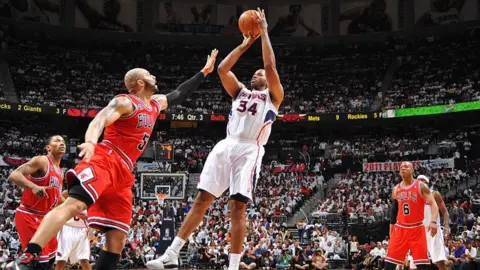
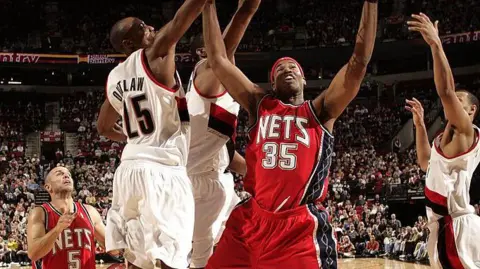
The California native started his career in college, playing for Stanford University before going to the NBA. He played for six teams in his 13 seasons in the league, starting with the New Jersey Nets.
He had previously been featured on Time Magazine's 100 most influential people list. He retired in 2014.
"Jason changed lives in unexpected ways and was an inspiration to all who knew him and to those who admired him from afar," his family said on Tuesday.
He started his coming out essay for Sports Illustrated in 2013, by writing: "I'm a 34-year-old N.B.A. center. I'm Black and I'm gay."
He was a free agent at the time the essay was published, and so it remained unclear whether coming out would end his NBA career.
While there were significant developments for the gay rights movement by then, gay marriage was not legal across the US until 2015.
Collins went on to rejoin the Nets - where he started his career - after they moved to Brooklyn, and he became the first openly gay athlete to ever play across any of the four major US sports leagues.
The Nets said in a statement that they are "heartbroken" about Collins' death.
"Jason spent eight seasons in a Nets uniform, helping define an era of our franchise and playing a vital role on our back-to-back Eastern Conference championship teams in 2002 and 2003," the team said.
"Those who were around Jason every day knew him not just as a competitor, but as a genuinely kind, thoughtful person who brought people together. His impact extended far beyond the court, and his courage and authenticity helped move the game - and the world - forward."
Former Stanford University basketball coach Mike Montgomery told US media that it was a "sad day" and that Collins was one of the school's "greats".
"The impact he had on Stanford was immense, as he could match up against anyone in the country because he was big, smart, strong and skilled, all while being a very bright and nice person," Montgomery said.
What is glioblastoma?
Glioblastoma, or GBM, is an aggressive type of brain cancer that starts in cells called astrocytes, which support nerve cells, according to the Mayo Clinic.
It is a part of a larger group of tumours called gliomas.
Glioblastoma is the most common malignant brain tumour in adults.
It can occur at any age but happens most often in older adults.
Symptoms can vary depending on where the tumour forms in the brain. It can include seizures or changes in thinking, speech, vision, strength, sensation or balance.
While treatments can potentially slow tumour growth, there is no known cure.
Latest Stories
-
GTA sensitises taxi drivers in ‘Know Ghana’ tourism campaign
49 minutes -
Archbishop Agyinasare calls for responsible speech amid growing social media abuse
54 minutes -
‘It will be inexcusable for gov’t not to honour payment of teachers’ arrears by 30th October’ – Haruna Iddrisu
1 hour -
Forbes’ World’s Best Employers 2026: No Ghanaian firm ranked among 900 companies
1 hour -
Electronic processing of teachers’ data: ‘The decision is the Controller’s’ – GES boss
1 hour -
Teachers’ Strike: Haruna Iddrisu questions paper-based processing of promoted teachers’ data
1 hour -
Savannah Region: Kunfusi bridge collapses again, leaving nearly 4,000 residents cut off
1 hour -
Teachers’ strike: GES targets Monday deadline to submit promotion data to Controller
1 hour -
Inflation to average 11.3% in 2027 – Fitch Solutions
2 hours -
I didn’t campaign for NDC to come and do this nonsense – Kpebu on EOCO
2 hours -
Fitch Solutions maintains policy rate forecast of 14% by December 2026
2 hours -
Diaspora Nasara Caucus congratulates Mohammed Ali Suraj, new NPP executives
4 hours -
Dr Antwi-Boasiako’s cybersecurity book showcased at UN crime prevention congress
4 hours -
We will empower the grassroots and protect every vote – NPP’s 1st Vice Chair Kojo Bamba
4 hours -
I do not see myself as better than anyone – NPP’s 1st Vice Chair Kojo Bamba
4 hours