

Audio By Carbonatix
When Ghana became the first country in Africa to receive Covid-19 vaccine doses through the Covid-19 Vaccines Global Access (COVAX) initiative to equitably distribute Covid vaccines, I had a glimmer of hope; that solidarity would prevail to protect people everywhere from the virus. Fast forward to today and a third of the world remains completely unvaccinated, including 80% of people in Africa. Moreover, lifesaving treatments are only available in a handful of countries.
Many countries did not, and still do not understand the gaps that the pandemic will not end until all people, in every country, are protected from Covid-19. The “me-first” approach has left large swaths of Africa without the tools needed to slow the spread of new variants, stop preventable deaths and build back economies, consequently, holding the entire world back. Obviously, we cannot leave solidarity to chance the next time around.
To safeguard our future, we need a new international system anchored in solidarity, transparency, accountability and equity to enable countries at every income level to detect, alert and respond to health threats before they become pandemics.
In a new Call to Action, the Panel for a Global Public Health Convention has proposed a bold path forward to address such gaps and dramatically strengthen pandemic prevention, preparedness and response systems through a new Pandemic Treaty or Convention.
The new set of recommendations calls for a positively incentivized system governed at the heads of state level where compliance with agreed preparedness standards, alert protocols and response efforts are overseen by an independent monitoring and assessment body at arm’s length from the World Health Organization (WHO).
Even though WHO’s leadership in setting international standards in preparedness and response and supporting countries achieve targets is still vital, this independent body would add an additional layer of accountability to our international system by having the mandate to call on and call out countries based on the performance of pandemic preparedness, detection and response.
We must also look through an equitable and realistic lens when we set targets and monitor for performance, as levels of pandemic preparedness will vary by country. For instance, following the 2014–2016 Ebola outbreak in West Africa, many countries strengthened their capacity to contain outbreaks through enhanced laboratory capacity, disease surveillance and cross-border coordination. Many of these systems moved into gear to respond to the growing COVID- 19 threat back in 2020.
However, countries without this recent history may be farther behind on the road to pandemic preparedness – a new Pandemic Treaty must ensure that targets are ambitious and appropriate, and no matter where a country falls on this spectrum, technical and financial support is readily available to enable countries to meet goals.
The African Union has done a laudable job establishing a range of continental funds and platforms to pool resources and provide technical and financial assistance to all countries – from the AU COVID-19 Response Fund to the African Vaccine Acquisition Task Team. A new Pandemic Treaty must ensure this kind of collaboration takes place at the international level because global health security is only as strong as its weakest link.
A new multilateral financing facility to ensure all countries can access predictable and sustainable funding without incurring catastrophic debt will be a necessary step. And we must consider tools (PPE, test kits and vaccines) and countermeasures that contain outbreaks, as global public goods and services to be financed, produced and distributed as such.
Finally, a new Pandemic Treaty must address gaps in our understanding and ability to stop pathogens at their source by reducing the risks of disease spillovers from animals to humans. While Ebola and more recently Covid-19 has added new urgency to address emerging challenges at the intersection of environmental, animal and human health, there is an insufficient investment, little oversight and a lack of coordination within countries. A Treaty must encourage more research and enhance coordination among all stakeholders.
From stopping outbreaks at the source to alerting the world and responding once an outbreak is underway, we need as much mutual assurance as possible along the timeline of events. Without clear accountability at each stage, calls for solidarity may yet again fail the next time an outbreak with pandemic potential emerges. We have the tools and solutions to prevent this
– let’s put them to use through a new, equitable Pandemic Treaty.
****
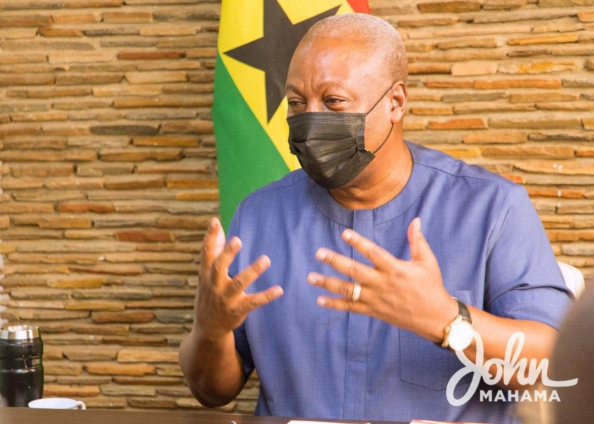
John Dramani Mahama is a former President of the Republic of Ghana and a Member of the PANEL FOR A GLOBAL PUBLIC HEALTH CONVENTION.
Latest Stories
-
NPP had more permanent fuel relief measures than current GH¢2 diesel cut – Amin Adam
14 minutes -
Photos from the 3rd Republic Bank-JoyNews Habitat Fair Clinic
17 minutes -
Ethiopia’s army promises restraint amid fears of new civil war
26 minutes -
Amin Adam calls for review of fuel taxes as diesel prices remain above GH¢18
58 minutes -
World Vision Ghana, Ahafo districts sign MoU for universal WASH coverage
1 hour -
When the gold engine stutters: What Ghana’s Cedi and reserves are telling us about the new economic architecture
2 hours -
Two reportedly die after being trapped in mining pit at Juaboso
2 hours -
Petrosol cleans up Wa Municipal Hospital, to donate medical equipment
2 hours -
‘If NPP was ‘insensitive’ over fuel prices, NDC must accept same description now’ — Amin Adam
2 hours -
KiDi brings the hits to London in sold-out UK headline concert
2 hours -
The last goodbye of Ghanaian shot dead in the US
3 hours -
MCC opens door to Ghana again as MiDA revives development partnership
3 hours -
CSIR moves to turn scientific research into jobs, national growth
3 hours -
More patrons troop in as 3rd Republic Bank-JoyNews Habitat Fair clinic enters final day stretch
3 hours -
German, Russian foreign ministers hold rare talks amid rising tensions
3 hours