

Audio By Carbonatix
Eleven selected kayayes are to undergo skills training to create employment opportunities in their communities to improve on their livelihood.
The beneficiaries are young girls who had gone to look for income as kayayes in Accra and Kumasi to support their families but returned to the Northern region because of the Covid-19 outbreak.
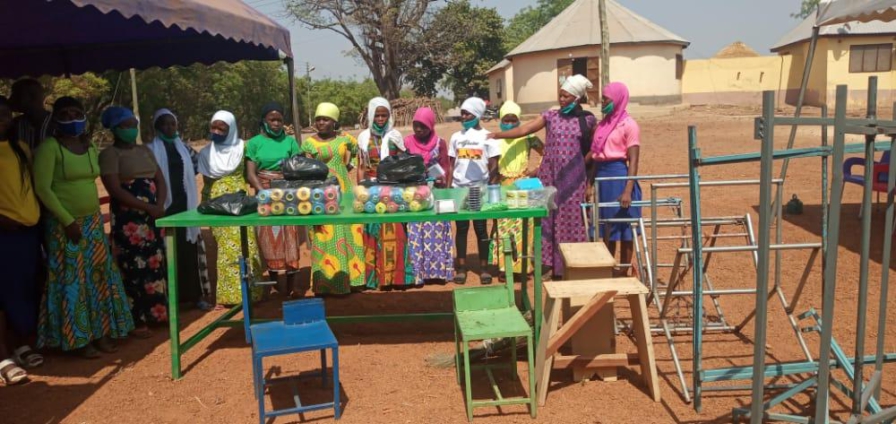
At a durbar in Kakpagyili, a community in the Tamale Metropolis of the Northern region, the beneficiaries were presented with equipment and materials needed to start their training.
They would be attached to master skill trainers to acquire the needed skills to venture into their preferred enterprises, including soap making, weaving and beads making.
The gesture formed part of Livelihood Empowerment for Migrant Returnees, a pilot project, under the Healthy Cities for Adolescents (HCA) Project, being implemented by the Regional Institute of Population Studies (RIPS) of the University of Ghana.
With support from the Botnar Foundation, the project is being implemented in partnership with the Tamale Metropolitan Assembly (TaMA) and Planned Parenthood Association of Ghana (PPAG) among other partners.
It is aimed at improving the health and general wellbeing of adolescents towards achieving the Sustainable Development Goals in the Tamale Metropolis.
Mrs Clara Lamisi Weobong, HCA Project Officer in Tamale, said: “the lockdown brought untold hardships to these young girls and many of them had to return home and so we thought it wise to pilot and test the livelihood empowerment programme to see if selected young girls can make living back home.”
That, she noted, would also build the capacities and confidence of the beneficiaries to create employment for other young people in their communities.
Also, it would discourage others from travelling to the Southern part of Ghana to engage in kayaye.
She appealed to parents and guardians as well as traditional authorities to be committed to ensure the wellbeing of their children and to discourage them from engaging in activities that would hamper their growth and development.
Guma Naa Fuseini Nayi, Chief of Kakpagyili, lauded the implementers of the HCA Project for the intervention and said the move would enhance the living standards of beneficiaries in the community. He encouraged beneficiaries to be dedicated and committed to their work to ensure they realized their ambitions.
Beneficiaries also expressed gratitude to the HCA for coming to their aid and pledged their commitment to ensuring they successfully go through the training to achieve the desired outcomes.
Management of the HCA project announced that successful graduates would receive start-up capital and equipment.
Latest Stories
-
Man City rule breaches not my concern – Mancini
2 seconds -
NSA releases PIN Codes for 2026/2027 national service private candidates and foreign-trained graduates
3 minutes -
GMet forecasts thunderstorms, rain across parts of Ghana this evening
5 minutes -
APRA wins Africa PR Legacy Award
7 minutes -
UN Special Rapporteur on adequate housing to visit Ghana
10 minutes -
Telecel Ghana concludes SME Month 2026 with Business Runway in Takoradi
18 minutes -
Ghana must embrace AI to transform tourism — GHATOF
19 minutes -
National Investment Quiz: Corpus Christi, Wesley Girls, advance to semi-finals
49 minutes -
Is Ghana losing the fight to protect children online?
59 minutes -
Ghana Institution of Surveyors pushes for Governing Council Bill, conference reforms
59 minutes -
Professional collaboration key to Ghana’s land, property development – Western Regional Minister
1 hour -
UPSA holds first session of 18th Congregation.
1 hour -
Why demand another country’s medical records? – Mahama on Ghana’s rejection of ‘humiliating’ US health compact
1 hour -
Mentorship critical to survival and growth of MSMEs – Sinapi Aba Trust
1 hour -
Nsawam Adoagyiri MP joins residents to oppose Agbogbloshie waste relocation to his constituency
2 hours