


Audio By Carbonatix
Kenya's population census figures have been released, causing controversy among some groups who feel the results are not fair or accurate.
It found that the total population of the country is now 47.6 million, nine million more than in 2009.
But some regions have experienced a decrease in population.
These outcomes can be hugely controversial because the size of the local population has important implications for the level of government funding they receive.
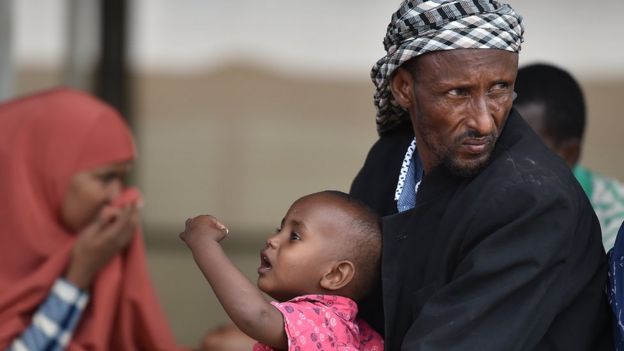 Image copyrightGETTY IMAGES
This area has a mainly ethnic Somali population.
The figures also reveal a high gender imbalance in the area, with significantly more males than females, leading some to speculate it might be due to a higher incidence of female mortality or an influx of single men who have moved there to work.
"This data, which was released this week, is false and not fit for purpose," says Aden Duale, a politician who represents a constituency with a large Somali population.
He argues that as Somali men normally have more than one wife, you would expect the numbers of women to be higher.
The Kenyan statistics bureau has defended the accuracy of the figures.
Image copyrightGETTY IMAGES
This area has a mainly ethnic Somali population.
The figures also reveal a high gender imbalance in the area, with significantly more males than females, leading some to speculate it might be due to a higher incidence of female mortality or an influx of single men who have moved there to work.
"This data, which was released this week, is false and not fit for purpose," says Aden Duale, a politician who represents a constituency with a large Somali population.
He argues that as Somali men normally have more than one wife, you would expect the numbers of women to be higher.
The Kenyan statistics bureau has defended the accuracy of the figures.
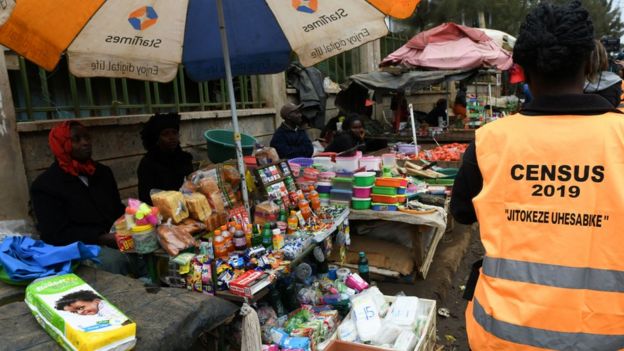 Image copyrightGETTY IMAGES
Image captionKenya's census is held every 10 years
It's a huge undertaking that involves mapping every home in the country and then visiting them to gather answers to a series of questions.
Some countries are ditching pen and paper for a digital process, in which people fill out a form online.
In Kenya the census is carried out by officials who go door-to-door, recording information on electronic tablets, which send the information to a central database.
Collecting information can sometimes prove difficult. Communities with little trust in their government can be unwilling to reveal personal details.
Image copyrightGETTY IMAGES
Image captionKenya's census is held every 10 years
It's a huge undertaking that involves mapping every home in the country and then visiting them to gather answers to a series of questions.
Some countries are ditching pen and paper for a digital process, in which people fill out a form online.
In Kenya the census is carried out by officials who go door-to-door, recording information on electronic tablets, which send the information to a central database.
Collecting information can sometimes prove difficult. Communities with little trust in their government can be unwilling to reveal personal details.
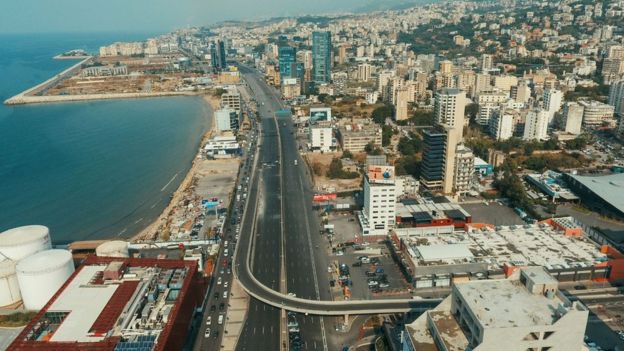 Image copyrightGETTY IMAGES
Image captionLebanon hasn't had a full census for decades
The more divided a country, the more contentious a census tends to be.
Ethiopia has postponed its census twice since 2017 because of protests and ethnic violence.
When it does finally happen, the outcome will be significant for groups vying for more regional powers - the larger the ethnic group, the stronger it will feel its claim for self-determination under Ethiopia's ethnically-based federal system.
The Sidama ethnic group in southern Ethiopia, for example, is campaigning to have its own state.
Nigeria has a long history of controversial censuses and was due to hold another one in 2016, but a lack of funds and logistical issues mean it's yet to happen.
And in Lebanon, the quota of representatives in parliament from particular regions is linked to population data in the census.
However, issues of demography there are so controversial there that there hasn't been a full census in Lebanon since 1932.
Image copyrightGETTY IMAGES
Image captionLebanon hasn't had a full census for decades
The more divided a country, the more contentious a census tends to be.
Ethiopia has postponed its census twice since 2017 because of protests and ethnic violence.
When it does finally happen, the outcome will be significant for groups vying for more regional powers - the larger the ethnic group, the stronger it will feel its claim for self-determination under Ethiopia's ethnically-based federal system.
The Sidama ethnic group in southern Ethiopia, for example, is campaigning to have its own state.
Nigeria has a long history of controversial censuses and was due to hold another one in 2016, but a lack of funds and logistical issues mean it's yet to happen.
And in Lebanon, the quota of representatives in parliament from particular regions is linked to population data in the census.
However, issues of demography there are so controversial there that there hasn't been a full census in Lebanon since 1932.
Why does population size matter?
Kenya's population is made up of many different ethnic groups, closely aligned to competing political parties. The government has yet to release all the data on the ethnic composition of the country, but the changes in population in certain regions from this latest census have already caused arguments. The outcome of such surveys can embolden or weaken claims made by groups for political representation or resources. In one area of the north-east territories bordering Ethiopia and Somalia, the census indicates a decrease in the population, prompting local political leaders looking to retain funding for their provinces to question the veracity of the survey.Image copyrightGETTY IMAGES
This area has a mainly ethnic Somali population.
The figures also reveal a high gender imbalance in the area, with significantly more males than females, leading some to speculate it might be due to a higher incidence of female mortality or an influx of single men who have moved there to work.
"This data, which was released this week, is false and not fit for purpose," says Aden Duale, a politician who represents a constituency with a large Somali population.
He argues that as Somali men normally have more than one wife, you would expect the numbers of women to be higher.
The Kenyan statistics bureau has defended the accuracy of the figures.
What is a census and how does it work?
A census is when a government collects information about its people. This generally includes demographic data such as household population, religion and ethnicity. Censuses are usually carried out every 10 years.Image copyrightGETTY IMAGES
Image captionKenya's census is held every 10 years
It's a huge undertaking that involves mapping every home in the country and then visiting them to gather answers to a series of questions.
Some countries are ditching pen and paper for a digital process, in which people fill out a form online.
In Kenya the census is carried out by officials who go door-to-door, recording information on electronic tablets, which send the information to a central database.
Collecting information can sometimes prove difficult. Communities with little trust in their government can be unwilling to reveal personal details.
How do governments use the information?
The outcome of the census can have a real-world impact on its citizens. In Kenya, not only is the distribution of government funds directly linked to regional population size, it's also the case that constituency boundaries are drawn up using census data.Image copyrightGETTY IMAGES
Image captionLebanon hasn't had a full census for decades
The more divided a country, the more contentious a census tends to be.
Ethiopia has postponed its census twice since 2017 because of protests and ethnic violence.
When it does finally happen, the outcome will be significant for groups vying for more regional powers - the larger the ethnic group, the stronger it will feel its claim for self-determination under Ethiopia's ethnically-based federal system.
The Sidama ethnic group in southern Ethiopia, for example, is campaigning to have its own state.
Nigeria has a long history of controversial censuses and was due to hold another one in 2016, but a lack of funds and logistical issues mean it's yet to happen.
And in Lebanon, the quota of representatives in parliament from particular regions is linked to population data in the census.
However, issues of demography there are so controversial there that there hasn't been a full census in Lebanon since 1932.DISCLAIMER: The Views, Comments, Opinions, Contributions and Statements made by Readers and Contributors on this platform do not necessarily represent the views or policy of Multimedia Group Limited.
DISCLAIMER: The Views, Comments, Opinions, Contributions and Statements made by Readers and Contributors on this platform do not necessarily represent the views or policy of Multimedia Group Limited.
Latest Stories
-
NDC threatens sanctions over oversized campaign posters, gives aspirants 5 days to comply
50 minutes -
Star Oil paid GH¢2.7bn in taxes, levies in nine months of 2026
1 hour -
Samson’s Take: The rule of law is cheaper before the bulldozer
1 hour -
GRA blames system failure for delay in issuing receipt over passenger’s customs duty
1 hour -
Livestream: Newsfile discusses World Cup visa scandal, beach demolitions, education strikes, BRICS bid
1 hour -
NC-PTAs welcomes end of teachers’ strike, urges parents to prepare children for Monday
2 hours -
Government procures over 2,000 transformers as Ghana’s electricity access hits 89.13% – Energy Minister
2 hours -
UTAG-UG threatens strike on October 19 over unpaid allowance
2 hours -
Let The Constitution direct Chieftaincy to deliver “All Development Is Local”
3 hours -
John Jinapor outlines renewable energy, nuclear power priorities for 2027
4 hours -
Ghana explores centre of excellence for hearing, communication and cochlear implant care
5 hours -
Schizophrenia-related disorders lead mental health cases recorded in Ghana
5 hours -
Dutch authorities enlist Ghana in hunt for fugitive drug lord Bolle Jos
6 hours -
Ghana housing finance conference adopts communiqué to improve affordable housing access
10 hours -
Special Initiatives Minister urges Wa Technical Institute to enrol more girls as EU-backed solar training lab opens
10 hours