

Audio By Carbonatix
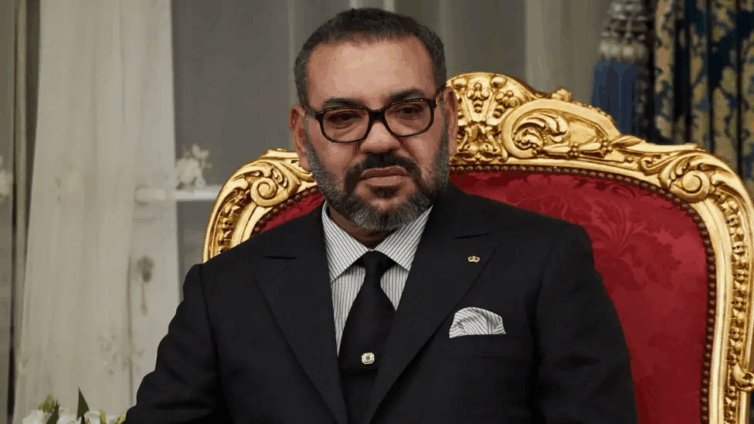
Morocco's King Mohammed VI chaired a Council of Ministers at the Royal Palace in Rabat on Sunday.
The session focused on the 2026 Finance Bill, key legislative reforms, military decrees, international cooperation agreements, and several high-level appointments.
The Minister of Economy and Finance presented the main outlines of the 2026 Finance Bill, developed under the High Royal Instructions and guided by the King’s recent Throne Day and legislative opening speeches.
Despite global uncertainty, Morocco’s economy is projected to grow by 4.8%, with inflation contained at 1.1% and the budget deficit expected to fall to 3.5% of GDP.
The new Finance Bill is anchored on four strategic priorities: economic consolidation and investment mobilisation, integrated local development, reinforcement of the social state, and continued structural and financial governance reforms.
The Council also approved four draft organic laws. These include an electoral reform bill that bars individuals with criminal convictions from parliamentary candidacy, provides 75% campaign cost reimbursement for youth under 35, and reserves regional seats for women.
A political party reform bill was endorsed to modernise governance and promote transparency, while the constitutionality challenge law empowers courts to refer unconstitutional laws to the Constitutional Court.
A separate reform will streamline appeal procedures and limit replacement terms for Constitutional Court members.
Two draft decrees concerning the military were approved. One establishes a special status for civil servants within the National Defence Administration’s Directorate of Information Systems Security, enabling flexible recruitment and performance-based incentives.
The other aligns the Royal School of Military Health Service with national health reforms and creates a Scientific Research Council to guide and coordinate research priorities.
To strengthen Morocco’s international partnerships, the Council approved 14 cooperation agreements — ten bilateral and four multilateral — aimed at consolidating the Kingdom’s global and continental presence.
Under Article 49 of the Constitution and upon the proposal of the Head of Government, the King also made several appointments, including new Walis and Governors within the Territorial Administration.
King Mohammed VI further appointed Tarik Senhaji as President of the Moroccan Capital Market Authority.
Latest Stories
-
Caveman Watches partners with Mfantsipim School for 150th anniversary
20 minutes -
We’ll pursue GH¢15m defamation suit against Sammy Gyamfi to its logical conclusion – Afenyo-Markin’s lawyers
21 minutes -
Martin Kpebu urges Afenyo-Markin not to return to court over Sammy Gyamfi lawsuit
30 minutes -
GRA submits preliminary report on drug shipment case to Mahama – Commissioner-General
57 minutes -
Sammy Gyamfi using ‘procedural roadblocks’ to dodge defamation case? – Afenyo-Markin’s lawyers
58 minutes -
The illusion of a good deal: Why some everyday money-saving habits may be costing you more
1 hour -
Family seeks autopsy, police investigation into death of student 12 days after Abomosu SHS enrolment
1 hour -
Trade Minister urges employers to leverage industrial opportunities to create jobs
1 hour -
Asantehene plants trees to commence Jimi Watercourse Rehabilitation destroyed by galamsey
2 hours -
15 arrested, 6 trucks impounded over sandwinning activities on Kumasi-Accra Expressway
2 hours -
OFFICIAL: Vinicius will miss El Clásico, suspended four games
2 hours -
Prayer vigil held after four arson attack murders
2 hours -
GRA fully recovers $154k legacy debt owed by foreign entities between 2022 and 2024
2 hours -
Kwesi Pratt Jr warns bus preachers are adding to passengers’ stress with accident prophecies
2 hours -
MTN Ghana to spend $1.1bn in 3 years, build 500 new sites as MoMo hits 44% Growth
2 hours