


Audio By Carbonatix
The Kwame Nkrumah University of Science and Technology (KNUST) has launched the Africa Breast Cancer Screening (ABCS) study to promote early detection and reduce the mortality rate of breast cancer among African women.
The Africa Breast Cancer Screening (ABCS) study aims to address the critical gap in understanding the interrelationship between metabolic syndrome, the gut microbiome, and breast cancer risk, particularly among sub-Saharan African women.
The study also aims to create a group of participants who will undergo breast cancer screening. This group will be monitored over time to gather more detailed information and understand the long-term effects of breast cancer.

Speaking at the inception meeting, Professor Reginald Adjetey Annan, the Principal Investigator, emphasized the importance of the study.
“We are expecting to recruit women aged 18 and above and screen them for the presence or absence of breast cancer, as well as examine the stage and type for those who have it. This study will aid in early detection for those affected, making treatment easier. We are conducting this study across the country, and we hope that many women will participate in the screening. It is not a stigma but a means to identify and prevent progression, thereby increasing survival,” he said.
“The study will help us understand the risk factors and provide insights for better risk assessment and management. It will also help us develop targeted interventions for individuals diagnosed with breast cancer, ultimately enhancing the health of African women,” he added.
The ABCS study, funded by the World Cancer Research Fund, is the first of its kind on the continent and has a four-year timeline.
Speaking on behalf of the KNUST Vice-Chancellor, Dr. Augustina Angelina Sylverken, a Senior Lecturer at the Department of Theoretical and Applied Biology, described the inception meeting as a springboard for sustainable breast cancer screening and early detection efforts.
Dr. Sylverken also stated that “the findings will not only enhance breast cancer screening in Ghana but will also set a precedent for other African nations to follow.”
She highlighted KNUST’s commitment to becoming a leading research-intensive institution. “At KNUST, we are deeply committed to driving innovation and scientific discovery that addresses pressing global and local challenges,” she added.
Dr. Ishmeal Kyei, a Senior Lecturer at the Department of Surgery, School of Medical Sciences, KNUST, and Co-Principal Investigator underscored the importance of collaboration in advancing breast cancer research.
“This study is one of many ongoing studies, and we are encouraging more initiatives like this. There are other aspects we hope other collaborators will join us in, so we can work together to thoroughly understand breast cancer in Black women,” he added.
The study consists of a twelve-member Advisory Board tasked with providing strategic guidance, expert advice, and stakeholder engagement support to ensure the successful implementation and sustainability of the project.
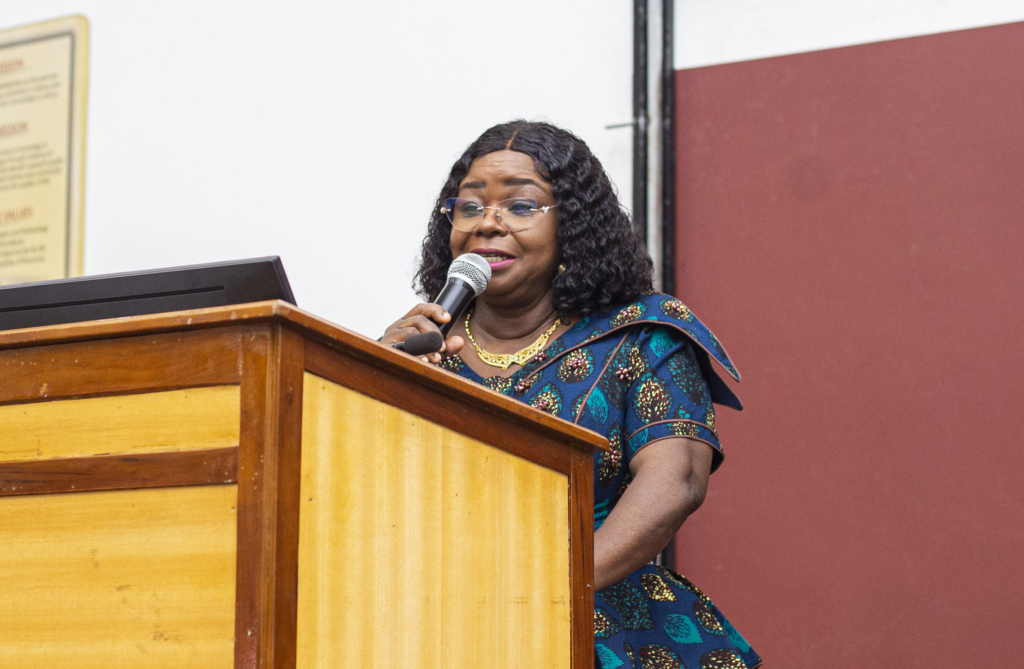
Mrs. Beatrice Wiafe Addai, Chairperson of the ABCS study Advisory Board, stressed the need for collective effort to ensure the success of the project.
She outlined the board's role in providing strategic direction, offering expert insights, supporting advocacy, and ensuring the project's alignment with global and national health priorities.
She also encouraged African scientists to incorporate cutting-edge technologies, such as artificial intelligence, into their research efforts to reduce human error and strengthen local capacity in breast cancer detection and treatment.
“African scientists should be mindful of technological advances and incorporate into our operations equipment that minimizes human errors while improving or building our local capacity through the use of AI as much as possible,” she added.
The study sites for the ABCS Project include the Peace and Love Hospital, Komfo Anokye Teaching Hospital, Western Regional Hospital (Effia Nkwanta), Cape Coast Teaching Hospital (Oncology Department), Tamale Teaching Hospital (Breast Centre), and Korle Bu Teaching Hospital (Breast Cancer Centre).
The ABCS study is built on a collaboration with academic institutions, international partners, government agencies, industry players, NGOs, and CSOs.
Latest Stories
-
Ghana explores centre of excellence for hearing, communication and cochlear implant care
41 minutes -
Schizophrenia-related disorders lead mental health cases recorded in Ghana
1 hour -
Dutch authorities enlist Ghana in hunt for fugitive drug lord Bolle Jos
1 hour -
Ghana housing finance conference adopts communiqué to improve affordable housing access
6 hours -
Special Initiatives Minister urges Wa Technical Institute to enrol more girls as EU-backed solar training lab opens
6 hours -
In the matter of my first year at the Bar
6 hours -
ActionAid Ghana calls for an end to child marriage, greater investment in girls’ rights
7 hours -
Newsfile to tackle World Cup visa scandal, beach demolitions, education strikes, BRICS bid
7 hours -
UK-Ghana Trade & Investment Summit: Trade Resource Centre to help businesses maximise UK-Ghana trade opportunities
7 hours -
Embassy of Denmark celebrates World Maritime Day
7 hours -
Linking LEAP to productive inclusion could cut extreme poverty by 2030 – UNICEF
8 hours -
Trade Ministry backs use of creative arts to rehabilitate prison inmates
9 hours -
Negotiations with government to continue despite strike suspension – GNAT
9 hours -
‘Ghana cannot afford to waste public resources; every cedi has a job’ – Ato Forson
9 hours -
Ghana expects economic boost as World Assemblies of God Congress brings 10,000 delegates to Accra
9 hours