

Audio By Carbonatix
Provision of sustainable energy to rural communities is essential for meeting the ideals of the Sustainable Development Goal 7.
Kwame Nkrumah University of Science and Technology and the Technical University of Munich are therefore collaborating to better understand global challenges and develop technical and scientific solutions using entrepreneurial approaches. The KNUST-TUM Seed Centre is facilitating this agenda.
Speaking at the annual symposium in Kumasi, Prof. Rexford Assasie Oppong, scientific director and project lead at the KNUST-TUM Seed Centre said “the whole idea is that we are able to provide sustainable energy and also provide entrepreneurship skills for rural development especially in the global south.”
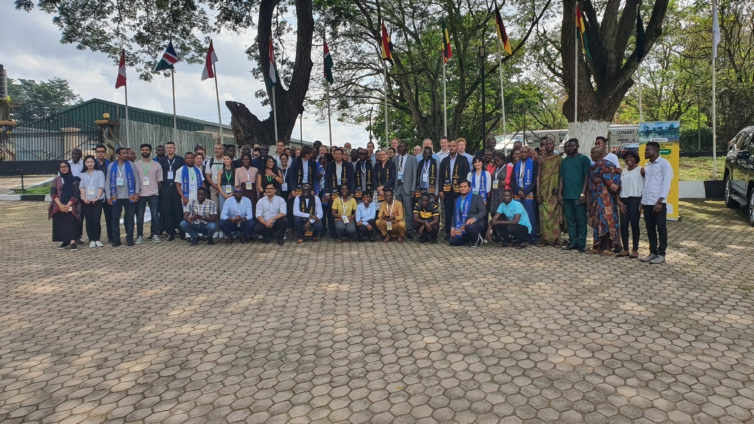
This year’s symposium saw the attendance of eight participating universities including KNUST, Bandung University, Bahir Da University, India University, Jomo Kenyatta University, Makerere University, Pontificia Universidad Catolica Del Peru, Namibia University of Science Technology.
The purpose of the symposium is to get the perspectives of the participating universities on how to get sustainable and affordable energy. Presentations will be made by all participating universities to meet this purpose.
Director of KNUST-TUM Seed Centre, Prof. Dr. Frank-Martin Belz said “We want to electrify and empower the rural communities and empower communities that don’t have access to electricity.
“We want to provide sustainable energy; water and we also want to find the intersection between sustainable energy and entrepreneurship in the global south.”
The Senior Vice President of Technical University of Munich, Prof. Dr. Juliane Winkelmann added the collaboration also seeks to build capacity of students.
“The students are our futures and we want to build our students and train them to make the world a better places,” she said.
So far, the Centre was able to provide electricity for the people of Yeboakrom in the Ashanti region of Ghana.
“We have managed to build a living lab at Yeboakrom. We managed electrification for a rural community of about 600 people and for the first time in the history of the community they have enjoyed electricity coming from solar panels,” Professor Rexford Assassie Oppong revealed.
Latest Stories
-
Nana B denies claims that Kojo Bamba was his driver and bodyguard
26 minutes -
Engage Now Africa to construct a 10-unit classroom block for struggling Navrongo Vocational Training Centre
33 minutes -
One digital financial breach could expose linked accounts to fraud – Financial Crimes Manager
38 minutes -
Ghana Russia Centre signs ICT cooperation agreement with Moscow University
42 minutes -
The powerhouses of the village: Honouring Ghana’s rural women on International Rural Women’s Day
42 minutes -
Vincent Assafuah petitions CHRAJ to investigate alleged irregularities in 2026 World Cup visa arrangements
43 minutes -
12-year-old boy found dead in muddy pit at Opeikuma
45 minutes -
GHS begins Yellow Fever vaccination campaign in three Upper West districts
46 minutes -
Organised Labour pushes for higher 2027 base pay despite slowing inflation
48 minutes -
Parliament’s Human Rights Committee demands swift justice in Obuasi SHTS sexual abuse case
58 minutes -
From Campaign Propaganda to Gov’t Accountability: When the message-makers demand a seat at the table
1 hour -
Ashanti Region Security Coordinator warns sand winners to stay off Accra–Kumasi Expressway site
1 hour -
PZ Cussons Ghana promotes hand washing among schoolchildren through Camel campaign
2 hours -
30 NDC aspirants file nominations in Upper West as regional election approaches
2 hours -
UPSA launches laptop assembly plant, requiring new students to assemble their own devices
2 hours