

Audio By Carbonatix
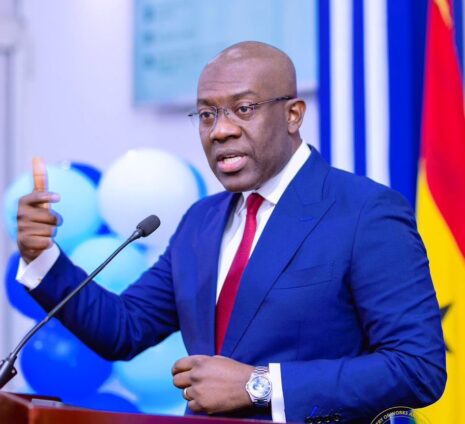
The Member of Parliament for Ofoase-Ayirebi and former Minister of Information, Kojo Oppong Nkrumah, has called for the urgent recapitalisation of the Bank of Ghana (BoG) following concerns over its financial position as highlighted in recent audit findings.
Speaking on Super Morning Show on Monday, 4 May, Mr Oppong Nkrumah warned that emerging policy directions under the government’s “reset agenda” could undermine the long-term stability of the central bank if not carefully managed.
He expressed concern that some recent policy decisions appear to be influenced by political considerations, cautioning that such an approach risks weakening the BoG’s core mandate of maintaining monetary stability and supporting economic resilience.
“You know very well that when you start selling your assets to generate revenue, you are in trouble, so we say with all humility that we have been warning since March 2025, that the approach you are using, you can even bring inflation down to zero, but you will create problems,” he argued.
Mr Oppong Nkrumah further criticised what he described as a strategy of asset sales aimed at stabilising the cedi, warning that it represents a short-term solution that fails to address deeper structural challenges within the economy.
He stressed the need for the central bank to remain insulated from political influence, noting that strict adherence to its technical and independent mandate is essential for restoring confidence in Ghana’s macroeconomic framework.
The former Information Minister also called for a clear and immediate recapitalisation plan to strengthen the BoG’s balance sheet and enhance its capacity to effectively perform its functions.
Watch the full interview below;
“Today, the Bank of Ghana is in a negative equity position, net of Ghc93 billion, and the bank needs to be recapitalised urgently,” he said.
“And we should not use any sort of politics to cover it,” he added.
His comments come amid an intensifying public debate over the financial health of the central bank, with analysts and policymakers divided over the sustainability of recent economic stabilisation measures and their long-term implications for Ghana’s economy.
READ ALSO: BoG losses justified for stabilising economy — Joe Jackson
Latest Stories
-
Assemblies of God requires pastors to resign before entering partisan politics – Rev. Wengam
3 minutes -
Ghana targets 20% annual reduction in maternal deaths – Health Minister
8 minutes -
Cyber attacks in Africa grow faster than global rate, report finds
10 minutes -
Ghana signs UAE deal to create 5,000 overseas jobs
17 minutes -
One Million Coders Programme targets 100,000 digital jobs in two years – Sam George
21 minutes -
John Jinapor, Italian Ambassador explore opportunities for energy sector investment
22 minutes -
NHIA seeks legal reforms to support Free Primary Healthcare
26 minutes -
Beatrice Annan defends Afi Agbenyo’s EC appointment, cites record of gender advocacy
29 minutes -
Ghana seeks investment deals in Bangkok amid global economic crises
33 minutes -
IMF raises Ghana’s 2026 growth forecast to 5.7%, sees inflation falling to 4.8%
35 minutes -
Ablakwa urges Africans not to view immigrants as threat to national progress
39 minutes -
Mahama Cares must fund treatment, not looting – Asogli chiefs
40 minutes -
Ghana’s economic salvation lies not in shifting geo-political allegiances – Dr Atuahene
43 minutes -
BoG proposes tougher rules on loan repayment assessment
48 minutes -
Government plans mandatory drug tests for public service jobs — Muntaka
53 minutes