

Audio By Carbonatix
Ghanaians have been urged to make concerted efforts to address socio-cultural norms and structural barriers that inhibit the full realisation of equal rights.
Dr Agnes Naa Momo Lartey, the Minister of Gender, Children and Social Protection, said stakeholders must work collaboratively to achieve sustainable results in advancing gender equality rather than working in silos.
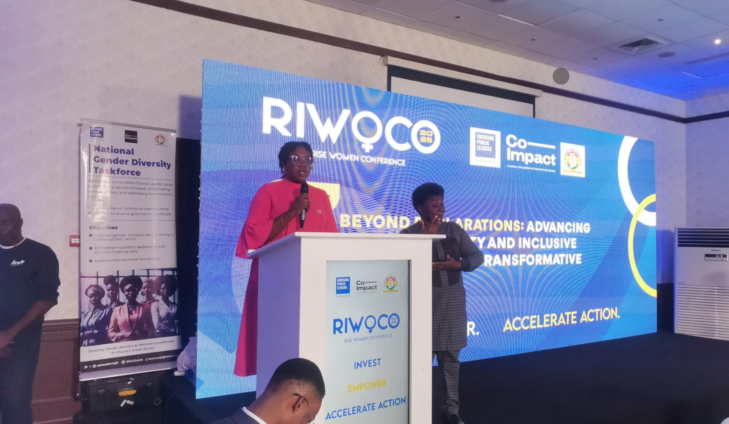
She made the call in a speech read on her behalf at the 2025 Rise Women Conference (RiWoCo), held in Accra on Wednesday, and organised by the Emerging Public Leaders (EPL) Ghana, a non-profit organisation.
The conference, on the theme: “Beyond Declarations: Advancing Gender Equality and Inclusive Leadership for Transformative Governance”, formed part of the EPL Co-Impact Women on the Rise Initiative.
It is implemented in collaboration with the Office of the Head of Civil Service (OHCS) to address gender barriers within the Public Service.
The initiative aims to localise international discussions linked to the Commission on the Status of Women, of which this year marked 30 years of implementing the Beijing Declaration, and to bring stakeholders together to develop solutions and policy strategies.
Dr Lartey noted that the future of transformative governance required inclusive leadership, where women had equal opportunities to participate and lead.
“We must, therefore, work together to create a society that values and supports the contributions of all individuals…” she said.
“Transformative governance will only be realised when every Ghanaian, regardless of gender, can contribute to and benefit equally from the country’s development,” she said.
The Minister stressed that advancing gender equality required not only government action but also a collective societal shift in attitudes and perceptions.
Through the Department of Gender, the Ministry had, over the years, taken steps to ensure robust coordination of gender equality initiatives, she said.
Dr Lartey highlighted the Affirmative Action Act, which mandates 30 per cent representation of women by 2026, rising to 50 per cent by 2034, as a strong legal framework for inclusive governance.
Ms Juliet A. Amoah, Country Director of EPL Ghana, said the future of governance could not be built on declarations alone but on accountability that was real and measurable.
She noted that women in Ghana currently held less than 30 per cent of senior leadership roles across sectors, and despite aspirations to be a beacon of equity and fairness, the public service continued to face challenges such as patriarchal norms, systemic gaps, and structural inequalities (Ghana Statistical Service, 2022; UN Women, 2024).
“This is not just about representation. It is about transformation – challenging the status quo, redefining leadership, and rewriting the rules so that no one is left behind,” she said.
Dr Efua Turkson, Gender Equity and Research Manager at EPL, Ghana, recommended national-level policy changes and effective implementation to address gender inequalities.
She called for community-level sensitisation and incentivisation, with a focus on early empowerment of young people.
Professor Eugene K. M. Darteh of the Department of Population and Health, University of Cape Coast, urged women leaders, particularly young ones, to seek mentors, build trust in society and institutions, and take active roles in governance.
He said women often excelled in leadership roles and should, therefore, be more involved in decision-making processes.
The Emerging Public Leaders work with government, local organisations, and communities to equip young Ghanaians with the knowledge, skills, and networks needed to become effective agents of change in the public sector.
Latest Stories
-
Power restoration fault suspected in Kumasi Central Market fire
2 hours -
The 7-foot giant of Ngleshie Amanfro: Seven-foot Ghanaian Ephraim Saawa dreams of joining the national basketball team
3 hours -
Government promises support for Kumasi Central Market fire victims
3 hours -
Vibes The Movie: Big Ghun’s Ghanaian film earns five nominations at 2026 REFFA
4 hours -
MamaCare CEO warns unresolved conflicts among health workers could undermine maternal and neonatal care
4 hours -
Health professionals urged to translate medical knowledge into practice to save mothers
4 hours -
Conflicts among care providers linked to maternal, neonatal deaths – Expert
6 hours -
GIS marks 10th TIME conference, champions improved teaching practices
6 hours -
BRICS Or Balance? What Ghana’s bid really means
6 hours -
GPRTU wants full TRAFFITECH-GH implementation to start in 2027
7 hours -
Mahama announces plans to import electric wheelchairs for PWDs
7 hours -
KGL U17 Colts 2026: Western beat Prempeh Elite Academy to set up final final with Greater Accra Region
7 hours -
Late Solanke strike salvages 10-man Spurs draw at Man United
7 hours -
Gender Ministry to monitor welfare of Nana Akua Addo’s children amid domestic violence case
7 hours -
Benedict Okyere Yeboah: Ghana’s football problem goes beyond sacking a coach
7 hours