

Audio By Carbonatix
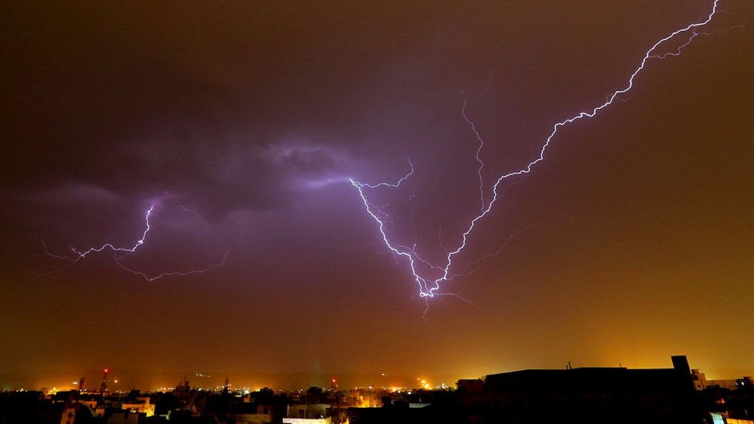
A lightning strike killed at least 16 people and injured many more in Jaipur in northern India on Sunday.
The victims were taking selfies in the rain on top of a watch tower at the city's 12th Century Amer Fort, a popular tourist attraction.
Dozens have also died in lightning strikes in Uttar Pradesh and Madhya Pradesh states.
Lightning strikes kill some 2,000 Indians on average every year, according to official data.
A senior police officer told the media that most of the people among the dead at the fort's tower were young.
Twenty-seven people were on the tower and the wall of the fort when the incident happened and some reportedly jumped to the ground.
Sunday alone saw nine more deaths from lightning strikes reported across Rajasthan state where Jaipur is located, according to local media reports.
At least 41 people - mostly women and children - were reportedly killed in Uttar Pradesh state. The highest toll of 14 was recorded in the city of Allahabad (also known as Prayagraj).
Two men, who were taking shelter under a tree, died on the spot after they were struck by lightning in Firozabad city. The remaining deaths occurred in several districts across the state.
At least seven died in Madhya Pradesh. Experts say casualty numbers are high in the two states because a large number of people work outdoors in agriculture and construction.
The chief ministers of Uttar Pradesh and Rajasthan and India's Prime Minister Narendra Modi have announced compensation for the families of those who died.
The Prime Minister was briefed about the loss of lives and damages due to lightning in parts of Uttar Pradesh. An ex-gratia of Rs. 2 lakh each from PMNRF would be given to the next of kin of the deceased and Rs. 50,000 would be given to the injured.
— PMO India (@PMOIndia) July 12, 2021
India's monsoon season, which sees heavy rains, typically lasts from June to September.
The Indian Meteorological Department (IMD) has said that deaths by lightning strikes have doubled in the country since the 1960s - one of the reasons they cited was the climate crisis.
The data says lightning incidents have increased by 30%-40% since the early- to mid-1990s. In 2018 the southern state of Andhra Pradesh recorded 36,749 lightning strikes in just 13 hours. More than 100 people died in two states in June last year in lightening-related incidents.
Officials say they are more common in areas with thinner tree cover, leaving people vulnerable to being struck.
Latest Stories
-
NCA announces major voice and data disruption across Northern Ghana due to fibre cuts
27 minutes -
Photos: Housing solutions take centre stage at Day 2 of the 3rd Republic Bank-JoyNews Habitat Fair
59 minutes -
Video: Immunity should be exercised without creating classism – Inusah Fuseini on cocaine bust
2 hours -
Ghana Air Force passes out 293 recruits after six months of intensive training
2 hours -
EOCO vrs Baffour Awuah: EOCO should have secured warrant before arrest attempt at court – Inusah Fuseini
2 hours -
Triple fibre cuts disrupt telecom services across Northern, Oti regions – Sam George
2 hours -
Politicisation could undermine parliamentary probe into cocaine seizures – Dr Osae-Kwapong
2 hours -
EOCO chases MP: Can Section 41 cure lacuna in EOCO Act? – Inusah Fuseini asks
2 hours -
GNFS, GWL inspect fire hydrants in Ministries enclave; 23 found faulty
2 hours -
Gov’t directs release of 50,000 bags of grain to ECOWAS
2 hours -
Ghana, Germany deepen cooperation on railways, labour mobility
2 hours -
Huge crowds greet Pope in Paris for open-air Mass
2 hours -
Ghana’s Charles Amofah Elected Vice President of African Bowling Federation
3 hours -
‘I never said I’ll declare a state of emergency’ – President Mahama on galamsey
3 hours -
Bobby Banson condemns EOCO’s attempted arrest of Nana Agyei Baffour Awuah
3 hours