

Audio By Carbonatix
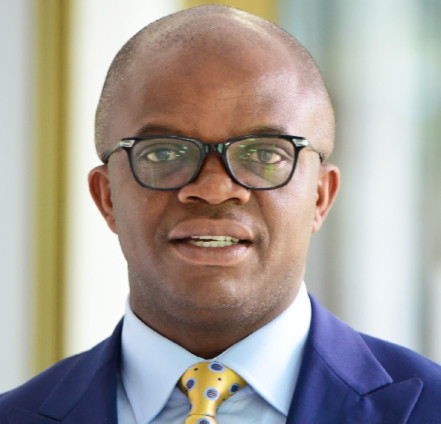
The Member of Parliament for Nhyiaeso, Stephen Amoah, has cautioned that Ghana’s declining inflation rate will not be sustainable unless government prioritises productive spending, supports SMEs and addresses structural weaknesses in the economy.
According to him, while the steady fall in inflation is positive, it does not automatically translate into long-term economic stability if the fundamentals remain weak.
“We need to prioritise our spending,” he said.
“We must focus on areas where expenditure has a strong correlation with GDP growth. We don’t have to be spending in areas that do not impact growth.”
His comments come on the back of new data from the Ghana Statistical Service (GSS), which showed that Ghana’s inflation rate fell further to 3.3 per cent in February 2026, down from 3.8 per cent in January.
The February figure marks the 14th consecutive decline in year-on-year inflation since January 2025 and represents the lowest rate recorded since the Consumer Price Index (CPI) rebasing in 2021.
Speaking on JoyNews Pulse on Wednesday, March 4, Dr Amoah stressed that cutting expenditure alone is not the solution.
“When we want to cut down expenditure, we shouldn’t just wake up and cut,” he explained. “There are items that don’t have strong correlation with growth or social impact. We need to be careful.”
He also raised concerns about government borrowing practices, noting that successive governments often borrow heavily from the domestic market sometimes at rates that crowd out the private sector.
“Governments, most of the time, borrow on our domestic market at a higher rate than even the private sector. Technically, it is very bad,” he stated.
The Nhyiaeso MP further emphasised the need to strengthen Ghana’s small and medium-sized enterprises (SMEs), which he said make up about 90 per cent of the country’s market structure.
According to him, many SMEs lack access to adequate funding, depend heavily on imports and do not have the mechanised systems and tools needed to expand production.
“We need to make good use of our SME sector as the strength of our economy and ensure they are strong enough to withstand turbulent periods,” he said.
Dr Amoah also pointed to Ghana’s high import dependency and its impact on the cedi and the country’s fiscal space.
“We import almost everything,” he noted. “Government must redefine its corporate focus, especially in agriculture, so that along the entire value chain, we do not depend on imports.”
Ghana has in recent years grappled with high debt levels, fiscal deficits and exchange rate pressures, prompting calls for deeper structural reforms beyond short-term macroeconomic gains.
Dr Amoah maintained that without addressing these foundational issues including institutional weaknesses and inefficient spending the country risks reversing the progress made on inflation.
“Once you are able to build these foundations, some of these macro indicators can be maintained and sustained. Other than that, we will still go back,” he warned.
Latest Stories
-
Why volunteering might be Africa’s most underrated career accelerator
1 minute -
ActionAid Ghana raises concern over gender gaps in Feed Ghana Programme
3 minutes -
Windstorm wreaks havoc in Gushegu, displacing nearly 2,000 residents and damaging schools
6 minutes -
Friends of Bridget Bonnie Marks her 35th birthday with donation to Kasseh Model Health Centre
53 minutes -
From Ekumfi Kokodo to the Pulpit Stage: Essi Donkor’s gospel journey takes shape
1 hour -
Landfilling waste management creates no value, it’s an economic waste
1 hour -
Photos: Speaker Bagbin Commissions MPs constituency office under parliamentary decentralisation programme
2 hours -
Black Stars technical advisor Winfried Schäfer sacked as GFA shakes up backroom staff
2 hours -
Wenchi water project almost complete, critical to gov’t agenda – GWL MD
2 hours -
Anti-LGBTQ+ bill not part of government’s legislative agenda – Inusah Fuseini
2 hours -
Anti-LGBTQ Bill: Forget the rumour mongers, I’m a man of action, and will pass the bill – Speaker
3 hours -
Women and children among those killed in Sudanese army shelling of wedding celebration
3 hours -
President Mahama is not sincere with Ghanaians on LGBTQ bill matter – Hassan Tampuli
3 hours -
Gov’t to establish Prison Industrial Hub to equip inmates with income-generating skills – Prison Service boss
3 hours -
Alhassan Tampuli donates cement, roofing sheets to support storm victims in Gushegu
3 hours