

Audio By Carbonatix
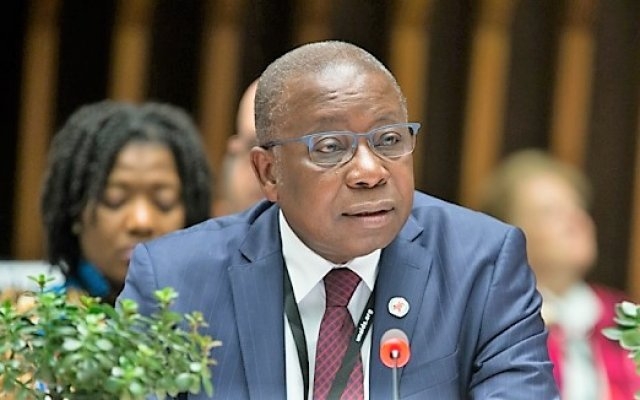
The Minister for Health, Kwaku Agyemang-Manu, has advised parents to allow their children below two years, to be vaccinated against malaria to stimulate the nation’s efforts to eradicate malaria in the country by 2030.
He emphasised that the malaria vaccine remains safe, effective and well tolerated and has no debilitating consequences on the health of children.
Mr Agyemang-Manu gave the advice while speaking at the launch of the expansion of the malaria vaccine implementation programme in Sunyani, on the theme: “Malaria vaccine for additional treatment.”
The Ghana Health Service (GHS) with support from its partners, including GAVI, PATH, and WHO is implementing the pilot programme in parts of the country.
Mr Agyemang-Manu stated that vaccination not only protect and save children's lives, but it is also one of the most cost-effective public health interventions and the most effective way to help children survive.
Considered to be the cornerstone of public health care, the Health Minister said globally vaccination has saved three million children from childhood diseases every year, and urged caregivers and parents to capitalise on the programme and vaccinate their eligible children.
In a speech read on his behalf, Dr Francis Kasolo, the WHO Representative to Ghana, said the “malaria vaccine is a welcome addition to the malaria control toolbox and will offer endemic countries the opportunity to rapidly reach children in the most vulnerable places with an effective intervention through the routine immunisation platform.”
So far, he said, about 1.5 million doses of the malaria vaccine had been administered across 42 districts in Ghana, reaching over 440,000 children with at least one dose and with over 175,000 children completing the fourth dose.
This is a commendable achievement for Ghana and Africa, according to Dr. Kasolo, who added that the malaria vaccine introduction programme demonstrated that the vaccine was safe, feasible, and could be implemented through routine childhood immunization alongside other malaria control interventions.
Dr Patrick Kuma-Aboagye, the Director General of the GHS, said the malaria vaccine reduced the number of times a child gets malaria, including severe malaria and reduced child deaths as well.
He explained children get the first dose of the vaccine at six months of age and the final dose at 18 months, a departure from the previous schedule of 24 months for the final dose.
The new schedule is, therefore, six months, seven months, nine months and 18 months, Dr Kuma-Aboagye explained, saying to get the maximum protection, a child must receive all the four doses.
Latest Stories
-
Conflicts among care providers linked to maternal, neonatal deaths – Expert
1 hour -
GIS marks 10th TIME conference, champions improved teaching practices
1 hour -
BRICS Or Balance? What Ghana’s bid really means
2 hours -
GPRTU wants full TRAFFITECH-GH implementation to start in 2027
2 hours -
Mahama announces plans to import electric wheelchairs for PWDs
2 hours -
KGL U17 Colts 2026: Western beat Prempeh Elite Academy to set up final final with Greater Accra Region
2 hours -
Late Solanke strike salvages 10-man Spurs draw at Man United
2 hours -
Gender Ministry to monitor welfare of Nana Akua Addo’s children amid domestic violence case
3 hours -
Benedict Okyere Yeboah: Ghana’s football problem goes beyond sacking a coach
3 hours -
GPL 2026/27: Darkwah Wiafe’s winner sees All Blacks beat Kotoko
3 hours -
ITF World Tour : Patel Wins Boys’ Singles Final at J100 Accra
3 hours -
Ghana must pursue BRICS partnership if it brings economic benefits – Kpebu
3 hours -
Success and Wright Claims J100 Accra Girls’ Doubles Championship
3 hours -
ITF J100: America’s Wright wins J100 Accra Girls’ Singles Title
3 hours -
Expedition hopes to find aviator Amelia Earhart’s plane on remote island
3 hours