

Audio By Carbonatix
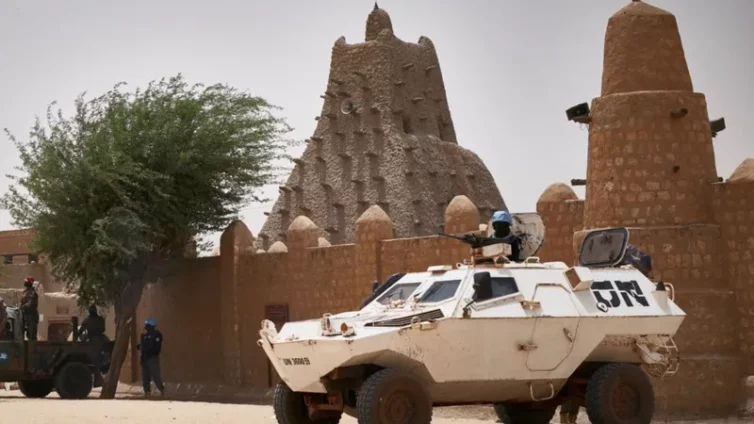
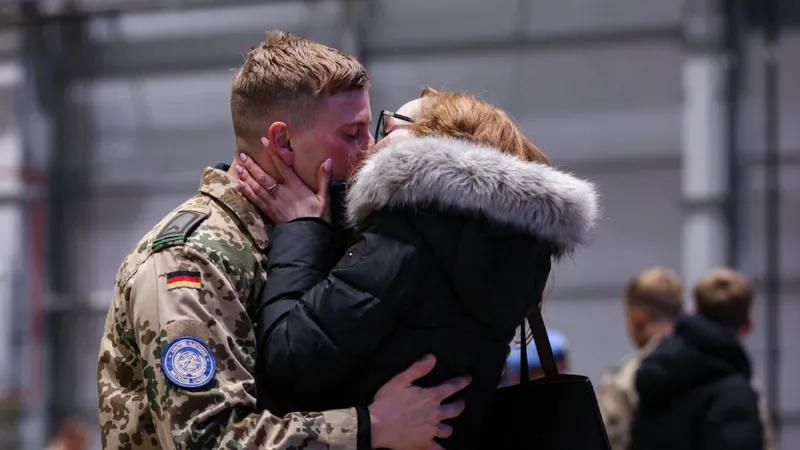
UN peacekeepers are due to finish their withdrawal from Mali on Sunday, after a long-running mission lasting a decade.
Minusma - the Multidimensional Integrated Stabilization Mission - began in 2013 after an armed rebellion, but has been asked to leave by the country's ruling military government.
The UN mission's head said it did a lot but fell below expectations.
With some 310 peacekeepers killed, Minusma was the UN's second deadliest mission worldwide, after Lebanon.
In the summer, Mali told the UN that its 12,000 peacemakers needed to leave, and the UN Security Council voted to withdraw the mission.
UN staff have been leaving in stages for months, with a deadline of 31 December for full withdrawal.
On Friday, local media reported that Minusma had handed over control of one of its last major camps in the northern Timbuktu region ahead of the deadline, for security reasons.
Timbuktu was one of three sites which were supposed to remain open to manage the end of the mission after 31 December, but the UN was worried about the presence of militants, reports said.
El-Ghassim Wane, head of the UN mission, said in a recorded statement that there was a "gap between what we were mandated to do and we were able to do".
"We did a lot but definitely it was below expectations and below the needs," he added.
Security in Mali is fragile, with armed Islamist and independence movements active.
Mali is suspended from regional bloc the Economic Community of West African States, along with Guinea, Niger, and Burkina Faso - all of which are also run by military governments that took power in coups.
In September, Mali, Niger and Burkina Faso created a defence pact called the Alliance of Sahel States.
Like Mali, Niger and Burkina Faso are rejecting longstanding links to France and are growing closer to Russia, with French forces and diplomats now having left all three countries.
The UN mission began 10 years ago, after separatist rebels and Islamist fighters banded together and occupied northern Mali in an effort to create a separate state.
France sent troops to try and put down the uprising, followed by UN peacekeepers.
The threat from Islamist militants, who have killed several thousand people and forced tens of thousands from their homes, continued over the years.
And despite the presence of UN peacekeepers and French troops, who led counter-terror operations, the number of terror attacks in Mali steadily increased, as did the number of Malians joining insurgent groups. France announced it was withdrawing troops last year.
Mali has been run by military leaders following two coups in 2020 and 2021.
The country has been struggling with a widespread jihadist insurgency that has made much of the north and east ungovernable.
In recent years, Islamic State in the Greater Sahara had made major gains, occupying large swathes of territory.
Many central regions have also recently been experiencing a surge in violence perpetrated by militants linked to al-Qaeda and Islamic State groups.
Fighting also broke out again in August between the separatists and government troops after eight years of calm, as both sides scrambled to fill the vacuum left by the withdrawal of the UN peacekeepers.
Latest Stories
-
UN housing expert urges Ghana to strengthen Rent Control Department amid housing affordability concerns
5 minutes -
Delta-BCI partnership reaches 166,000 people with breast cancer education
14 minutes -
Power restoration fault suspected in Kumasi Central Market fire
5 hours -
The 7-foot giant of Ngleshie Amanfro: Seven-foot Ghanaian Ephraim Saawa dreams of joining the national basketball team
6 hours -
Government promises support for Kumasi Central Market fire victims
6 hours -
Vibes The Movie: Big Ghun’s Ghanaian film earns five nominations at 2026 REFFA
7 hours -
‘I’m a fulfilled man’—Justice Korbieh on missing out on Supreme Court despite two nominations
7 hours -
MamaCare CEO warns unresolved conflicts among health workers could undermine maternal and neonatal care
7 hours -
Health professionals urged to translate medical knowledge into practice to save mothers
7 hours -
Retired judge Justice Francis Korbieh charges 1,568 new lawyers to uphold integrity
9 hours -
Conflicts among care providers linked to maternal, neonatal deaths – Expert
9 hours -
GIS marks 10th TIME conference, champions improved teaching practices
9 hours -
BRICS Or Balance? What Ghana’s bid really means
9 hours -
Adamus Resources launches breast cancer awareness campaign in Nzema
9 hours -
GPRTU wants full TRAFFITECH-GH implementation to start in 2027
10 hours