

Audio By Carbonatix
As geopolitical competition increasingly extends into the world’s oceans, naval partnerships have become essential to protecting global trade, preserving freedom of navigation and addressing emerging challenges across the maritime domain.
The world’s oceans underpin global commerce, energy supplies and strategic connectivity. With more than 80 per cent of global trade by volume carried by sea, secure shipping routes are vital to economic prosperity and international stability.
As geopolitical competition intensifies across the maritime domain, safeguarding these critical waterways has become a responsibility no nation can fulfil alone.
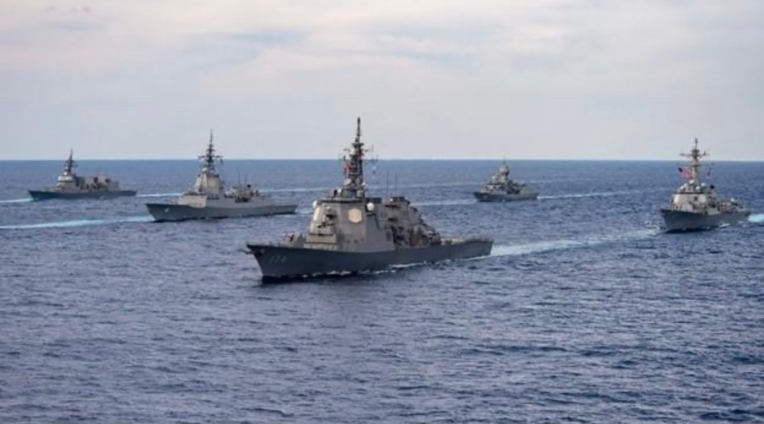
Warships operating in formation during multinational exercises underscore the importance of allied naval cooperation. Combined training, coordinated patrols and intelligence sharing enable participating fleets to improve interoperability, strengthen operational readiness and enhance their ability to manage complex situations at sea.
These activities also build confidence among partner nations and reinforce long-term strategic relationships.
Today’s maritime challenges extend well beyond conventional naval defence. Piracy, illegal fishing, transnational organised crime, maritime terrorism and threats to critical undersea infrastructure continue to strain the resilience of coastal states and the international community.
Protecting strategic sea lanes and maritime chokepoints has therefore become increasingly important as global supply chains remain closely interconnected.
Large multinational exercises continue to strengthen collective preparedness. NATO’s Dynamic Mariner and BALTOPS bring allied navies together to refine command procedures, improve coordination and operate effectively in demanding environments.
Training in realistic conditions enhances interoperability and prepares participating forces for humanitarian assistance, disaster response and regional contingency operations.
Technological innovation is reshaping naval operations. Satellite surveillance, unmanned maritime systems, artificial intelligence, advanced sensors and secure information networks provide greater situational awareness and enable faster decision-making.
These capabilities enable naval forces to monitor vast maritime areas more efficiently and support coordinated operations among allied partners.
In a changing international order, effective maritime governance depends on trusted partnerships, continuous innovation and sustained collaboration.
By strengthening naval cooperation and investing in modern capabilities, nations can safeguard vital sea lanes, uphold freedom of navigation and help ensure a stable, secure and resilient maritime domain.
Latest Stories
-
Ghana, UNICEF strengthen partnership to advance child protection
2 minutes -
Day Two of 3rd Republic Bank-JoyNews Habitat Fair ends with great homeownership offers and financing solutions
6 minutes -
Guinness Ghana DJ Awards 2026 Pub Fest celebrates Ghana’s DJ culture as Accra turns up the energy
24 minutes -
10th woman found dead in South Africa’s string of killings
25 minutes -
French Embassy trains Ghana Police CTU in counter-terrorism operations
56 minutes -
UPSA uncovers mass results manipulation involving 178 students, over 500 results compromised
1 hour -
ECG announces planned power outages in parts of Tema from Sept. 29 to October 1
2 hours -
Sylvester Mensah urges Latenu FM to promote trade, export opportunities in Ga
2 hours -
Ga language under threat of decline as children shy away from speaking it – Sylvester Mensah
2 hours -
‘Let every Ga child you raise know the Ga language and story’ – Sylvester Mensah
2 hours -
‘We are not deterred’ – Ablakwa responds to backlash over South Africa evacuation
2 hours -
Day Two: Republic Bank-JoyNews Habitat Fair gains momentum at Junction Mall
3 hours -
NCA announces major voice and data disruption across Northern Ghana due to fibre cuts
3 hours -
Photos: Housing solutions take centre stage at Day 2 of the 3rd Republic Bank-JoyNews Habitat Fair
4 hours -
Nana Agyei Baffour Awuah denies GHS2.2m legal fee payment allegation
4 hours