

Audio By Carbonatix
The Pro Vice-Chancellor of the Kwame Nkrumah University of Science and Technology, Prof. Ellis Owusu-Dabo has expressed concerns about the poor state of orthodox medical practice in Ghana.
He believes the forcing of people into the health sector has resulted in substandard health delivery.
Prof. Owusu-Dabo who is also the principal investigator of the Mastercard Foundation Africa Higher Education Health Collaborative said this at the opening ceremony of the short course in community health entrepreneurship by the Collaborative in Kumasi.
“The already known traditional area in health which is known as orthodox medicine or medical practice is suffering in this country. And many people who have gotten into our profession were perhaps forced into the profession.
“We want a doctor, we want a nurse, we want this, and we want that. The consequences of these actions and the ramification thereof I promise you if we don’t change we are going to be seeing a lot of medicolegal issues in this country,” he said.
He also mentioned that the medical profession is losing what characterizes it as a noble profession.
“When we used to call the health profession a noble profession there were a lot of several things that characterized he health profession.
“Some of us have bleeding hearts because we are losing all those attributes that characterize the so called noble profession.
“Whether you are biomedical scientist, a nurse, a doctor or a physician assistant you apply yourself dutifully to certain attributes; those attributes I daresay we are losing them,” he said.
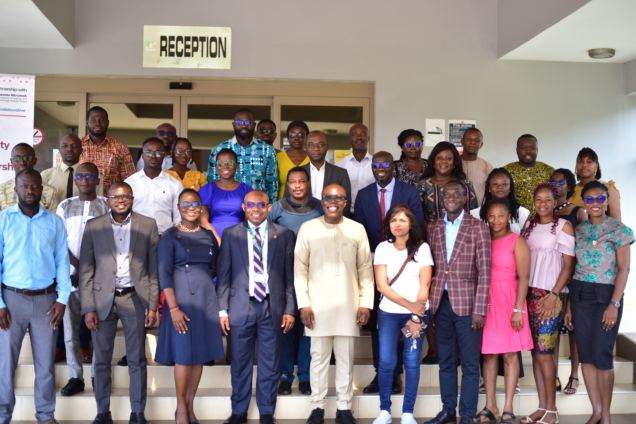
The community health entrepreneurship is a short course organized by the Mastercard Foundation Africa Higher Education Health Collaborative in partnership with the Kwame Nkrumah University of Science and Technology.
This course will equip 20 selected community health personnel from across the country with requisite skills in entrepreneurship to stem the brain drain menace.
The programme is under the health employment pillar of the MasterCard Foundation Africa Higher Education Health Collaborative.
The health employment pillar aims to expand and improve current capacities to train primary healthcare workers.
Provost of the College of Health Sciences, Prof. Christian Agyare mentioned that “there is huge opportunity for building and scaling human capital within the sector. To meet current market demands, health workers require differentiated competencies including tangible skills that can be marketed to prospective employers but also encourage self-employment when feasible.”
Latest Stories
-
UPSA students lament high fees at private hostels, call for government intervention
5 minutes -
We will upgrade Ghana’s credit ratings if government maintains fiscal discipline, policy effectiveness – Moody’s
6 minutes -
Gender Ministry supports four siblings allegedly sexually abused by their father
10 minutes -
UMB MD wins ‘CEO of the Year’, banking category at 2026 Ghana Credit Excellence Awards
10 minutes -
Don’t throw away empty egg cartons — 6 smart ways to reuse them
14 minutes -
GoldBod poised to surpass 2025 forex performance – Sammy Gyamfi
15 minutes -
Old students of Peki SHS break ground to give 70-year-old school infrastructure a facelift
29 minutes -
Ablakwa facing ‘personal vendetta’ over refusal to grant Nana B service passport – Majority
30 minutes -
Every year, the lawyers come out, and so does the nonsense! – Ace Ankomah writes
42 minutes -
Digital transformation without an ownership culture can digitise poor service
45 minutes -
Fishing communities demand revocation of offshore gold exploration licences over livelihood concerns
48 minutes -
How Ghanaian tycoon Manoj Lakhiani built a water and plastics empire from a $25,000 loan
50 minutes -
GoldBod recovers GH¢38.7m of GH¢55.8m outstanding receivables; remainder subject to legal action – Sammy Gyamfi
57 minutes -
GEXIM Bank donates GH¢200,000 worth of medical equipment to Korle-Bu Child Health Department
60 minutes -
Majority rejects Minority’s claims over GH¢49.7m South Africa evacuation
1 hour